
UPSC Mains 2022 GS Paper 1 Q16: model answer
Mention the significance of straits and isthmus in international trade.
What the question wants
Explain why straits and isthmuses matter for international trade.
How to structure it
Mention the significance: define, then key examples with their trade value, risks and India.
- Definitions
- Key straits
- Key isthmuses and canals
- Risks
- India
How to think it through
Straits and isthmuses are the world's narrow doors. Lock one and the whole house feels it. In 2021 a single ship, the Ever Given, blocked Suez for six days and held up about 9.6 billion dollars of trade a day.
Model answer
In March 2021 the container ship Ever Given got stuck in the Suez Canal for six days, holding up an estimated 9.6 billion dollars of trade each day (Lloyd's List). That week showed how much world trade depends on a few narrow passages.
Definitions
- A strait is a narrow sea passage connecting two larger bodies of water.
- An isthmus is a narrow strip of land joining two larger landmasses; canals cut through them.
Key straits
- Strait of Malacca: about a quarter of world trade; China, Japan and Korea's oil route.
- Strait of Hormuz: about a fifth of world oil passes through it.
- Bab-el-Mandeb: links the Red Sea to the Gulf of Aden; Houthi attacks since 2023 forced ships around Africa.
- Bosporus and Dardanelles: Black Sea grain and oil.
- Strait of Gibraltar, English Channel (the busiest), Taiwan Strait.
Isthmuses and canals
- Suez Canal (isthmus of Suez): about 12% of global trade; cuts the Europe–Asia route by around 7,000 km.
- Panama Canal (isthmus of Panama): about 5% of world trade; droughts in 2023 cut transits.
- Kra isthmus in Thailand: a proposed canal to bypass Malacca.
Significance
- Shorter routes, lower freight costs and time.
- Energy security for importers.
- Strategic control: naval power depends on choke points.
- Ports and economies along them (Singapore, Port Said).
Risks
Piracy, war, blockage, climate (Panama drought) and great power rivalry.
India
- India sits near Malacca and Hormuz; the Andaman and Nicobar Islands overlook the Ten Degree and Six Degree channels.
- Navy anti-piracy and Red Sea deployments (Operation Sankalp).
- Alternative routes: INSTC, IMEC, Chabahar.
Conclusion
Whoever keeps these narrow doors open keeps world trade moving; India wants a role in that.
Draw: World map marking the main straits and canals.
Keywords, cases and data to drop in
choke points, Malacca, Hormuz, Bab-el-Mandeb, Suez, Panama, Ever Given 2021, Houthi attacks, Kra canal, INSTC.
Where most answers lose marks
- Listing names without trade data.
Related Mains PYQs
- Discuss the natural resource potentials of ‘Deccan Trap’. UPSC 2022 · GS-I
- Examine the potential of wind energy in India and explain the reasons for their limited spatial spread. UPSC 2022 · GS-I
- Describing the distribution of rubber-producing countries, indicate the major environmental issues faced by them. UPSC 2022 · GS-I
- Despite India being one of the countries of the Gondwanaland, its mining industry contributes much less to its Gross Domestic Product (GDP)… UPSC 2021 · GS-I
Fresh examples from current affairs

Cauvery panel tells Karnataka to release 3,000 cusecs to Tamil Nadu: Article 262 and the inter-State water dispute
The Cauvery Water Regulation Committee has told Karnataka to ensure 3,000 cusecs of water a day at Biligundlu for 15 days, and the Cauvery Water Management Authority has endorsed it. Tamil Nadu wanted almost five times more, including a claimed backlog. Karnataka says a weak monsoon has left its four Cauvery reservoirs 55% short and most of its taluks in drought. For you, this is a live case study of Article 262, water tribunals and how a dry year turns sharing into a crisis.
UPSC angle: Prelims: Cauvery source and tributaries, Article 262, ISWD Act 1956, CWMA. · Mains GS-II: inter-State water disputes; cooperative federalism.
25 Oct 2026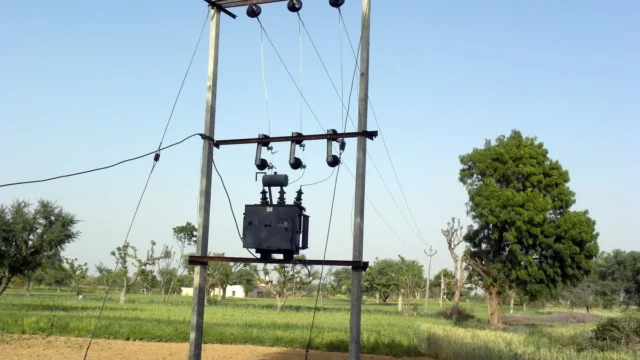
Haryana’s first private power distributor: what a parallel licence means for Gurugram and Nuh
The Haryana Electricity Regulatory Commission (HERC) on 19 October 2026 gave Eleven Power Pvt Ltd a 25-year parallel distribution licence for Gurugram and Nuh. It will be Haryana’s first private distributor and India’s second case of parallel licensing after Mumbai. The State government and power-sector staff oppose it and plan to appeal to the Appellate Tribunal for Electricity.
UPSC angle: Prelims: Section 14, APTEL, Concurrent List Entry 38. · Mains GS-III: discom reform, cross-subsidy, competition.
22 Oct 2026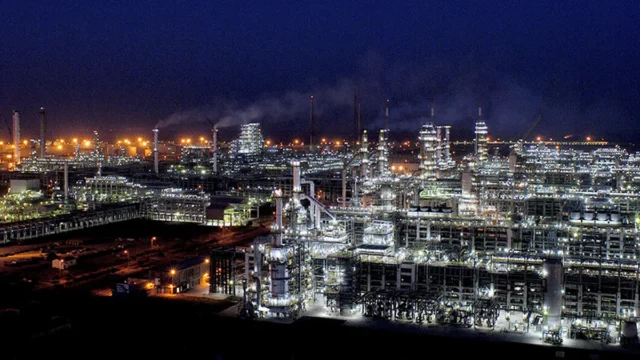
Rubio at Jamnagar: US pitches oil and Venezuelan crude to India’s ‘refining superpower’
US Secretary of State Marco Rubio visited Reliance’s Jamnagar refinery complex in Gujarat on 21 October 2026, a day after calling India a ‘refining superpower’. He wants India to buy more US oil and refine more Venezuelan crude. In Mumbai on 20 October, External Affairs Minister S. Jaishankar also held an unannounced India–US–UAE meeting on energy and connectivity, with the Strait of Hormuz blocked.
UPSC angle: Prelims: Jamnagar, Hormuz, I2U2, IMEC, SPR sites. · Mains GS-II/III: energy security vs strategic autonomy; India–US–UAE.
21 Oct 2026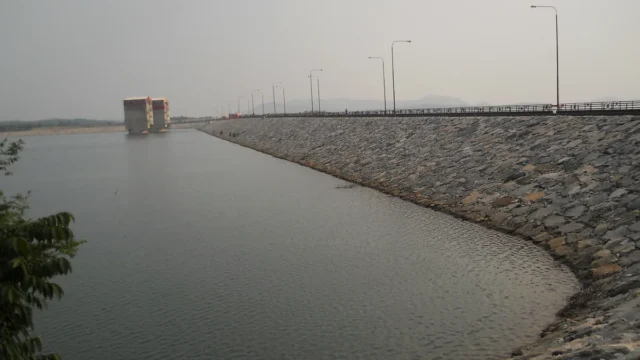
Pumped storage hydropower: India’s roadmap for 100 GW of ‘water batteries’ by 2035-36
A PIB backgrounder of 19 October 2026 explains how pumped storage projects (PSPs) will store solar and wind power for India’s grid. India runs 7.43 GW of pumped storage today, is building 15.87 GW more and has an assessed potential of 345.38 GW. A roadmap aims to add about 100 GW between 2025-26 and 2035-36.
UPSC angle: Prelims: PSP types, CEA, ISTS waiver, IRENA ranking. · Mains GS-III: storage and the clean energy transition.
19 Oct 2026Learn the concept
Question text as printed in the official UPSC Civil Services (Main) question paper. The model answer is original Battle IAS work; use it to learn structure, not to memorise.
Want every PYQ in one place? See the Battle IAS PYQ Book.