
UPSC Mains 2023 GS1 Q17: model answer
From being net food importer in 1960s, India has emerged as a net food exporter to the world. Provide reasons.
What the question wants
Reasons for India's shift from food imports (PL-480) to food exports.
How to structure it
Intro: 1960s: droughts of 1965–66, PL-480 wheat imports, 'ship to mouth'. Body: (1) Green Revolution: HYV seeds, fertilisers, irrigation; (2) Institutions: MSP, FCI, APMC; (3) Research: ICAR, agricultural universities; (4) White, Blue and Yellow revolutions; (5) Infrastructure and credit; (6) Liberalisation and export policy: APEDA, rice and marine exports; (7) Diversification. Conclusion: challenges: soil, water, climate; sustainability.
- 1(1) Green Revolution: HYV seeds, fertilisers, irrigation
- 2(2) Institutions: MSP, FCI, APMC
- 3(3) Research: ICAR, agricultural universities
- 4(4) White, Blue and Yellow revolutions
- 5(5) Infrastructure and credit
- 6(6) Liberalisation and export policy: APEDA, rice and marine exports
- 7(7) Diversification
Model answer
In the mid-1960s, after the droughts of 1965 and 1966, India depended on US wheat under PL-480 and lived 'ship to mouth'. Today it is the world's largest rice exporter and a major exporter of marine products, spices and buffalo meat.
- 1965–66Droughts; PL-480 wheat imports
- 1965MSP and FCI set up
- Late 1960sGreen Revolution: HYV wheat and rice
- 1970–96Operation Flood
- 1991 onLiberalisation; export promotion
- 2010sLargest rice exporter
Reasons for the turnaround
- Green Revolution: high-yielding wheat and rice varieties from the mid-1960s, with fertilisers and irrigation, multiplied output in Punjab, Haryana and western UP.
- Price support and procurement: MSP and the Food Corporation of India (both 1965) gave farmers assured prices.
- Research and extension: ICAR, State agricultural universities and Krishi Vigyan Kendras.
- Irrigation and power: canals, tube-wells and rural electrification.
- Other revolutions: Operation Flood made India the largest milk producer; the Blue Revolution raised fish output; the Yellow Revolution boosted oilseeds.
- Credit and inputs: nationalised banks, NABARD and subsidised fertiliser.
- Liberalisation: after 1991 and the WTO, export restrictions eased; APEDA and MPEDA promoted exports.
- Diversification: horticulture output now exceeds foodgrains.
Caveats
- Malnutrition persists despite surplus.
- Groundwater depletion and soil damage in Green Revolution areas.
- India still imports edible oils and pulses.
- Frequent export bans (as on non-basmati rice in 2023) show volatility.
Sustaining this success needs climate-resilient, water-saving and diversified farming.
Keywords, cases and data to drop in
PL-480 Green Revolution MSP FCI Operation Flood APEDA
Where most answers lose marks
- Ignoring post-1991 trade reforms.
- No caveats.
Fresh examples from current affairs
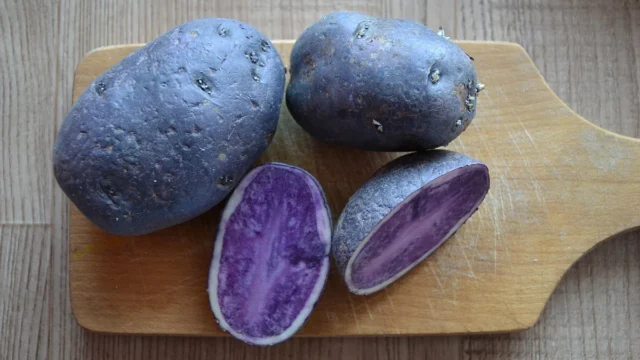
Kufri Jamunia: ICAR-CPRI’s purple potato to fight hidden hunger
A PIB backgrounder of 18 October 2026 puts the spotlight on Kufri Jamunia, a purple-fleshed potato bred by ICAR’s Central Potato Research Institute and released in 2024. It has nearly twice the Vitamin C of a common potato and several times more zinc and iron, along with antioxidants called anthocyanins. The idea is clever: instead of asking people to change what they eat, make the food they already eat more nutritious. That is biofortification.
UPSC angle: Prelims: Kufri Jamunia, CPRI, anthocyanins, biofortification vs fortification. · Mains GS-III: nutrition security; GS-II: hunger.
18 Oct 2026
Oil companies bar sugar-based ethanol for 2026-27; maize incentive cut to ₹2.79 a litre
The oil marketing companies have kept sugar out of India’s ethanol programme for the coming year. The tender issued on 16 October 2026 seeks about 11 billion litres of ethanol for the 2026-27 supply year, but asks for none made from sugarcane juice, sugar syrup or B-heavy molasses, because the Government wants sugar diversion for ethanol cut to zero. Grain must now carry the load, and even the maize incentive has been cut. Read this as a live example of the food-versus-fuel trade-off.
UPSC angle: Prelims: E20, NPB 2018, molasses grades, feedstocks. · Mains GS-III: energy security vs food security; farm incomes.
18 Oct 2026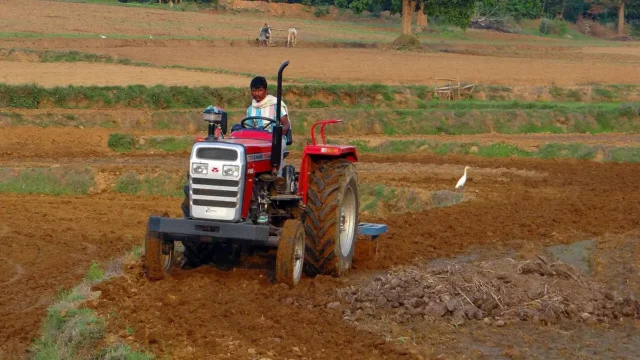
Khet Bachao Abhiyan: Centre reviews 22 October to 30 November farm campaign with States
On 17 October 2026 Union Agriculture Minister Shivraj Singh Chouhan reviewed preparations for the Khet Bachao Abhiyan with agriculture ministers of 11 States and UTs. The campaign runs from 22 October to 30 November 2026. About 4,150 teams of Krishi Vigyan Kendra and ATMA staff, with over 12,000 scientists and officials, plan around 1.5 lakh meetings with farmers on soil health, crop residue, balanced fertiliser use and key schemes.
UPSC angle: Prelims: Khet Bachao Abhiyan dates, KVK, ATMA, Soil Health Card. · Mains GS-III: agricultural extension and sustainable farming.
17 Oct 2026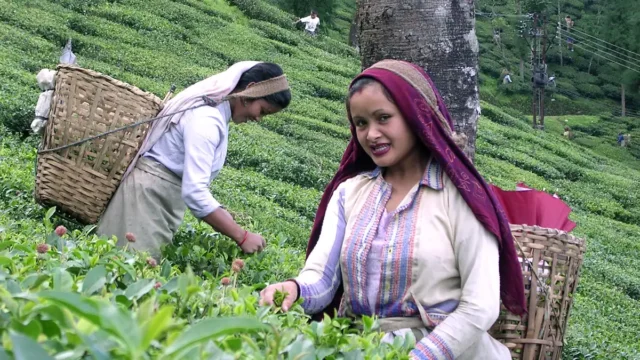
FSSAI proposes residue limits for acetamiprid and imidacloprid in tea
On 17 October 2026 FSSAI explained draft limits for two insecticides in tea: 20 ppm for acetamiprid and 50 ppm for imidacloprid. The draft, published in the Gazette on 16 October, amends the rules on contaminants, toxins and residues. India’s proposed acetamiprid limit is lower than Japan’s 30 ppm and the USA’s 50 ppm.
UPSC angle: Prelims: MRL, neonicotinoids, Insecticides Act 1968, FSS Act 2006. · Mains GS-III: pesticide regulation and food safety.
17 Oct 2026Learn the concept
Question text as printed in the official UPSC question paper: https://www.upsc.gov.in/sites/default/files/QP-CSM-23-GENERAL-STUDIES-PAPER-I-180923.pdf The model answer is original Battle IAS work; use it to learn structure, not to memorise.