
UPSC Mains 2023 GS1 Q9: model answer
Explain why suicide among young women is increasing in Indian society.
What the question wants
Causes of rising suicide among young women, with data and a way forward.
How to structure it
Intro: NCRB data on suicides; housewives and students form large shares. Body: (1) Family and marriage pressures: dowry, domestic violence, early marriage; (2) Education and career stress; (3) Patriarchy and restrictions on choice; (4) Mental health stigma and lack of care; (5) Cyber-bullying, relationship issues; (6) Economic dependence. Conclusion: Mental Healthcare Act 2017, Tele-MANAS, the National Suicide Prevention Strategy 2022, and social change.
- 1(1) Family and marriage pressures: dowry, domestic violence, early marriage
- 2(2) Education and career stress
- 3(3) Patriarchy and restrictions on choice
- 4(4) Mental health stigma and lack of care
- 5(5) Cyber-bullying, relationship issues
- 6(6) Economic dependence
Model answer
NCRB data show over 1.7 lakh suicides in India in 2022; housewives and students form large shares, and India has a far higher share of global female suicides than its share of population.
Reasons
- Marriage and family: dowry harassment, domestic violence and forced or early marriage.
- Restricted choice: control over education, career, mobility and partners.
- Exam and career pressure: Kota-style coaching stress and unemployment.
- Economic dependence: no income of their own to leave abuse.
- Online harm: cyber-bullying and sharing of private images.
- Mental health: depression goes untreated due to stigma and few counsellors.
- Role conflict: modern aspirations clash with traditional expectations.
Way forward
- The National Suicide Prevention Strategy (2022), Tele-MANAS helplines and the Mental Healthcare Act, 2017, which decriminalised attempted suicide.
- Counsellors in schools and colleges; strict action on dowry and domestic violence.
Women's agency and mental health care must grow together.
Keywords, cases and data to drop in
NCRB dowry Tele-MANAS National Suicide Prevention Strategy Mental Healthcare Act 2017
Where most answers lose marks
- Writing only about mental illness.
- No data or remedies.
Fresh examples from current affairs

NMC withdraws MSMER-2023: medical colleges lose the fixed penalty rulebook, annual disclosure stays
The National Medical Commission (NMC) has de-notified the Maintenance of Standards of Medical Education Regulations, 2023 (MSMER-2023) by a notification dated 14 October 2026, published in the Gazette on 16 October. Its fixed penalties, including seat cuts and fines of up to ₹5 lakh for false records, go with it. The Annual Disclosure Report stays.
UPSC angle: Prelims: NMC Act 2019, autonomous boards, Concurrent List Entry 25. · Mains GS-II: regulation of medical education.
19 Oct 2026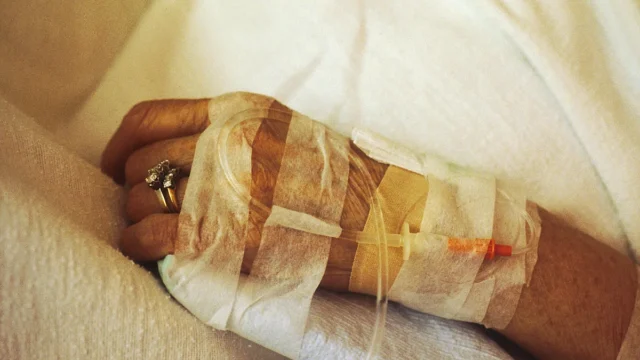
NPPA caps trade margins on 137 anti-cancer drugs: prices to fall up to 70% from 9 November
On 17 October 2026 the National Pharmaceutical Pricing Authority (NPPA) capped trade margins on 137 non-scheduled anti-cancer drugs at 30%, using its special public-interest power under Paragraph 19 of the Drugs (Prices Control) Order, 2013. The Government expects the retail price of these medicines to fall by up to 70%, and the new prices apply from 9 November 2026. The list includes costly immunotherapy drugs such as pembrolizumab and durvalumab.
UPSC angle: Prelims: NPPA, DPCO 2013 Para 19, trade margin, scheduled vs non-scheduled drugs. · Mains GS-II: affordable medicines and health equity.
18 Oct 2026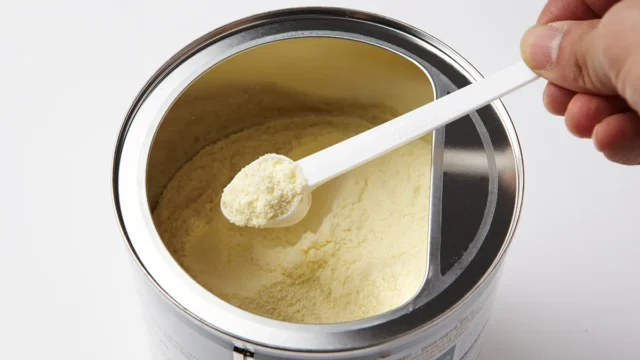
FSSAI draft: no added sucrose or fructose in foods for infants up to six months
On 17 October 2026 FSSAI explained a draft rule that would stop companies from adding sucrose (table sugar) or fructose (fruit sugar) to any product meant for babies up to six months old. The draft amends the Foods for Infant Nutrition Regulations, 2020, was published in the Gazette on 16 October, and is open for public comments for 60 days. The idea is simple: in the first six months a baby needs the right nutrients, not an early taste for sugar.
UPSC angle: Prelims: FSSAI, FSS Act 2006, infant nutrition regulations, IMS Act 1992. · Mains GS-II: child nutrition, preventive health and food regulation.
17 Oct 2026
FSSAI proposes residue limits for acetamiprid and imidacloprid in tea
On 17 October 2026 FSSAI explained draft limits for two insecticides in tea: 20 ppm for acetamiprid and 50 ppm for imidacloprid. The draft, published in the Gazette on 16 October, amends the rules on contaminants, toxins and residues. India’s proposed acetamiprid limit is lower than Japan’s 30 ppm and the USA’s 50 ppm.
UPSC angle: Prelims: MRL, neonicotinoids, Insecticides Act 1968, FSS Act 2006. · Mains GS-III: pesticide regulation and food safety.
17 Oct 2026Learn the concept
Question text as printed in the official UPSC question paper: https://www.upsc.gov.in/sites/default/files/QP-CSM-23-GENERAL-STUDIES-PAPER-I-180923.pdf The model answer is original Battle IAS work; use it to learn structure, not to memorise.