
UPSC Mains 2024 GS3 Q3: model answer
What were the factors responsible for the successful implementation of land reforms in some parts of the country? Elaborate.
What the question wants
Why land reforms worked in States like West Bengal, Kerala and J&K.
How to structure it
Intro: land reform components. Body: (1) political will; (2) peasant mobilisation; (3) accurate land records; (4) local institutions and legal design. Conclusion: lesson for current land record reforms.
- 1(1) political will
- 2(2) peasant mobilisation
- 3(3) accurate land records
- 4(4) local institutions and legal design
Model answer
Land reforms after 1947 aimed at abolishing zamindari, tenancy reform, ceilings and redistribution. Results were uneven; Kerala, West Bengal and Jammu and Kashmir stand out.
Factors behind success
- Political will: Kerala's Land Reforms (Amendment) Act, 1969 conferred ownership on tenants; J&K's Big Landed Estates Abolition Act, 1950 gave land to tillers without compensation.
- Peasant movements: organised tenants and agricultural workers in Kerala and Bengal pushed implementation.
- Record of rights: Operation Barga (1978) in West Bengal registered over a million sharecroppers, giving them secure tenure.
- Panchayat involvement: local bodies in Bengal helped identify beneficiaries.
- Few loopholes: less scope for benami transfers and fake partitions.
Elsewhere, weak records and landlord influence diluted laws. Digitised records under DILRMP can complete the unfinished agenda.
Keywords, cases and data to drop in
Operation Barga Kerala 1969 J&K 1950 record of rights DILRMP
Where most answers lose marks
- Talking only about failures.
Fresh examples from current affairs
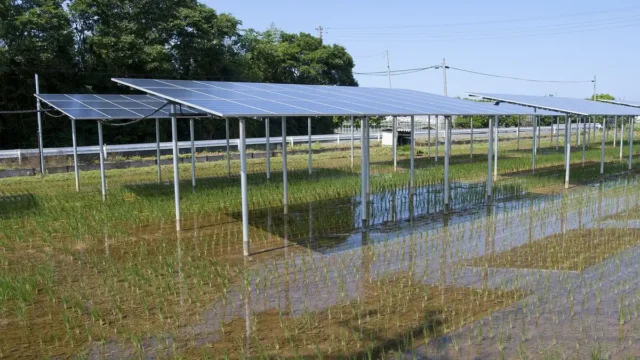
Agrivoltaics: Centre plans a scheme to push solar panels above farms; 5 GW seen in 3–4 years
MNRE Secretary Santosh Kumar Sarangi said on 19 October 2026 that the Centre is planning a central sector scheme to help States adopt agrivoltaics, either standalone or within PM-KUSUM 2.0. He expects capacity to cross 5 GW in three to four years if States notify feed-in tariffs. India hosts the 7th Agrivoltaics World Conference in New Delhi from 21 to 23 October.
UPSC angle: Prelims: agrivoltaics, PM-KUSUM components, feed-in tariffs. · Mains GS-III: energy transition and food security.
20 Oct 2026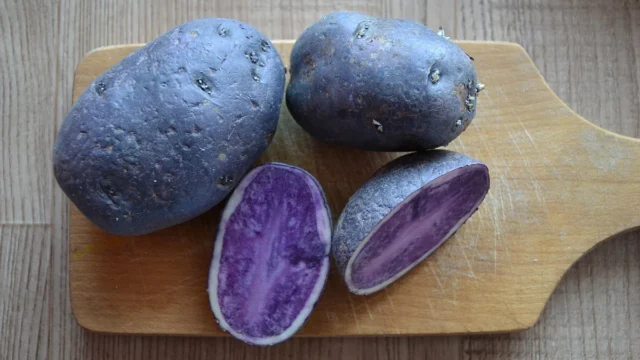
Kufri Jamunia: ICAR-CPRI’s purple potato to fight hidden hunger
A PIB backgrounder of 18 October 2026 puts the spotlight on Kufri Jamunia, a purple-fleshed potato bred by ICAR’s Central Potato Research Institute and released in 2024. It has nearly twice the Vitamin C of a common potato and several times more zinc and iron, along with antioxidants called anthocyanins. The idea is clever: instead of asking people to change what they eat, make the food they already eat more nutritious. That is biofortification.
UPSC angle: Prelims: Kufri Jamunia, CPRI, anthocyanins, biofortification vs fortification. · Mains GS-III: nutrition security; GS-II: hunger.
18 Oct 2026
Oil companies bar sugar-based ethanol for 2026-27; maize incentive cut to ₹2.79 a litre
The oil marketing companies have kept sugar out of India’s ethanol programme for the coming year. The tender issued on 16 October 2026 seeks about 11 billion litres of ethanol for the 2026-27 supply year, but asks for none made from sugarcane juice, sugar syrup or B-heavy molasses, because the Government wants sugar diversion for ethanol cut to zero. Grain must now carry the load, and even the maize incentive has been cut. Read this as a live example of the food-versus-fuel trade-off.
UPSC angle: Prelims: E20, NPB 2018, molasses grades, feedstocks. · Mains GS-III: energy security vs food security; farm incomes.
18 Oct 2026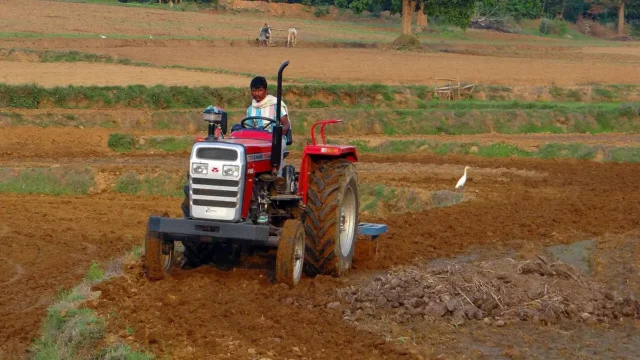
Khet Bachao Abhiyan: Centre reviews 22 October to 30 November farm campaign with States
On 17 October 2026 Union Agriculture Minister Shivraj Singh Chouhan reviewed preparations for the Khet Bachao Abhiyan with agriculture ministers of 11 States and UTs. The campaign runs from 22 October to 30 November 2026. About 4,150 teams of Krishi Vigyan Kendra and ATMA staff, with over 12,000 scientists and officials, plan around 1.5 lakh meetings with farmers on soil health, crop residue, balanced fertiliser use and key schemes.
UPSC angle: Prelims: Khet Bachao Abhiyan dates, KVK, ATMA, Soil Health Card. · Mains GS-III: agricultural extension and sustainable farming.
17 Oct 2026Learn the concept
Question text as printed in the official UPSC question paper: https://www.upsc.gov.in/sites/default/files/QP_CSM_2024_GenStud_III_03102024.pdf The model answer is original Battle IAS work; use it to learn structure, not to memorise.