
UPSC Mains 2025 GS3 Q13: model answer
Examine the factors responsible for depleting groundwater in India. What are the steps taken by the government to mitigate such depletion of groundwater ?
What the question wants
Causes of groundwater depletion and government responses.
How to structure it
Intro: India's dependence. Body: (1) Factors (free or flat-rate power, cropping pattern, weak law); (2) Government steps; (3) Gaps. Conclusion: Groundwater is a common resource used as private property.
- 1(1) Factors (free or flat-rate power, cropping pattern, weak law)
- 2(2) Government steps
- 3(3) Gaps
Model answer
India is the world's largest user of groundwater, drawing roughly a quarter of the global total. Groundwater supplies most rural drinking water and over 60% of irrigation. The Central Ground Water Board's assessments show over-exploited blocks concentrated in Punjab, Haryana, Rajasthan and parts of the south.
Factors
- Free or flat-rate power for farm pumps encourages unlimited pumping.
- Cropping pattern: paddy and sugarcane in dry regions, supported by MSP and procurement.
- Weak law: groundwater goes with land ownership (Easements Act, 1882), so anyone can drill.
- Urbanisation: paved surfaces cut recharge; cities like Bengaluru and Chennai depend on borewells.
- Loss of traditional storage: tanks, step-wells and wetlands encroached.
- Climate: erratic monsoon and hard-rock aquifers in peninsular India store little.
Government steps
- Atal Bhujal Yojana (2019): community-led management in seven States.
- Jal Shakti Abhiyan: Catch the Rain; Mission Amrit Sarovar ponds.
- National Aquifer Mapping (NAQUIM) and the Model Groundwater Bill.
- CGWA guidelines (2020) requiring no-objection certificates for industrial use.
- PMKSY 'Per Drop More Crop' for micro-irrigation; PM-KUSUM solar pumps with feeder separation.
- Punjab's Preservation of Subsoil Water Act (2009) delaying paddy transplanting.
- Crop diversification incentives in Haryana (Mera Pani Meri Virasat).
Gaps: power subsidies untouched, weak enforcement, MSP bias towards water-intensive crops.
Groundwater is a common resource used as private property. Pricing power sensibly, changing crops and community regulation together can reverse the decline.
Keywords, cases and data to drop in
over-exploited blocks free power Easements Act Atal Bhujal NAQUIM Amrit Sarovar PM-KUSUM
Where most answers lose marks
- Not linking depletion to power and crop policy.
Fresh examples from current affairs
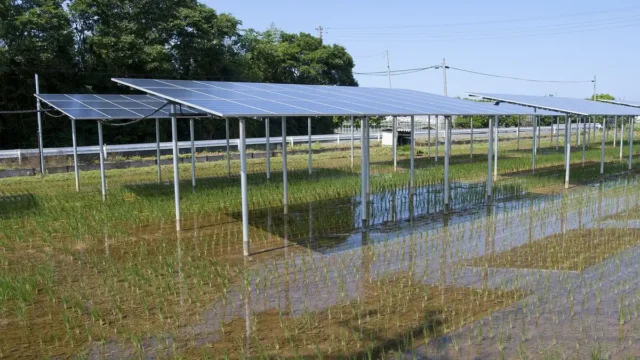
Agrivoltaics: Centre plans a scheme to push solar panels above farms; 5 GW seen in 3–4 years
MNRE Secretary Santosh Kumar Sarangi said on 19 October 2026 that the Centre is planning a central sector scheme to help States adopt agrivoltaics, either standalone or within PM-KUSUM 2.0. He expects capacity to cross 5 GW in three to four years if States notify feed-in tariffs. India hosts the 7th Agrivoltaics World Conference in New Delhi from 21 to 23 October.
UPSC angle: Prelims: agrivoltaics, PM-KUSUM components, feed-in tariffs. · Mains GS-III: energy transition and food security.
20 Oct 2026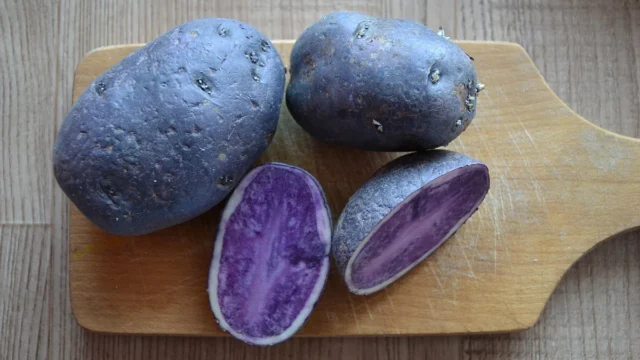
Kufri Jamunia: ICAR-CPRI’s purple potato to fight hidden hunger
A PIB backgrounder of 18 October 2026 puts the spotlight on Kufri Jamunia, a purple-fleshed potato bred by ICAR’s Central Potato Research Institute and released in 2024. It has nearly twice the Vitamin C of a common potato and several times more zinc and iron, along with antioxidants called anthocyanins. The idea is clever: instead of asking people to change what they eat, make the food they already eat more nutritious. That is biofortification.
UPSC angle: Prelims: Kufri Jamunia, CPRI, anthocyanins, biofortification vs fortification. · Mains GS-III: nutrition security; GS-II: hunger.
18 Oct 2026
Oil companies bar sugar-based ethanol for 2026-27; maize incentive cut to ₹2.79 a litre
The oil marketing companies have kept sugar out of India’s ethanol programme for the coming year. The tender issued on 16 October 2026 seeks about 11 billion litres of ethanol for the 2026-27 supply year, but asks for none made from sugarcane juice, sugar syrup or B-heavy molasses, because the Government wants sugar diversion for ethanol cut to zero. Grain must now carry the load, and even the maize incentive has been cut. Read this as a live example of the food-versus-fuel trade-off.
UPSC angle: Prelims: E20, NPB 2018, molasses grades, feedstocks. · Mains GS-III: energy security vs food security; farm incomes.
18 Oct 2026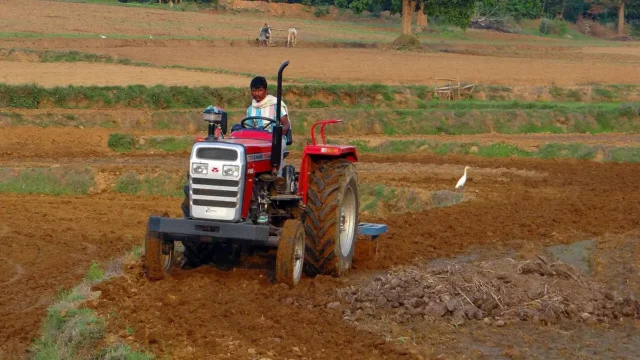
Khet Bachao Abhiyan: Centre reviews 22 October to 30 November farm campaign with States
On 17 October 2026 Union Agriculture Minister Shivraj Singh Chouhan reviewed preparations for the Khet Bachao Abhiyan with agriculture ministers of 11 States and UTs. The campaign runs from 22 October to 30 November 2026. About 4,150 teams of Krishi Vigyan Kendra and ATMA staff, with over 12,000 scientists and officials, plan around 1.5 lakh meetings with farmers on soil health, crop residue, balanced fertiliser use and key schemes.
UPSC angle: Prelims: Khet Bachao Abhiyan dates, KVK, ATMA, Soil Health Card. · Mains GS-III: agricultural extension and sustainable farming.
17 Oct 2026Learn the concept
Question text as printed in the official UPSC question paper: https://www.upsc.gov.in/sites/default/files/GENERAL-STUDIES-PAPER-III-QP-CSM-25-010925.pdf The model answer is original Battle IAS work; use it to learn structure, not to memorise.