
Chapter 18 · Topic 18.2 · Prelims + Mains2 of 3
Ancient Economy: Coins and inland trade
Key points
- Punch-marked silver coins (about 6th–5th century BCE) carried symbols, no names.
- Indo-Greeks added portraits and names; Kushans issued gold widely; Guptas issued the most gold dinaras.
- Uttarapatha: Taxila to Tamralipti; Dakshinapatha: Kaushambi and Ujjain to Paithan.
Prelims box: facts and traps
- Kahapana and nikkha: coins in Pali texts.
- Satavahanas: lead and potin coins; ship-type coins.
- Sarthavaha: caravan leader.
Coinage
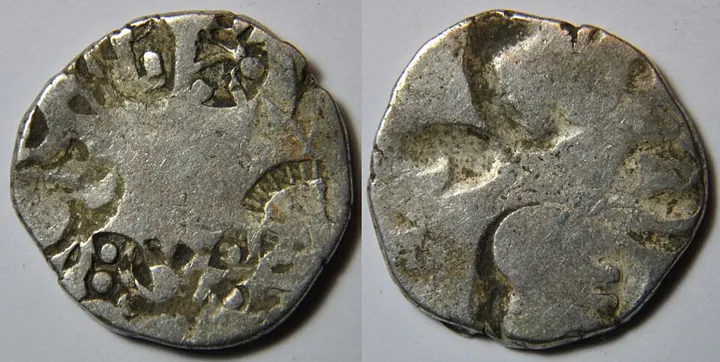
Coins show how much trade there was. Early Pali texts mention coins such as the kahapana and nikkha. The first coins we actually have are punch-marked: bits of silver (and some copper) stamped with symbols, from about the 6th–5th century BCE.
| Ruler or period | Coins |
|---|---|
| Punch-marked (Mahajanapadas, Mauryas) | Silver karshapana (pana) with symbols; no names |
| Indo-Greeks | Coins with the king’s portrait and name, in fine detail |
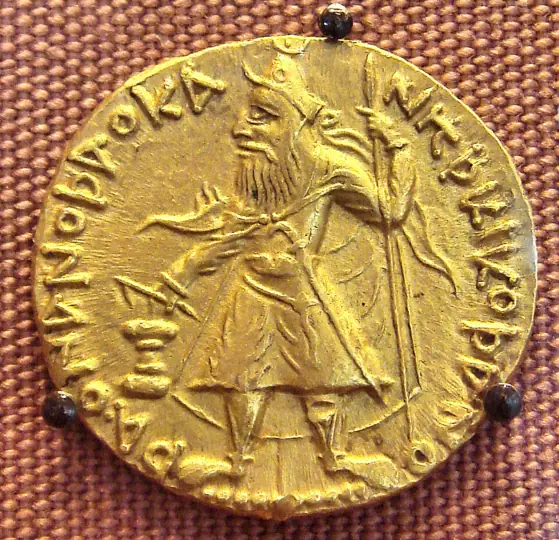
| Kushans | Gold coins on a large scale (from Vima Kadphises); Kanishka shows Greek, Persian and Indian gods |
| Satavahanas | Lead and potin coins; ship-type coins |
| Guptas | The most gold coins (dinara); later ones less pure |
| After the Guptas | Fewer coins; some historians see this as a sign of decline in trade |
Coins also help with dates and religion. Kushan coins show both the Buddha and Shiva, and Gupta coins show Lakshmi and Garuda.
What UPSC asks
Prelims: punch-marked, Indo-Greek, Kushan, Gupta coins. Mains: coins as sources. Next likely: new coin finds.
Trade routes inside India
Two great routes tied India together, like national highways. The Uttarapatha ran from Taxila along the Ganga plain to Pataliputra and on to Tamralipti on the Bengal coast. The Dakshinapatha ran south from Kaushambi and Ujjain to Pratishthana (Paithan) and the Deccan.
| Feature | Details |
|---|---|
| Rivers | The Ganga was a highway for boats; Pataliputra and Varanasi grew on it |
| Caravans | Led by a sarthavaha; Jataka stories describe caravans of hundreds of carts |
| Mauryan roads | A royal road with signposts, and a superintendent of trade |
| Towns | Second urbanisation: Rajagriha, Shravasti, Kaushambi, Ujjain, Mathura |
| Goods | Salt, metals, cloth, horses from the north-west, spices from the south |
What UPSC asks
Prelims: Uttarapatha, Dakshinapatha, sarthavaha. Mains: urbanisation. Next likely: heritage routes.
Mains box: analysis and answer points
- Coins as sources: dates, religion, economy.
- Urbanisation: second urbanisation towns on trade routes.
Practice
Write an answer
In 150 words, explain the significance of Ancient Economy with one recent example.
Flashcards (6)
Earliest coins found?
Punch-marked silver coins.
First coins with kings' portraits?
Indo-Greek.
Who issued gold on a large scale first?
The Kushans.
Gupta gold coin?
Dinara.
Northern trade route?
Uttarapatha.
Southern trade route?
Dakshinapatha.
Read more: related explainers
In the news
- 20 Oct 2026Sirpur in Chhattisgarh enters UNESCO’s Tentative List of World Heritage sites
- 15 Oct 2026PM inaugurates five Ladakh projects: Nimmu–Padum–Darcha road, Leh terminal, Hanu hydro
- 14 Oct 2026HAL, NCF and ASI sign MoA for Hampi, Taj Mahal and Bekal Fort
- 11 Oct 2026Birth anniversaries: Jayaprakash Narayan and Nanaji Deshmukh
 Next topic · 18.3 →Ancient Economy: Overseas trade
Syllabus: Prelims GS-I · History of India and Indian National Movement.