
Chapter 18 · Topic 18.3 · Prelims + Mains3 of 3
Ancient Economy: Overseas trade
Key points
- Monsoon sailing (tradition credits Hippalus) opened direct Red Sea–India trade from the 1st century BCE.
- Ports: Barygaza, Sopara, Muziris, Arikamedu, Puhar, Tamralipti.
- Exports: pepper, muslin, pearls, gems, ivory, indigo; imports: gold and silver coins, wine, glass, coral, tin, horses.
- Trade with Suvarnabhumi spread Indian culture east.
Prelims box: facts and traps
- Periplus of the Erythraean Sea: 1st century CE guide; Barygaza the greatest western port.
- Arikamedu: Roman amphorae and pottery.
- Pliny: India drained Rome of gold.
Overseas trade
From the 1st century BCE, Greek sailors used the monsoon winds (credited by tradition to Hippalus) to sail straight from the Red Sea to India. The monsoon works like a seasonal conveyor belt: in summer the wind blows from the south-west towards India, and in winter from the north-east back towards Arabia and Africa. Ships that once hugged the coast could now cross the open sea in weeks. Trade with Rome boomed. The Roman writer Pliny complained that India drained Rome of gold every year, putting the loss at no less than fifty million sesterces (Roman coins) a year.
A voyage, step by step
Pliny describes the timing. Ships left Egypt in midsummer and sailed down the Red Sea to its mouth. From there the south-west monsoon carried them across the Arabian Sea to the Indian coast in about forty days. Traders sold their goods, loaded pepper and cloth, and set off home in December or January, when the north-east wind turned to help them. So one round trip fitted neatly into a single year, and merchants planned their business around the winds, just as farmers plan around the rains.
The main ports
| Port | Where and what |
|---|---|
| Barygaza (Bharuch) | Gujarat; the greatest western port in the Periplus |
| Sopara | Konkan coast |
| Muziris | Kerala; pepper trade; possibly the site at Pattanam |
| Arikamedu | Near Puducherry; Roman pottery and amphorae found |
| Puhar (Kaveripattinam) | Chola port described in the Tamil epic Silappadikaram |
| Tamralipti | Bengal; gateway to Southeast Asia and Sri Lanka |
What went out and what came in
| Exports | Imports |
|---|---|
| Pepper, spices, fine cotton (muslin), pearls, gems, ivory, indigo | Gold and silver coins, wine, glass, coral, tin, horses |
Pepper was the star export. Romans used it in cooking and medicine, and it is often called ‘black gold’ even today. In return, India took mostly gold and silver, which is why Roman coins turn up in Indian soil today.
How we know
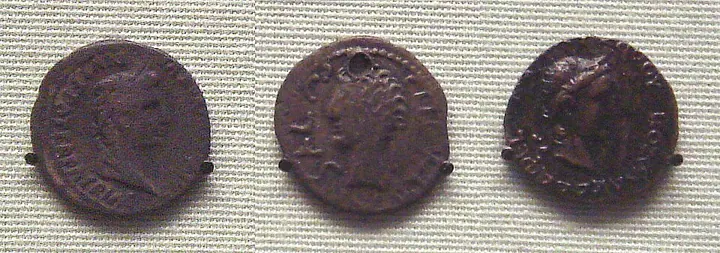
Hoards of Roman coins in south India prove the trade; many hold coins of the early emperors Augustus and Tiberius, when the trade was at its height. The Periplus of the Erythraean Sea (1st century CE), a Greek guidebook for sea traders, lists ports, goods and sailing seasons. At Arikamedu, digs found Roman amphorae (tall clay jars for wine and oil) and fine red Roman pottery. A papyrus (an old paper document) from Egypt records a loan for a cargo shipped from Muziris, and pottery with Tamil-Brahmi writing has been found at Berenike, a Red Sea port in Egypt.
Trade to the east
Trade with Southeast Asia (Suvarnabhumi, ‘land of gold’) spread Indian culture there. Ships from Tamralipti and the eastern coast carried cloth, beads and ideas across the Bay of Bengal. Over time, Indian scripts, Sanskrit words, Hindu and Buddhist faiths and temple styles took root in the region. That is the background to India’s Act East policy.
Why it faded
Roman trade declined after the 3rd century CE as the Roman empire faced troubles at home. Indian merchants then turned more towards Southeast Asia and China.
What UPSC asks
Prelims: Barygaza, Muziris, Arikamedu, Periplus. Mains: Indo-Roman trade. Next likely: Act East, maritime heritage.
Mains box: analysis and answer points
- Indo-Roman trade: monsoon, goods, gold, decline after the 3rd century CE.
- Likely next angle: Act East and maritime heritage.
Practice
Write an answer
In 150 words, explain the significance of Ancient Economy with one recent example.
Flashcards (4)
Who is credited with the monsoon route?
Hippalus.
Roman site near Puducherry?
Arikamedu.
Greatest western port in the Periplus?
Barygaza (Bharuch).
Who complained of the gold drain to India?
Pliny.
Read more: related explainers
In the news
- 20 Oct 2026Sirpur in Chhattisgarh enters UNESCO’s Tentative List of World Heritage sites
- 15 Oct 2026PM inaugurates five Ladakh projects: Nimmu–Padum–Darcha road, Leh terminal, Hanu hydro
- 14 Oct 2026HAL, NCF and ASI sign MoA for Hampi, Taj Mahal and Bekal Fort
- 11 Oct 2026Birth anniversaries: Jayaprakash Narayan and Nanaji Deshmukh
 Next chapter · 19. Ancient Society →Ancient Society: Varna, ashrama and marriage
Syllabus: Prelims GS-I · History of India and Indian National Movement.