
Chapter 5 · Topic 5.1 · Prelims + Mains1 of 3
Religious Movements: Jainism and Buddhism: Background and Jainism
Key points
- New faiths rose in the 6th century BCE against costly rituals, varna tensions and animal sacrifice, helped by new towns and traders.
- Mahavira (24th tirthankara): born Kundagrama, kevala jnana at 42, died at Pavapuri at 72; triratna, five vows, anekantavada.
- Jains split into Digambaras and Shvetambaras; canon written at Vallabhi (5th century CE) in Ardhamagadhi Prakrit.
Prelims box: facts and traps
- Prelims 2020: parivrajaka = wanderer, upasaka = lay follower; a shramana was not a priest.
- Six orthodox systems: Nyaya, Vaisheshika, Samkhya, Yoga, Mimamsa, Vedanta; Lokayata and Kapalika are not (Prelims 2014).
- Ajivikas: Makkhali Gosala, niyati (fate); Barabar caves.
- Four gatis: deva, manushya, tiryancha, naraki; Yaksha is not one (Prelims 2026).
- Sthanakvasi: a Jain (Shvetambara) sect (Prelims 2018).
- Jaina texts: Parishishtaparvan, Trishashtilakshana Mahapurana (Prelims 2022).
On this page (3 sections)
Why new faiths arose in the sixth century BCE
The sixth and fifth centuries BCE were a time of deep religious questioning in the middle Ganga plain (today’s Bihar and eastern Uttar Pradesh). Historians count dozens of new sects (religious groups) in this period. Jainism and Buddhism became the most important and lasting. Several changes came together to make this happen.
| Cause | What it meant |
|---|---|
| Reaction against Vedic ritual | Sacrifices had become long, costly and controlled by priests; many people wanted a simpler path |
| Varna tensions | Kshatriyas resented Brahmana claims to the top place; both Mahavira and the Buddha were Kshatriyas |
| A new farming economy | Iron-age farming needed cattle, so killing animals in sacrifices was resented; non-violence suited farmers |
| Rise of towns and traders | Vaishya merchants grew rich but had low ritual status; they became major patrons |
| Language | The new teachers preached in Prakrit and Pali, the people’s languages, not Sanskrit |
Many of the new teachers were wanderers who had left family life. Prelims 2020 tested three such terms. A parivrajaka is a renunciant (someone who gives up home and property) and wanderer, and an upasaka is a lay follower of Buddhism, meaning a believer who still lives at home. Those pairs are right. The pair Shramana, Priest with a high status, is wrong: a shramana was an ascetic, someone living a hard, simple life, who sought liberation outside the Vedic priesthood. The answer is 1 and 3 only (b).
With reference to the cultural history of India, consider the following pairs : 1. Parivrajaka — Renunciant and Wanderer 2. Shramana — Priest with a high status 3. Upasaka — Lay follower of Buddhism Which of the pairs given above are correctly matched ?
- 1 and 2 only
- 1 and 3 only
- 2 and 3 only
- 1, 2 and 3
Show answer
Answer: (b) · UPSC official key
Other sects of the time are worth knowing. The Ajivikas, led by Makkhali Gosala, believed in niyati (fate): everything is decided in advance, so effort changes nothing. Ashoka and his grandson Dasharatha gave the Barabar and Nagarjuni caves to them. The Lokayata or Charvaka school was materialist: it trusted only what the senses show, and denied rebirth and the authority of the Vedas. Prelims 2014 asked which pair does not form part of the six systems of Indian Philosophy. The six orthodox systems (those that accept the Vedas) are Nyaya, Vaisheshika, Samkhya, Yoga, Mimamsa and Vedanta, so the answer is Lokayata and Kapalika (c).
Which one of the following pairs does not form part of the six systems of Indian Philosophy?
- Mimamsa and Vedanta
- Nyaya and Vaisheshika
- Lokayata and Kapalika
- Sankhya and Yoga
Show answer
Answer: (c) · UPSC official key
What UPSC asks
Prelims: terms (2020); Ajivikas and Lokayata; six systems (2014). Mains: why new sects arose in the sixth century BCE. Next likely: the Barabar caves and other heritage sites in the news.
Mahavira and Jain teachings
Jains believe their faith was taught by 24 tirthankaras (‘ford-makers’, those who help people cross the river of life and death). The first was Rishabhadeva (Adinatha). The 23rd, Parshvanatha, taught four vows. The 24th, Vardhamana Mahavira, gave Jainism its historical shape. Tradition dates him to 599–527 BCE; many historians place him somewhat later.
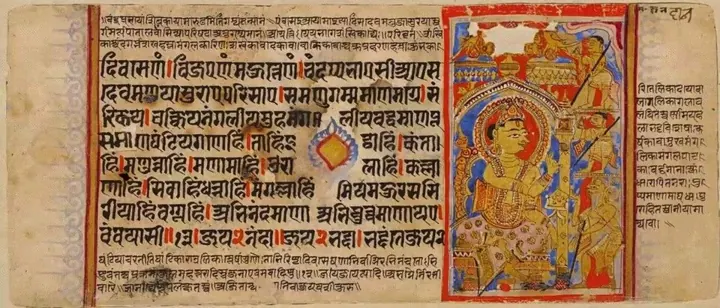
Mahavira was born at Kundagrama near Vaishali (Bihar) to Siddhartha, chief of the Jnatrika clan, and Trishala, a Lichchhavi princess. At 30 he left home. After 12 years of hard penance (self-punishment to purify the soul) he gained kevala jnana (supreme knowledge) at 42 under a sal tree near Jrimbhikagrama. He was then called Jina (‘conqueror’, one who has conquered his desires), and his followers became Jainas. Buddhist texts call him Nigantha Nataputta. He taught for about 30 years and died at Pavapuri near Rajgir at the age of 72.
| Teaching | Meaning |
|---|---|
| Triratna (three jewels) | Right faith, right knowledge, right conduct: the path to liberation |
| Five great vows | Ahimsa (non-violence), satya (truth), asteya (non-stealing), aparigraha (non-possession) and brahmacharya (chastity), the fifth added by Mahavira |
| Anekantavada and syadvada | Reality has many sides; every statement is true only from some point of view |
| Karma and liberation | Karma clings to the soul; penance and the vows free it, leading to moksha |
| Sallekhana | A vow of fasting unto death at the end of life |
Jains believe that every living thing, and even the smallest particle, has a soul (jiva). That is why Jain monks sweep the path before them, so as not to crush an ant. Prelims 2023 quoted this idea: Souls are not only the property of animal and plant life, but also of rocks, running water and many other natural objects. That belief is Jain (b). Prelims 2013 listed three statements: The surest way of annihilating Karma is to practice penance; every object, even the smallest particle, has a soul; and karma is the bane of the soul and must be ended. All three are Jain teachings, so the answer is 1, 2 and 3 (d).
“Souls are not only the property of animal and plant life, but also of rocks, running water and many other natural objects not looked on as living by other religious sects.” The above statement reflects one of the core beliefs of which one of the following religious sects of ancient India?
- Buddhism
- Jainism
- Shaivism
- Vaishnavism
Show answer
Answer: (b) · UPSC official key
Which of the following statements is/are applicable to Jain doctrine? 1. The surest way of annihilating Karma is to practice penance. 2. Every object, even the smallest particle has a soul. 3. Karma is the bane of the soul and must be ended. Select the correct answer using the codes given below.
- 1 only
- 2 and 3 only
- 1 and 3 only
- 1, 2 and 3
Show answer
Answer: (d) · UPSC official key
Prelims 2026 asked which is not among the four main forms of existence of life recognized in Jainism. The four forms (gatis) are deva (gods), manushya (humans), tiryancha (animals and plants) and naraki (hell-beings). Yaksha (demi-gods) is not one of them, so the answer is (b).
Among the four main forms of existence of life recognized in Jainism, which one of the following is not included ?
- Deva (gods)
- Yaksha (demi-gods)
- Manushya (humans)
- Tiryancha (animals and plants)
Show answer
Answer: (b) · UPSC provisional key (final key awaited)
What UPSC asks
Prelims: Jain teachings (2013, 2023); forms of life (2026). Mains: ahimsa and anekantavada in Indian thought. Next likely: court debates on sallekhana.
Jain councils, sects, texts and contribution
Two councils (big meetings of monks) shaped the Jain holy books. The first met at Pataliputra in about the third century BCE under Sthulabhadra. The second met at Vallabhi in Gujarat in the fifth century CE under Devarddhi Kshamashramana. There the canon, the Agamas including the 12 Angas, was finally written down in Ardhamagadhi Prakrit.
The great split followed a famine in Magadha. Tradition says Bhadrabahu led a group of monks south to Karnataka, with Chandragupta Maurya, who ended his life by sallekhana (fasting unto death) at Shravanabelagola. Those who stayed behind under Sthulabhadra began to wear white. In time the community split into the Digambaras (‘sky-clad’), whose monks wear nothing, and the Shvetambaras (‘white-clad’).
Smaller groups grew within each branch. Prelims 2018 asked which religion the Sthanakvasi sect belongs to. It is Jainism (b): the Sthanakvasis are a Shvetambara group that rejects image worship, as do the Terapanthis.
With reference to the religious practices in India, the “Sthanakvasi” sect belongs to
- Buddhism
- Jainism
- Vaishnavism
- Shaivism
Show answer
Answer: (b) · UPSC official key
Jain literature is vast, in Prakrit, Sanskrit, Apabhramsha, Kannada and Tamil. The Kalpasutra, credited to Bhadrabahu, tells the lives of the tirthankaras. Prelims 2022 listed four texts and asked: Which of the above are Jaina texts? The Parishishtaparvan of Hemachandra and the Trishashtilakshana Mahapurana, on the 63 great men of Jain tradition, are Jaina. The Nettipakarana and Avadanashataka are Buddhist. The answer is 2 and 4 only (b).
With reference to Indian history, consider the following texts : 1. Nettipakarana 2. Parishishtaparvan 3. Avadanashataka 4. Trishashtilakshana Mahapurana Which of the above are Jaina texts ?
- 1, 2 and 3
- 2 and 4 only
- 1, 3 and 4
- 2, 3 and 4
Show answer
Answer: (b) · UPSC official key
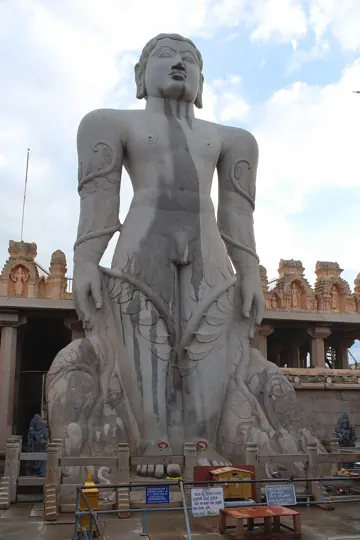
Jainism gave India more than a religion: early writing in regional languages, especially Kannada; a strong habit of non-violence and vegetarianism; support from merchant families; and great monuments such as the 57-foot Gommateshwara (Bahubali) statue at Shravanabelagola (about 983 CE), the Dilwara temples at Mount Abu and the temples of Palitana.
What UPSC asks
Prelims: sects (2018); Jaina texts (2022). Mains: Jain contribution to literature and art. Next likely: the Mahamastakabhisheka festival at Shravanabelagola.
Mains box: analysis and answer points
- Why heterodox sects arose: ritual cost, Kshatriya-Brahmana rivalry, farming needs cattle, rich Vaishyas, people's languages.
- Jain contribution: Kannada literature, ahimsa and vegetarianism, merchant patronage, Shravanabelagola, Dilwara, Palitana.
- Likely next angle: court debates on sallekhana.
Practice
Practice MCQs (8)
In the Pali Buddhist texts, Vardhamana Mahavira is mentioned under the name
Answer (a) & explanation
The Buddhist canon refers to Mahavira as Nigantha Nataputta. 'Nigantha' (Sanskrit nirgrantha, 'free from bonds') was the name of the ascetic order he led, and 'Nataputta' means the son of the Jnatrika (Pali Nata) clan. The Samannaphala Sutta lists him among the six famous teachers of the Buddha's time, along with Makkhali Gosala (Ajivika), Ajita Kesakambali (materialist), Pakudha Kachchayana, Purana Kassapa and Sanjaya Belatthiputta.
With reference to the vows in Jainism, consider the following statements:
1. Lay followers observe the five basic vows in a milder form called anuvratas.
2. Monks and nuns observe the same vows in their full form as mahavratas.
3. The vow of aparigraha means abstaining from stealing.
Which of the statements given above is/are correct?
Answer (b) & explanation
Statements 1 and 2 are correct. The five vows are ahimsa (non-violence), satya (truth), asteya (not stealing), brahmacharya (chastity) and aparigraha (non-possession). Monks and nuns take them in their absolute form as mahavratas, the 'great vows'; householders take them as anuvratas, the 'small vows', for example chastity as faithfulness within marriage and non-possession as a limit on wealth. Statement 3 is wrong: not stealing is asteya, while aparigraha means giving up attachment to possessions.
Consider the following events in the history of Jainism:
1. Lonka Shah's movement against image worship
2. The council at Pataliputra under Sthulabhadra
3. Hemachandra's composition of the Trishashti-shalaka-purusha-charita
4. The council at Valabhi under Devarddhi Kshamashramana
Which one of the following is the correct chronological order of the above events?
Answer (b) & explanation
The order is 2-4-3-1. The Pataliputra council met in the Mauryan period, around the late fourth or early third century BCE. The Valabhi council fixed the Shvetambara canon in writing in the fifth century CE (453 or 466 CE). Hemachandra (1089–1172) wrote the Trishashti- shalaka-purusha-charita in the twelfth century at the Chaulukya court of Gujarat. Lonka Shah of Ahmedabad began his movement against image worship in the fifteenth century; it gave rise to the Sthanakvasis.
The Second Buddhist Council at Vaishali, held about a century after the Buddha's death, was convened chiefly to
Answer (c) & explanation
The Second Council met at Vaishali because the Vajjian monks there had adopted ten practices (dasa vatthuni), the best known being the acceptance of gold and silver from lay people, which stricter monks regarded as breaches of the Vinaya. The council, held under Kalashoka, rejected the ten points. Tradition connects the aftermath with the first great division of the Sangha into the Sthaviravadins (elders) and the Mahasanghikas (the 'great community'). Mahayana and Hinayana emerged centuries later, and the Abhidhamma and missions belong to the Third Council.
Consider the following statements: Statement-I: Over the centuries, Jainism found its strongest lay support among trading and merchant communities. Statement-II: The strict Jaina rule of ahimsa discouraged occupations such as agriculture, which involve the killing of insects and other small creatures.
Which one of the following is correct in respect of the above statements?
Answer (a) & explanation
Both statements are correct, and Statement-II explains Statement-I. Since Jainism finds souls even in tiny creatures and in earth and water, ploughing and many crafts were seen as causing great himsa. RS Sharma notes that this rule made Jaina laymen avoid agriculture and turn to trade and commerce; Basham makes the same point. That is why Jaina laity, from the Shvetambara merchants of Gujarat and Rajasthan to the Digambara traders of the Deccan, were mostly mercantile, and their wealth funded temples, manuscripts and charities.
Consider the following pairs: Shvetambara text : Content
1. Acharanga Sutra : Rules of conduct for monks, with an account of Mahavira's austerities
2. Kalpasutra : Lives of the Jinas, recited during the Paryushana festival
3. Uttaradhyayana Sutra : Sermons and parables, traditionally Mahavira's last teaching
4. Sutrakritanga : Rules for the worship of images by lay people
Which of the pairs given above are correctly matched?
Answer (a) & explanation
Pairs 1, 2 and 3 are correct. The Acharanga, the first and oldest Anga, lays down monastic discipline, and one section describes Mahavira's ascetic wanderings. The Kalpasutra, attributed to Bhadrabahu, contains the lives of the Jinas, the list of elders and rules for the rainy season; it is read aloud during Paryushana. The Uttaradhyayana, a Mulasutra, collects sermons and parables. Pair 4 is wrong: the Sutrakritanga, the second Anga, refutes rival doctrines and guides young monks; it is not a manual of image worship.
The canon of the Shvetambara Jainas was finally written down in the fifth century CE at a council held at Valabhi in Gujarat. This council was presided over by
Answer (d) & explanation
The Valabhi council, dated by tradition to 980 or 993 years after Mahavira's nirvana (453 or 466 CE), was led by Devarddhi Kshamashramana. It fixed the Shvetambara canon (the Agamas) in writing, after centuries of oral transmission and two earlier attempts. Sthulabhadra had led the first council at Pataliputra in Mauryan times; Bhadrabahu is linked with the migration to the south; Kundakunda was a leading Digambara thinker, and the Digambaras do not accept the Valabhi canon at all.
Consider the following pairs: Jaina sub-sect : Description
1. Sthanakvasi : A Shvetambara group that rejects the worship of images
2. Shvetambara Terapanth : Founded by Acharya Bhikshu in the eighteenth century
3. Taranapanth : A Shvetambara group that began in Gujarat
How many of the pairs given above are correctly matched?
Answer (b) & explanation
Two pairs are correct. The Sthanakvasis grew out of the fifteenth-century reform of Lonka Shah of Ahmedabad, who found no sanction for image worship in the scriptures; they worship in halls (sthanakas), not temples. In 1760 Acharya Bhikshu, a monk who broke away from the Sthanakvasis, founded the Shvetambara Terapanth, which also rejects images and is led by a single acharya. Pair 3 is wrong: the Taranapanth was founded in central India (present Madhya Pradesh) by Taran Svami (15th–16th century) and comes from the Digambara side; it too rejects image worship.
0 / 0 correct
Write an answer
In 150 words, explain the significance of Religious Movements with one recent example.
Flashcards (10)
Who was the first tirthankara?
Rishabhadeva (Adinatha).
Which vow did Mahavira add to
Parshvanatha's four? Brahmacharya (chastity).
Where was Mahavira born and where did he
die? Kundagrama near Vaishali; Pavapuri.
What are the three jewels of Jainism?
Right faith, right knowledge, right conduct.
Four gatis of life in Jainism?
Deva, manushya, tiryancha and naraki.
Where was the Jain canon written down?
At the Vallabhi council, 5th century CE.
Which Jain sect rejects image worship?
Sthanakvasi (also Terapanthi).
Who wrote the Parishishtaparvan?
Hemachandra.
Who led Jain monks south during the
famine? Bhadrabahu.
Where did the Buddha die?
Kushinagar.
Read more: related explainers
In the news
- 20 Oct 2026Sirpur in Chhattisgarh enters UNESCO’s Tentative List of World Heritage sites
- 15 Oct 2026PM inaugurates five Ladakh projects: Nimmu–Padum–Darcha road, Leh terminal, Hanu hydro
- 14 Oct 2026HAL, NCF and ASI sign MoA for Hampi, Taj Mahal and Bekal Fort
- 11 Oct 2026Birth anniversaries: Jayaprakash Narayan and Nanaji Deshmukh
 Next topic · 5.2 →Religious Movements: Jainism and Buddhism: The Buddha, councils and schools
Syllabus: Prelims GS-I · History of India and Indian National Movement.