
Chapter 4 · Topic 4.2 · Prelims + Mains2 of 2
Vedic Civilization: Later Vedic, iron and kingdoms
Key points
- Later Vedic (about 1000–600 BCE): move to the Ganga-Yamuna doab, iron from about 1000 BCE, rice farming, PGW pottery.
- Kings grew strong with rajasuya, ashvamedha and vajapeya; four varnas hardened; gotra appeared; women left the sabha.
- Jana became janapada and then mahajanapada; NBPW marks the second urbanisation; Upanishads questioned ritual.
1 PYQ 2015–2024
Prelims box: facts and traps
- Iron: shyama or krishna ayas ('dark metal').
- Kshetra-patni: from the Atharvaveda (Prelims 2026).
- PGW sites: Hastinapur, Ahichchhatra, Atranjikhera.
- Trap: even Later Vedic kings had no standing army.
- Top god: Prajapati, the creator.
The Later Vedic period: what changed
In the Later Vedic period (about 1000–600 BCE) the centre of Vedic life moved east, from Punjab to the Ganga-Yamuna doab (the land between the two rivers), home of the Kurus and Panchalas, and then to Kosala, Kashi and Videha. Our sources are the Samaveda, Yajurveda, Atharvaveda, the Brahmanas, Aranyakas and early Upanishads, plus archaeology, especially Painted Grey Ware (PGW) sites such as Hastinapur, Ahichchhatra and Atranjikhera.
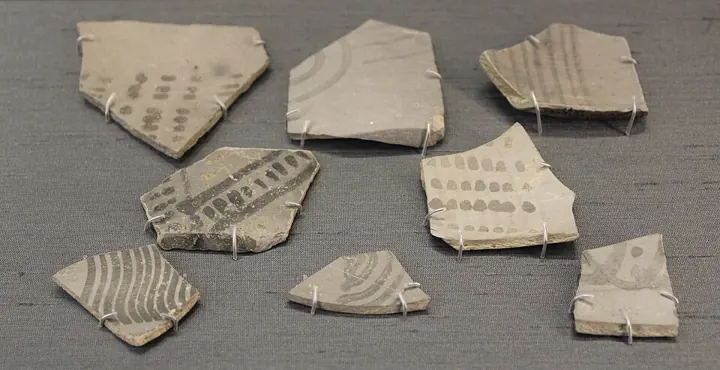
Iron came into use from about 1000 BCE; the texts call it shyama or krishna ayas, ‘dark metal’. Iron tools helped clear the forests of the Ganga plain, though historians debate how fast. Farming became the main job: rice (vrihi), wheat and barley were grown, and many oxen pulled the plough. Crafts multiplied and villages became permanent.
| Aspect | Early Vedic (Rigvedic) | Later Vedic |
|---|---|---|
| Region | Sapta Sindhu (Punjab) | Ganga-Yamuna doab and the east |
| Economy | Pastoral; cattle as wealth | Settled farming; rice and iron |
| Polity | Tribal chief; strong assemblies | Territorial kings; assemblies weaken; vidatha disappears |
| Rituals | Simple yajnas | Rajasuya, Ashvamedha, Vajapeya |
| Society | Varnas fluid | Four varnas hardened; gotra; ashramas |
| Women | Attend assemblies | Excluded from the sabha; lower status |
| Gods | Indra, Agni, Varuna | Prajapati, Vishnu, Rudra |
Kings grew stronger. They held grand sacrifices to show off their power: the rajasuya (crowning ceremony), the ashvamedha (horse sacrifice: the king claimed all the land where his horse roamed freely) and the vajapeya (a chariot race the king had to win). Officials called ratnins helped them, and bali became a regular tax. Still, kings had no standing army, a permanent paid force; men of the tribe were called up when war came. Prajapati, the creator, now became the top god. Society was split into four varnas, Brahmana, Kshatriya, Vaishya and Shudra, with the Shudras at the bottom. Gotra (descent from a common ancestor) appeared, with the rule of marrying outside one’s gotra. Women lost ground: they were kept out of the sabha.
Prelims 2026 asked in which text the term kshetra-patni (‘mistress of the field’) originates. The answer is the Atharvaveda (b), the Veda of everyday hopes and charms.
In which one among the following texts does the term kshetra-patni (‘mistress of the field’) originate ?
- Rigveda
- Atharvaveda
- Ashtadhyayi
- Arthashastra
Show answer
Answer: (b) · UPSC provisional key (final key awaited)
Mains 2024 asked candidates to underline the changes in the field of society and economy from the Rig Vedic to the later Vedic period. Write it as a comparison, not two separate descriptions: herding to farming, copper to iron, tribe to territory, flexible to rigid varna, and a fall in women’s status. End with the result: the surplus (extra food) that supported kingdoms and, later, towns.
Underline the changes in the field of society and economy from the Rig Vedic to the later Vedic period.
What UPSC asks
Prelims: term and text pairs (2026); rituals; iron. Mains: changes from Rig Vedic to Later Vedic (2024). Next likely: PGW digs in the doab.
Iron, kingdoms and the road to cities
Political change followed economic change. The Rigvedic jana was a people. In the Later Vedic age it settled on land, and the territory itself came to be called a janapada (‘foothold of the tribe’). Rulers took grand titles such as samrat and ekarat (‘sole ruler’). Kuru and Panchala led early on; later, Kosala, Kashi and Videha rose further east, and Janaka of Videha is remembered for hosting Upanishadic debates.
By the sixth century BCE these kingdoms had grown into the sixteen mahajanapadas (‘great janapadas’), and cities rose again in the Ganga plain, more than a thousand years after the Harappans. Historians call this the second urbanisation (the Harappan cities were the first). Iron tools, rice surpluses, trade routes and later punch-marked coins made it possible. Its pottery marker is Northern Black Polished Ware (NBPW), a glossy, high-quality ware that came after PGW.
The Upanishads mark a turning point in thought. They questioned costly sacrifices and asked about the self (atman), the ultimate reality (brahman), karma (every action has a result) and rebirth. These ideas, and the reaction against priests’ rituals, set the stage for Buddhism and Jainism.
Mains 2023 asked: What are the main features of Vedic society and religion? Do you think some of the features are still prevailing in Indian society? Describe kinship, varna, gotra, the ashramas (stages of life), yajna, nature gods, rita and the Upanishadic ideas, then show what continues: fire as witness in marriage, gotra rules, the Gayatri mantra, Sanskrit rituals, the ideas of karma and dharma, and caste, which the Constitution now opposes.
What are the main features of Vedic society and religion? Do you think some of the features are still prevailing in Indian society?
What UPSC asks
Prelims: janapada, NBPW, second urbanisation. Mains: Vedic features still alive today (2023).
Mains box: analysis and answer points
- Rigvedic to Later Vedic: herding to farming, copper to iron, tribe to territory, flexible to rigid varna, women's status down.
- Still alive today: fire as witness in marriage, gotra rules, Gayatri mantra, karma and dharma, caste.
- Asked: Mains 2024 (GS Paper I, 10 marks) on changes in society and economy; Mains 2023 (GS Paper I, 15 marks) on Vedic features still prevailing.
Practice
Practice MCQs (16)
With reference to the Kurus and Panchalas of the later Vedic period, consider the following statements:
1. The Kurus were formed by the union of the Bharatas and the Purus.
2. The Panchalas were settled mainly in present-day Bihar.
3. Tradition makes Hastinapura the seat of the Kurus.
Which of the statements given above is/are correct?
Answer (d) & explanation
R.S. Sharma writes that the Bharatas and Purus, two major Rigvedic tribes, combined to form the ruling Kuru people. The Kurus held Delhi and the upper doab, with their capital at Hastinapura, while the Panchalas occupied the area of the present Bareilly, Badaun and Farrukhabad districts of western Uttar Pradesh. The two together came to dominate the later Vedic heartland. Statement 2 is wrong.
The term 'rashtra', which indicates a territory, first appears in
Answer (a) & explanation
R.S. Sharma notes that the term rashtra, which indicates territory, first appears in the later Vedic period. This marks the move from loyalty to the tribe (jana) towards loyalty to a territory, as tribes such as the Kurus and Panchalas settled in the Ganga-Yamuna doab. In the Rigveda the people are organised as jana, and Harappan seals remain undeciphered.
With reference to the economy of the later Vedic period, consider the following statements:
1. Agriculture became the chief means of livelihood.
2. Ancient legends say that Janaka, the king of Videha, himself put his hand to the plough.
3. Metallic coins were in regular use for trade.
Which of the statements given above is/are correct?
Answer (a) & explanation
R.S. Sharma notes that agriculture was the chief means of livelihood of the later Vedic people; the Shatapatha Brahmana speaks at length about ploughing rituals, and according to legend Janaka, king of Videha, lent his hand to the plough (Sita's name means 'furrow'). But there were no regular coins: units such as the nishka and shatamana were ornaments or measures of value, and punch-marked coins appear only around the sixth-fifth century BCE. Statement 3 is wrong.
With reference to the polity of the later Vedic period, consider the following statements:
1. The vidatha, an assembly of the Rigvedic period, had disappeared.
2. Women were no longer permitted to sit in the sabha.
3. The king maintained a large standing army paid from regular taxes.
Which of the statements given above is/are correct?
Answer (c) & explanation
R.S. Sharma notes that the popular assemblies lost importance as royal power grew. The vidatha completely disappeared, and the sabha and samiti survived but changed: women were no longer permitted to sit in the sabha, which was now dominated by nobles and brahmanas. Yet even in this period the king had no standing army; tribal units were mustered in times of war. Statement 3 is wrong.
The institution of 'gotra', which became important in later Vedic times as the basis of exogamous marriage, takes its name from a word that literally means
Answer (b) & explanation
R.S. Sharma explains that gotra literally means a cow-pen, the enclosure where the cattle of a whole kin group were kept. In later Vedic times it came to signify descent from a common ancestor, and marriage between people of the same gotra was not allowed: the rule of gotra exogamy. The name itself preserves the memory of the cattle-based Rigvedic economy.
With reference to worship in the Rigvedic period, consider the following statements:
1. The gods were worshipped mainly through prayers and the offering of sacrifices.
2. Temples and images of the gods were central to worship.
3. Worshippers asked the gods mainly for material benefits such as offspring, cattle and food.
Which of the statements given above is/are correct?
Answer (a) & explanation
R.S. Sharma writes that the dominant mode of worshipping the gods was the recitation of prayers and the offering of sacrifices; both collective and individual prayers were made. The people did not worship the gods for their spiritual uplift or to end misery; they asked mainly for praja (children), pashu (cattle), food, wealth and health. There were no temples or idols in the Vedic period, so statement 2 is wrong.
With reference to the varna order in the later Vedic period, consider the following statements:
1. The upanayana (sacred thread) ceremony was not open to the shudras.
2. The Aitareya Brahmana describes the vaishya as one who pays tribute to another.
3. Some artisans, such as the rathakara (chariot-maker), were entitled to the upanayana.
Which of the statements given above is/are correct?
Answer (d) & explanation
R.S. Sharma shows that in the later Vedic period the three higher varnas were entitled to the upanayana, while the shudras were excluded. The Aitareya Brahmana describes the vaishya as tributary to another, to be lived upon by another, a sign that the vaishyas were now the main taxpayers. Yet some artisans such as the rathakara enjoyed high status and were entitled to the sacred thread. All three statements are correct.
The Shatapatha Brahmana lists the 'ratnins', the 'jewels' of the king, at whose houses offerings were made during the royal consecration. Consider the following pairs: Ratnin : Role
1. Senani : Commander of the army
2. Mahishi : Chief queen
3. Palagala : Messenger
4. Suta : Treasurer
How many of the pairs given above are correctly matched?
Answer (c) & explanation
During the Rajasuya the king visited the houses of the ratnins, the high functionaries of the realm, and made offerings there. The list in the Shatapatha Brahmana includes the purohita, the senani (army commander), the mahishi (chief queen), the gramani, the suta, the bhagadugha (collector of the king's share), the akshavapa and the palagala (courier or messenger). The suta was the charioteer and herald, not the treasurer, so pair 4 is wrong.
In the Rigvedic period, 'bali' was
Answer (d) & explanation
R.S. Sharma explains that the Rigvedic chief received bali, a voluntary offering from his people, and a share of the booty won in war. There was no regular system of taxation. In the later Vedic period the bali became a compulsory payment, collected by the bhagadugha, and the one-sixth share appears only in the later Dharmashastra tradition. The priest's fee was called dakshina.
Which one of the following ideas is NOT associated with the early Upanishads?
Answer (d) & explanation
The early Upanishads teach that the self (atman) is one with brahman, that knowledge rather than ritual leads to liberation (moksha), and that deeds (karma) decide rebirth. Image worship in temples belongs to a much later age: there were no temples or images in the Vedic period, and temple-based devotion developed in the post-Vedic and Gupta periods.
Consider the following statements: Statement-I: The Rigveda uses the term 'gavishti', literally 'search for cows', for war. Statement-II: Cattle were the chief form of wealth among the Rigvedic people.
Which one of the following is correct in respect of the above statements?
Answer (a) & explanation
R.S. Sharma points out that the Rigvedic word for war is gavishti, 'search for cows', because many conflicts were fought over cattle. The reason is economic: the Rigvedic people were mainly pastoral, cattle were their chief form of wealth, a rich man was gomat (possessor of cows) and gifts to priests were counted in cows. Statement-II therefore explains Statement-I.
With reference to the economy of the Rigvedic people, consider the following statements:
1. Yava (barley) was the principal cereal they knew.
2. Vrihi (rice) is frequently mentioned in the Rigveda.
3. Cattle were the main measure of wealth, and gifts to priests were often made in cows.
Which of the statements given above is/are correct?
Answer (c) & explanation
The Rigvedic people were mainly pastoral, though they practised some farming. The cereal they knew best was yava, a word that seems to have covered barley and grain in general. Rice (vrihi) does not appear in the Rigveda; it is mentioned in the later Vedic texts, when settlement moved into the wetter Ganga plain. Wealth was counted in cattle, and the dana-stutis praise chiefs for gifts of cows. Statement 2 is wrong.
A Rigvedic verse says: 'I am a poet, my father is a physician, and my mother grinds corn.' Historians cite it mainly to show that in the Rigvedic period
Answer (a) & explanation
The verse comes from the ninth mandala (IX.112). R.S. Sharma uses it to show that varna divisions were not yet hereditary or rigid: members of one family could follow quite different callings. Rigvedic society was essentially tribal and largely egalitarian, and the fourfold order appears only in the late Purusha Sukta; birth-based occupations hardened in the later Vedic period.
Consider the following statements about officers and leaders in the Rigvedic period:
1. The vrajapati had authority over the pasture ground.
2. The kulapa was the head of a family.
3. The gramani was the leader of a fighting unit or village.
4. The senani was the chief priest of the tribe.
How many of the statements given above are correct?
Answer (c) & explanation
R.S. Sharma describes a simple tribal administration. The vrajapati held authority over the pasture ground and led the heads of families, the kulapas, or the heads of fighting units, the gramanis, into battle; in time the gramani became the village headman. The two officials closest to the chief were the purohita (priest) and the senani, who was the commander of the army, not a priest. Statement 4 is wrong.
Consider the following statements about religion in the later Vedic period:
1. Prajapati, the creator, came to occupy the supreme position.
2. Indra and Agni lost the importance they had in the Rigveda.
3. Pushan, who looked after cattle, came to be regarded as the god of the brahmanas.
4. Rudra lost all importance as a deity.
How many of the statements given above are correct?
Answer (b) & explanation
R.S. Sharma notes that the two great Rigvedic gods, Indra and Agni, lost their former importance in the later Vedic period, while Prajapati, the creator, rose to the supreme position. Rudra, the god of animals, became important (he is the forerunner of Shiva), and Vishnu came to be seen as the preserver. Pushan, who looked after cattle, came to be regarded as the god of the shudras, not the brahmanas. Statements 3 and 4 are wrong.
Which Upanishad forms the fortieth and last chapter of the Vajasaneyi Samhita of the Shukla Yajurveda?
Answer (d) & explanation
The Isha (Ishavasya) Upanishad, which opens with 'isha vasyam idam sarvam' ('all this is to be dwelt in by the Lord'), is the 40th chapter of the Vajasaneyi Samhita. It is therefore unusual: most Upanishads are attached to a Brahmana or an Aranyaka, but this one is part of a Samhita itself. The Kena belongs to the Samaveda, the Katha to the Krishna Yajurveda and the Mundaka to the Atharvaveda.
0 / 0 correct
Mains PYQs on this topic (1)
Write an answer
In 150 words, explain the significance of Vedic Civilization with one recent example.
Flashcards (5)
Vedic name for iron?
Shyama or krishna ayas.
Pottery of Later Vedic sites?
Painted Grey Ware.
Which text gives the term kshetra-patni?
The Atharvaveda.
Pottery of the second urbanisation?
Northern Black Polished Ware.
What does janapada mean?
'Foothold of the tribe': its territory.
Read more: related explainers
In the news
- 20 Oct 2026Sirpur in Chhattisgarh enters UNESCO’s Tentative List of World Heritage sites
- 15 Oct 2026PM inaugurates five Ladakh projects: Nimmu–Padum–Darcha road, Leh terminal, Hanu hydro
- 14 Oct 2026HAL, NCF and ASI sign MoA for Hampi, Taj Mahal and Bekal Fort
- 11 Oct 2026Birth anniversaries: Jayaprakash Narayan and Nanaji Deshmukh
 Next chapter · 5. Religious Movements: Jainism and Buddhism →Religious Movements: Jainism and Buddhism: Background and Jainism
Syllabus: Prelims GS-I · History of India and Indian National Movement.