
Chapter 11 · Topic 11.1 · Prelims + Mains1 of 3
Infrastructure: Transport
Key points
- Roads.
- Railways.
- Ports and waterways.
- Logistics.
10 PYQs 2017–2026
Prelims box: facts and traps
| Point | Detail |
|---|---|
| Network | National Highways (NHAI, MoRTH), State highways, district and rural roads |
| Bharatmala Pariyojana (2017) | Economic corridors, inter-corridor and feeder routes, border and coastal roads, expressways |
| PMGSY (2000) | All-weather roads to unconnected rural habitations |
| Financing | EPC, HAM, BOT-toll; asset monetisation through TOT and InvITs |
| FASTag | Electronic toll collection, mandatory since 2021. |
- Sagarmala aims at port-led growth through cost-effective coastal logistics: moving more cargo by coast and river cuts road congestion, fuel use and freight costs.
- The IWAI was set up in 1986 under the Inland Waterways Authority of India Act, 1985 and works under the Ministry of Ports, Shipping and Waterways, with its headquarters at Noida.
- The Major Port Authorities Act, 2021 replaced the Major Port Trusts Act, 1963 and turned port trusts into port authorities with smaller, professional boards.
- Trap: “The Inland Vessels Act, 2025” is wrong. The law on inland vessels is the Inland Vessels Act, 2021, which had already replaced the Inland Vessels Act of 1917; there was no 2025 Act of that name.
- Trap: “Major Port Authorities Act also governs the non-major ports administered by State Maritime Boards” is wrong. The Act applies only to major ports, which are a Union subject; non-major ports are governed by State laws and State Maritime Boards (and, since 2025, by the Indian Ports Act framework).
On this page (3 sections)
Roads
| Point | Detail |
|---|---|
| Network | National Highways (NHAI, MoRTH), State highways, district and rural roads |
| Bharatmala Pariyojana (2017) | Economic corridors, inter-corridor and feeder routes, border and coastal roads, expressways |
| PMGSY (2000) | All-weather roads to unconnected rural habitations |
| Financing | EPC, HAM, BOT-toll; asset monetisation through TOT and InvITs |
| FASTag | Electronic toll collection, mandatory since 2021 |
Mains 2021: Investment in infrastructure is essential for more rapid and inclusive economic growth. Mains 2021 Infrastructure has a high multiplier, crowds in private investment, cuts logistics costs and links lagging regions to markets.
“Investment in infrastructure is essential for more rapid and inclusive economic growth.” Discuss in the light of India’s experience.
Railways
| Point | Detail |
|---|---|
| Budget | Rail Budget merged with the Union Budget from 2017-18 |
| Dedicated Freight Corridors | Eastern (Ludhiana–Sonnagar) and Western (Dadri–JNPT); run by DFCCIL |
| Modernisation | Vande Bharat trains, Kavach anti-collision system, station redevelopment (Amrit Bharat Stations) |
| High-speed rail | Mumbai–Ahmedabad bullet train (NHSRCL, Japanese assistance) |
| Electrification | Mission to electrify the broad-gauge network |
Mains 2022: Why is Public Private Partnership (PPP) required in infrastructural projects? Mains 2022 Railway station redevelopment uses PPP to bring in private capital and commercial skills, though early bids saw weak interest.
Why is Public Private Partnership (PPP) required in infrastructural projects? Examine the role of PPP model in the redevelopment of Railway Stations in India.
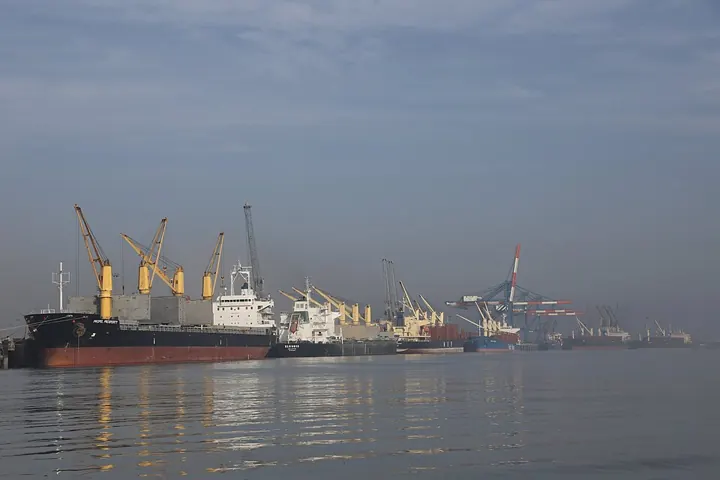
Ports and inland waterways
| Point | Detail |
|---|---|
| Ports | Major ports (Centre; Major Port Authorities Act, 2021) and non-major ports (States) |
| Sagarmala (2015) | Port-led development: modernisation, connectivity, port-led industrialisation, coastal communities |
| Waterways | National Waterways Act, 2016 declared 111 national waterways; NW-1 is the Ganga (Haldia–Prayagraj) |
| Regulator | Inland Waterways Authority of India (IWAI) |
| Projects | Jal Marg Vikas (NW-1); Vadhavan port; Great Nicobar transhipment port |
Sagarmala aims at port-led growth through cost-effective coastal logistics: moving more cargo by coast and river cuts road congestion, fuel use and freight costs.
Mains box: analysis and answer points
- Likely next angle: HAM
- Asked: Mains 2021 (GS Paper III, 15 marks): Investment in infrastructure is essential for more rapid and inclusive economic growth. Discuss in the light of India’s experience.
- Asked: Mains 2022 (GS Paper III, 10 marks): Why is Public Private Partnership (PPP) required in infrastructural projects? Examine the role of PPP model in the redevelopment of Railway Stations in India.
Practice
Practice MCQs (8)
The Inland Waterways Authority of India (IWAI) is
Answer (a) & explanation
The IWAI was set up in 1986 under the Inland Waterways Authority of India Act, 1985 and works under the Ministry of Ports, Shipping and Waterways, with its headquarters at Noida. It develops and regulates national waterways for shipping and navigation: fairway depth, terminals, navigation aids and vessel services. The Ministry of Jal Shakti and the Central Water Commission handle water resources such as irrigation, floods and dams, not navigation.
Consider the following statements about the merger of the Railway Budget with the Union Budget:
1. The separate Railway Budget was merged with the Union Budget from 2017-18.
2. After the merger, Indian Railways no longer pays a dividend to the general revenues on the capital provided by the Government.
3. After the merger, Indian Railways was converted into a statutory corporation.
Which of the statements given above is/are correct?
Answer (c) & explanation
Statements 1 and 2 are correct. A separate Railway Budget had been presented since 1924, following the Acworth Committee. The Government merged it with the Union Budget from 2017-18, as recommended by a NITI Aayog committee (Bibek Debroy and Kishore Desai). With the merger, the Railways' annual dividend liability to general revenues was abolished and the Ministry of Finance now meets its gross budgetary support. Statement 3 is wrong: Indian Railways remains a departmentally run commercial undertaking of the Government; it was not corporatised, and its accounts and functional autonomy continue as before.
Consider the following statements: Statement-I: The Government is promoting coastal shipping and inland water transport as a way to lower India's logistics costs. Statement-II: For bulk cargo, the cost of moving one tonne over one kilometre by water is generally lower than by road.
Which one of the following is correct in respect of the above statements?
Answer (a) & explanation
Both statements are correct, and Statement-II explains Statement-I. A vessel or barge carries far more cargo per unit of fuel than a truck, so water transport has the lowest cost per tonne-km for bulk goods such as coal, cement, fertiliser and steel, followed by rail and then road. India's freight is heavily tilted towards road, which raises logistics costs; so Sagarmala, the Coastal Shipping Act, 2025 and inland waterway projects try to shift bulk cargo to water. The lower unit cost is the reason for the push.
With reference to the Major Port Authorities Act, 2021, consider the following statements:
1. It replaced the Major Port Trusts Act, 1963.
2. It allows the Board of each Major Port Authority to fix its own scale of rates, ending the tariff- setting role of the Tariff Authority for Major Ports.
3. It also governs the non-major ports administered by State Maritime Boards.
Which of the statements given above is/are correct?
Answer (a) & explanation
Statements 1 and 2 are correct. The Major Port Authorities Act, 2021 replaced the Major Port Trusts Act, 1963 and turned port trusts into port authorities with smaller, professional boards. The Board of each authority can now fix the scale of rates for its services, and the Tariff Authority for Major Ports (TAMP) lost its tariff role; an Adjudicatory Board deals with disputes, including PPP concession disputes. Statement 3 is wrong: the Act applies only to major ports, which are a Union subject; non-major ports are governed by State laws and State Maritime Boards (and, since 2025, by the Indian Ports Act framework).
Consider the following statements about national waterways in India:
1. National Waterway-1 runs on the Ganga–Bhagirathi–Hooghly river system between Haldia and Prayagraj.
2. National Waterway-2 runs on the Brahmaputra between Dhubri and Sadiya.
3. The National Waterways Act, 2016 declared 106 new national waterways, taking the total to 111.
Which of the statements given above is/are correct?
Answer (d) & explanation
All three statements are correct. NW-1 (Ganga–Bhagirathi–Hooghly, Haldia to Prayagraj, about 1,620 km) and NW-2 (Brahmaputra, Dhubri to Sadiya, about 891 km) are the two oldest and longest national waterways; NW-3 is the West Coast Canal in Kerala. The National Waterways Act, 2016 added 106 new waterways to the five that already existed, making 111. Only some of these are commercially navigable today; the IWAI develops them in phases based on feasibility studies.
The Jal Marg Vikas Project, implemented with technical and financial support from the World Bank, aims to improve navigation on which one of the following?
Answer (a) & explanation
The Jal Marg Vikas Project of the IWAI aims to build capacity for commercial navigation on the Haldia–Varanasi stretch of NW-1 (Ganga), with World Bank support. Its works include multimodal terminals at Varanasi, Sahibganj and Haldia, a new navigation lock at Farakka, fairway development to keep a minimum depth, and river information systems. It lets large barges carry bulk cargo along the Ganga and connect with the Indo-Bangladesh Protocol route. The other waterways are developed under separate IWAI plans.
With reference to the constitutional position of ports and waterways in India, consider the following statements:
1. Ports declared by or under law made by Parliament to be major ports are a subject in the Union List.
2. Ports other than major ports are a subject in the Concurrent List.
3. Shipping and navigation on national waterways, as regards mechanically propelled vessels, is a subject in the State List.
Which of the statements given above is/are correct?
Answer (b) & explanation
Statements 1 and 2 are correct. Entry 27 of the Union List covers ports declared to be major ports, including the constitution of their port authorities. Entry 31 of the Concurrent List covers 'Ports other than those declared... to be major ports', so both Parliament and State legislatures can make laws on non-major ports, though the coastal States administer them, mostly through State Maritime Boards. Statement 3 is wrong: shipping and navigation on national waterways for mechanically propelled vessels is in Entry 24 of the Union List, which is why the Centre declares national waterways by law and runs them through the IWAI.
Consider the following laws:
1. The Indian Ports Act, 2025
2. The Coastal Shipping Act, 2025
3. The Merchant Shipping Act, 2025
4. The Inland Vessels Act, 2025
How many of the above were enacted by Parliament in its Monsoon Session of 2025?
Answer (c) & explanation
Three of them were enacted, so the answer is 'Only three'. In the Monsoon Session of 2025 Parliament passed five maritime laws that replaced colonial-era statutes: the Bills of Lading Act, 2025, the Carriage of Goods by Sea Act, 2025, the Coastal Shipping Act, 2025, the Merchant Shipping Act, 2025 (replacing the 1958 Act) and the Indian Ports Act, 2025 (replacing the Indian Ports Act, 1908). Item 4 is wrong: the law on inland vessels is the Inland Vessels Act, 2021, which had already replaced the Inland Vessels Act of 1917; there was no 2025 Act of that name.
0 / 0 correct
Prelims PYQs on this topic (8)
Consider the following statements :
Statement-I :
Interest income from the deposits in Infrastructure Investment Trusts (InvITs) distributed to their investors is exempted from tax, but the dividend is taxable.
Statement-II :
InvITs are recognized as borrowers under the 'Securitization and Reconstruction of Financial Assets and Enforcement of Security Interest Act, 2002'.
Which one of the following is correct in respect of the above statements?
Answer (d) & explanation
Statement I is wrong but Statement II is correct (d). Statement I is wrong because it is reversed: interest income that an InvIT passes on to investors is taxable in their hands. Dividends are usually exempt, as long as the project company has not opted for the lower corporate tax regime. Statement II is right: the Finance Act, 2021 made InvITs and REITs borrowers under the SARFAESI Act, 2002, so lenders can enforce security against them, which makes lending to them safer.
Notice what an InvIT is: like a mutual fund for infrastructure. It pools investors' money into income-earning assets such as toll roads, power lines and pipelines, and passes on most of the income. SEBI regulates both InvITs and REITs. The government uses InvITs for asset monetisation.
Statement I swaps interest and dividend. One swap is enough to make it wrong.
Answer as per the official UPSC answer key.
Consider the following infrastructure sectors :
- 1. Affordable housing
- 2. Mass rapid transport
- 3. Health care
- 4. Renewable energy
On how many of the above does UNOPS Sustainable Investments in Infrastructure and Innovation (S3i) initiative focus for its investments?
Answer (c) & explanation
S3i focuses on three of the four (c). The UN Office for Project Services (UNOPS) launched Sustainable Investments in Infrastructure and Innovation (S3i) in 2018 to bring private money into infrastructure in developing countries. Its three focus areas are affordable housing, renewable energy and health infrastructure. Item 2 is wrong: mass rapid transport is not one of them. So options (a), (b) and (d) are wrong.
Notice that S3i projects included plans for affordable homes in countries such as Ghana, Kenya and Pakistan, and renewable projects in the Caribbean. UNOPS itself is a UN body based in Copenhagen that manages projects for governments and other UN agencies. The initiative later ran into financial mismanagement concerns and was wound down.
Answer as per the official UPSC answer key.
Consider the following statements :
The 'Stability and Growth Pact' of the European Union is a treaty that
- 1. limits the levels of the budgetary deficit of the countries of the European Union
- 2. makes the countries of the European Union to share their infrastructure facilities
- 3. enables the countries of the European Union to share their technologies
How many of the above statements are correct?
Answer (a) & explanation
Only one statement is correct (a). Statement 1 is right: the Stability and Growth Pact (1997) is a set of fiscal rules for EU members: the budget deficit should stay below 3% of GDP and public debt below 60% of GDP. Countries that break the rules face an excessive deficit procedure. Statement 2 is wrong: it says nothing about sharing infrastructure. Statement 3 is wrong: it says nothing about sharing technology.
Notice that the rules were suspended during COVID-19 and reformed in 2024, giving countries more time to cut debt. The aim is to keep the euro stable, since members share a currency but run their own budgets. India's version is the FRBM Act, 2003, which sets fiscal deficit targets for the Centre.
Answer as per the official UPSC answer key.
Consider the following statements about G-20 :
- 1. The G-20 group was originally established as a platform for the Finance Ministers and Central Bank Governors to discuss the international economic and financial issues.
- 2. Digital public infrastructure is one of India's G-20 priorities.
Which of the statements given above is/are correct?
Answer (c) & explanation
Both statements are correct (c). Statement 1 is right: the G-20 began in 1999, after the Asian financial crisis, as a meeting of finance ministers and central bank governors to discuss global economic issues. It was raised to leaders' level in 2008, after the global financial crisis. Statement 2 is right: during its 2023 presidency, India pushed digital public infrastructure, such as UPI and Aadhaar-style platforms, as a key priority, and the New Delhi Declaration endorsed it.
Notice India's other G-20 wins: the African Union became a permanent member, and the theme was "Vasudhaiva Kutumbakam", One Earth, One Family, One Future. India also launched the Global Biofuels Alliance. South Africa held the presidency in 2025, the first in Africa.
Answer as per the official UPSC answer key.
Consider the following :
- 1. Asian Infrastructure Investment Bank
- 2. Missile Technology Control Regime
- 3. Shanghai Cooperation Organisation
India is a member of which of the above ?
Answer (d) & explanation
India is a member of all three (d). Item 1 is right: India is a founding member of the Asian Infrastructure Investment Bank, which began work in 2016 in Beijing, and is its second-largest shareholder after China, as well as its largest borrower. Item 2 is right: India joined the Missile Technology Control Regime in June 2016, which helps it buy and sell missile technology. Item 3 is right: India became a full member of the Shanghai Cooperation Organisation in 2017, along with Pakistan. So options (a), (b) and (c) all leave something out.
Notice India's place in the export control clubs: it is in the MTCR, the Wassenaar Arrangement (2017) and the Australia Group (2018), but its bid for the Nuclear Suppliers Group stays blocked by China.
AIIB is led by China, so many assume India stayed out. India is in fact its largest borrower.
UPSC repeats traps like this year after year. The PYQ Book gathers every trap in one place, so you see them coming. Try the free sample
Answer as per the official UPSC answer key.
With reference to Asian Infrastructure Investment Bank (AIIB), consider the following statements :
- 1. AIIB has more than 80 member nations.
- 2. India is the largest shareholder in AIIB.
- 3. AIIB does not have any members from outside Asia.
Which of the statements given above is/are correct?
Answer (a) & explanation
Only statement 1 is correct (a). Statement 1 is right because the AIIB, set up in 2016 with its headquarters in Beijing, had more than 80 approved members by 2019, and now has about 110. Statement 2 is wrong because China is the largest shareholder, with about 26% of the voting power. India is the second-largest shareholder and the bank's biggest borrower. Statement 3 is wrong because the AIIB has many members from outside Asia, such as the UK, Germany, France, Brazil and Egypt. The USA and Japan are not members.
Notice the comparison: the Asian Development Bank (Manila, 1966) is led by Japan and the USA. The New Development Bank of the BRICS is in Shanghai.
Answer as per the official UPSC answer key.
Mains PYQs on this topic (2)
- UPSC Mains 2026 · GS Paper III · Q7Discuss how the contradiction between 'rapid infrastructure development' and 'disaster-risk reduction' in ecologically-sensitive areas of India can be managed, with suitable examples.How to approach: Intro: why hills and coasts need roads and power. Body: examples of conflict; management measures. Conclusion: risk-informed development.
- UPSC Mains 2024 · GS Paper III · Q19India has a long and troubled border with China and Pakistan fraught with contentious issues. Examine the conflicting issues and security challenges along the border. Also give out the development being undertaken in the…How to approach: Intro: length of both borders. Body: (1) conflicting issues with China; (2) with Pakistan; (3) security challenges; (4) BADP work; (5) BIM work and Vibrant Vill…
Write an answer
In 150 words, explain the significance of Infrastructure with one recent example.
Flashcards (8)
Bharatmala launched?
2017.
PMGSY launched?
2000.
Rail budget merged?
From 2017-18.
Two DFCs?
Eastern and Western.
Kavach?
Indigenous train anti-collision system.
Sagarmala launched?
2015.
National waterways declared in 2016?
111.
NW-1?
Ganga, Haldia–Prayagraj.
Read more: related explainers
In the news
- 24 Oct 2026Net FDI positive for third straight month: $3.3 billion in August 2026, says RBI Bulletin
- 23 Oct 2026Carbon capture: how India can make its ₹20,000 crore CCUS push count, in three phases
- 23 Oct 2026Colour-coded driving licences: draft CMVR amendments for Indian and foreign nationals explained
- 22 Oct 2026Haryana’s first private power distributor: what a parallel licence means for Gurugram and Nuh
 Next topic · 11.2 →Infrastructure: Aviation, power and telecom
Syllabus: GS-III · Effects of liberalization on the economy, changes in industrial policy and their…