
Election Commission of India (Article 324): Composition, 2023 Appointment Law, Powers, Model Code and Reforms (UPSC Notes + PYQs)
UPSC has already asked about this. Read the story with these questions in mind.
- Prelims 2017Consider the following statements: The Election Commission of India is a five-member body. …Solve it below ↓
- Mains 2026 · GS2Is the right to vote a fundamental right? Discuss the position of the Election Commission of India while undertaking the revision of electoral rolls.…See model answer →
Background
Elections in British India were narrow affairs: under the Government of India Act, 1935 only about a sixth of adults could vote, on the basis of property, tax and education. The Constituent Assembly chose universal adult franchise from day one, an unusual step for a poor, largely non-literate country. To run polls for about 17 crore voters, it created a single, central, independent body in Article 324 rather than leaving elections to the States. Sukumar Sen, the first Chief Election Commissioner, conducted the 1951-52 general election, with party symbols on separate ballot boxes so that voters who could not read could still choose.
Set-up
The Commission was formed on 25 January 1950, now celebrated as National Voters’ Day. It had only a Chief Election Commissioner until October 1989, when two more commissioners were added; the posts were abolished in January 1990 and restored in October 1993. Decisions are by majority. The Chief Electoral Officer in each State and the District Election Officer run the machinery on the ground. Local body elections are not its job: State Election Commissions (Articles 243K and 243ZA) handle them.
Appointment and removal
The Constitution left appointment to a law of Parliament. Until one existed, the President appointed on the Prime Minister’s advice. In Anoop Baranwal (March 2023) the Supreme Court said a panel of the PM, the Leader of Opposition and the CJI should advise until Parliament legislated. Parliament then passed the Chief Election Commissioner and Other Election Commissioners (Appointment, Conditions of Service and Term of Office) Act, 2023: a search committee shortlists, and a selection committee of the PM, the Leader of Opposition (or leader of the largest opposition party) and a Union Cabinet Minister chosen by the PM selects. Term: six years or until 65. The CEC can be removed only like a Supreme Court judge; other commissioners only on the CEC’s recommendation.
- 1Search committee under the Law Minister prepares a panel of five
- 2Selection committee: PM, Leader of Opposition, a Cabinet Minister
- 3Committee may consider names outside the panel
- 4President appoints on its recommendation
What it does
- Prepares and revises electoral rolls; issues EPIC (voter ID).
- Notifies schedules and conducts polls; deploys observers.
- Registers and recognises parties as national or State parties; allots symbols under the Symbols Order, 1968; decides disputes on splits.
- Enforces the Model Code of Conduct, a consensus code with no statute behind it, effective from announcement of the schedule.
- Advises the President or Governor on disqualification of legislators (Articles 103 and 192).
- 1951-52First general election under Sukumar Sen
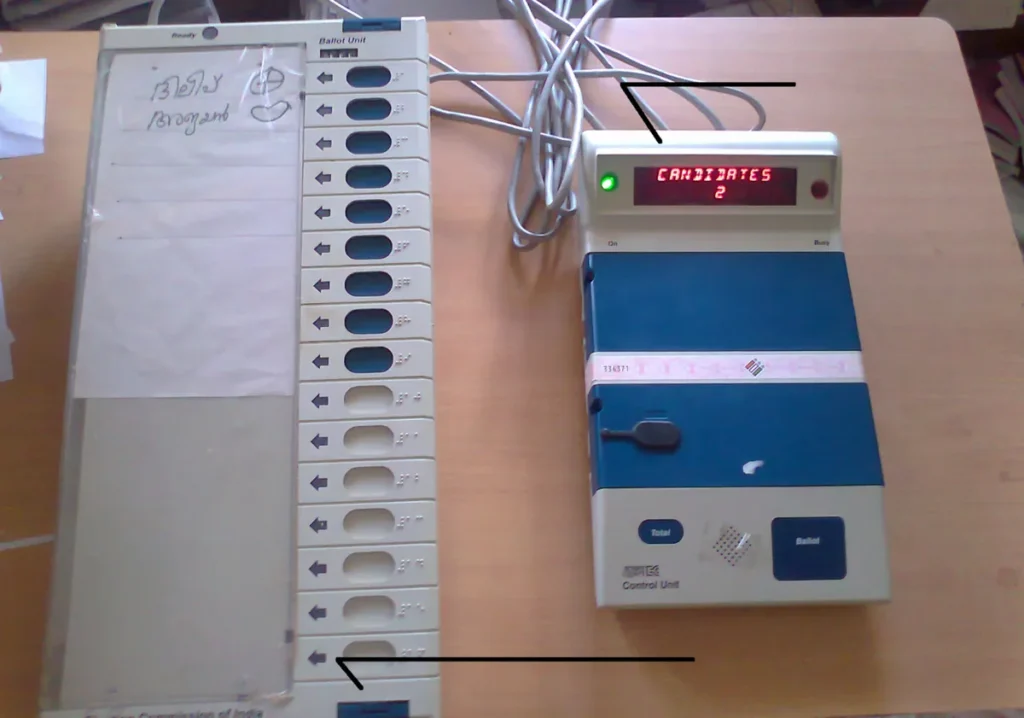
- 1982First EVM use, Paravur (Kerala)
- 1989Voting age lowered to 18; ECI made multi-member
- 1993Three-member Commission restored for good
- 2013NOTA and VVPAT introduced
- 2023New law on appointment of CEC and ECs
Technology and reforms
EVMs were first used in a by-election in Paravur, Kerala, in 1982; VVPAT slips were first used in Noksen, Nagaland, in 2013; NOTA came in 2013 after PUCL v Union of India. Live issues: neutrality and the appointment process, curbing money power (electoral bonds were struck down in ADR, February 2024), paid news, criminal candidates, and remote voting for migrants.
Constitutional provisions at a glance
| Article | Provision |
|---|---|
| 324 | Superintendence, direction and control of elections vested in the ECI |
| 325 | One general electoral roll; no exclusion on religion, race, caste or sex |
| 326 | Adult suffrage (18 years since the 61st Amendment, 1988) |
| 327-328 | Parliament and State legislatures may make election laws |
| 329 | Bar on courts interfering in electoral matters during the process |
The detailed law sits in the Representation of the People Acts of 1950 (rolls, delimitation of seats) and 1951 (conduct of elections, disqualifications, corrupt practices).
Judgments and committees
- Mohinder Singh Gill (1978): Article 324 is a reservoir of power where the law is silent, but must be used fairly.
- T.N. Seshan v Union of India (1995): upheld the multi-member Commission and majority decisions.
- ADR (2002) and PUCL (2003): candidates must disclose criminal record, assets and education.
- Lily Thomas (2013): sitting legislators convicted for two years or more lose their seat at once.
- Committees: Dinesh Goswami (1990) on electoral reform and State funding; Indrajit Gupta (1998) on State funding; Law Commission’s 170th (1999) and 255th (2015) reports.
Way forward
Give the CEC and Election Commissioners equal protection from removal; create an independent secretariat with its own budget charged on the Consolidated Fund; give statutory backing to parts of the Model Code that are routinely flouted; strengthen expenditure monitoring; and pilot remote voting for domestic migrants after building consensus. Public trust is the ECI’s real capital, so transparency on decisions like roll revisions matters as much as legal powers.
PYQ trend
Prelims tests the basics: membership, who conducts local polls, the CEC’s powers on election disputes. Mains asked about electoral reforms and ONOE (2024) and about the ECI’s role in revising electoral rolls and the right to vote (2026). Expect questions on appointment law and roll revisions.
Election Commission Of India: UPSC angle
For UPSC CSE
Prelims: Article 324, number of members, removal, who conducts local polls, MCC status. Mains GS-II: independence of the ECI, appointment debate, electoral reforms.
Election Commission Of India UPSC PYQs (Prelims)
Questions UPSC has actually asked, from the official papers. Pick an option to check yourself.
Consider the following statements :
– 1. The Election Commission of India is a five-member body.
– 2. Union Ministry of Home Affairs decides the election schedule for the conduct of both general elections and bye-elections.
– 3. Election Commission resolves the disputes relating to splits/mergers of recognised political parties.
Which of the statements given above is/are correct?
The Commission has been three-member since 1993: the Chief Election Commissioner and two Election Commissioners. It fixes poll schedules itself. Under paragraph 15 of the Symbols Order, 1968, it decides disputes between rival groups of a recognised party. Answer as per the official UPSC key · Battle IAS PYQ bankAnswer (d) & why
Consider the following statements :
– 1. Union Territories are not represented in the Rajya Sabha.
– 2. It is within the purview of the Chief Election Commissioner to adjudicate the election disputes.
– 3. According to the Constitution of India, the Parliament consists of the Lok Sabha and the Rajya Sabha only.
Which of the statements given above is/are correct?
Delhi and Puducherry (and now J&K) send members to the Rajya Sabha. Election disputes are decided by the High Courts (and the Supreme Court), not the Election Commission. Under Article 79, Parliament is the President and the two Houses. All three statements are wrong. Answer as per the official UPSC key · Battle IAS PYQ bankAnswer (d) & why
Mains PYQs on this topic
Questions from the official UPSC Mains papers (2023-2026 in the Battle IAS Mains bank), newest first. Each links to a model answer.
- UPSC Mains 2026 · GS Paper II · Q4 · 10 marks
Is the right to vote a fundamental right? Discuss the position of the Election Commission of India while undertaking the revision of electoral rolls. Can it also examine the question of citizenship of voters?
- UPSC Mains 2024 · GS Paper II · Q1 · 10 marks
Examine the need for electoral reforms as suggested by various committees with particular reference to “one nation — one election” principle.
Quick quiz
Elections to municipalities in a State are conducted by the
Article 243ZA.Answer (b)
Under the 2023 Act, the selection committee for the CEC does not include
The CJI was part of the interim panel set by the Court, not the Act.Answer (c)
The Model Code of Conduct is
It evolved from party consensus.Answer (c)
FAQs
Is the ECI a multi-member body by the Constitution?
Article 324 allows it; the number is fixed by the President. It has had three members since 1993.
Who decides election disputes after results?
The High Court through an election petition, not the ECI.
Can the ECI de-register a party?
Only in limited cases, such as registration by fraud; it has no general power to de-register.
When does the Model Code begin?
From the date the ECI announces the election schedule until results are declared.
Is the right to vote a Fundamental Right?
The Supreme Court has treated it as a statutory right under the RPA, 1950, though the freedom to express a choice by voting is linked to Article 19(1)(a).
Who fixes the number of Election Commissioners?
The President, under Article 324(2), subject to law made by Parliament.
Spotted an error? Tell us. We correct within 48 hours.
Image: Jayeshj, Wikimedia Commons, CC BY 3.0
How to use this in Mains
If asked: Discuss the role of the Election Commission of India in ensuring free and fair elections. (GS-II)
Quote: “Prepares and revises electoral rolls; issues EPIC (voter ID).”
Use it: Use as a basic function line; build to the electoral-roll debate.
In the news
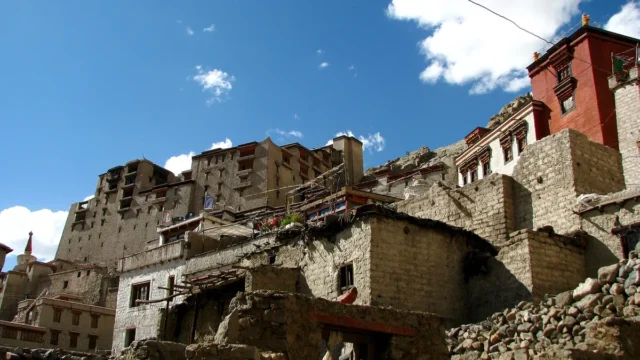
Ladakh draft framework: L-G to have final say on laws of proposed UT-level elected body
The Centre’s draft ‘Constitutional and Statutory Framework’ for Ladakh proposes a Union Territory-level elected body whose every regulation will take effect only after the Lieutenant Governor’s assent, The Hindu reported on 21 October 2026. A new constitutional provision would also give constitutional status to the hill councils. Leh and Kargil groups, who want Sixth Schedule safeguards, meet the Home Ministry this week.
21 Oct 2026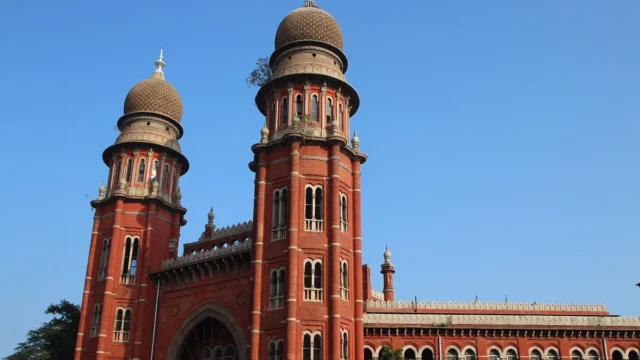
Conversion does not carry over a quota: Supreme Court on Tamil Nadu’s BC Muslim certificates
On 15 October 2026, in The Secretary to Government v. Sameer Ahamed N., the Supreme Court upheld the Madras High Court’s quashing of a 2024 Tamil Nadu order. That order let converts to Islam from Backward, Most Backward, Denotified and Scheduled Caste communities get Backward Class Muslim certificates and use the 3.5% BC Muslim quota. The Court said conversion to Islam does not by itself make a person a member of any of the seven notified BC Muslim communities.
21 Oct 2026
India to host 61st CIML meeting on legal metrology in New Delhi, 26–28 October
India will host the 61st meeting of the International Committee of Legal Metrology (CIML) for the first time, in New Delhi from 26 to 28 October 2026. The Department of Consumer Affairs is organising it with the International Organization of Legal Metrology (OIML), and more than 100 delegates are expected, PIB said on 19 October.
19 Oct 2026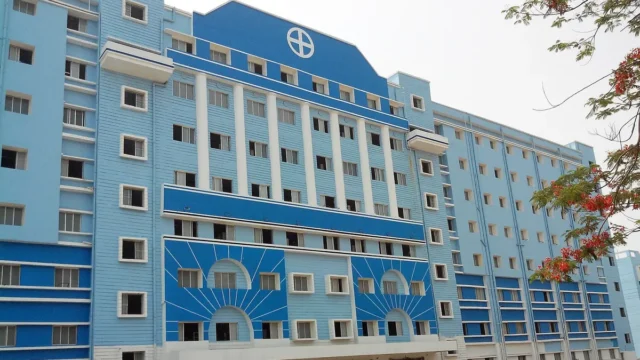
NMC withdraws MSMER-2023: medical colleges lose the fixed penalty rulebook, annual disclosure stays
The National Medical Commission (NMC) has de-notified the Maintenance of Standards of Medical Education Regulations, 2023 (MSMER-2023) by a notification dated 14 October 2026, published in the Gazette on 16 October. Its fixed penalties, including seat cuts and fines of up to ₹5 lakh for false records, go with it. The Annual Disclosure Report stays.
19 Oct 2026