
Anusandhan National Research Foundation (ANRF): the ANRF Act 2023, the ₹1 Lakh Crore Research, Development and Innovation (RDI) Scheme and India’s R&D Gap (UPSC Notes + PYQs)

Why India needed a research foundation
Ask any young scientist in an Indian state university what slows them down and the answer is rarely talent. It is money that arrives late, equipment that has to be shared with three departments, and grant rules written for a different era. India spends only about 0.65% of its GDP on research and development (R&D). China spends about 2.4%, the United States about 3.5%, and Israel and South Korea more than 4.5%. Worse, India’s spending is lopsided: government agencies such as DRDO, the Department of Space and the Department of Atomic Energy account for most of it, while private companies contribute only about a third, the reverse of what we see in innovative economies.
The National Education Policy 2020 recommended a single national research foundation to fix this. Its idea was simple: research should not be the preserve of a few IITs and national labs; it must reach the thousands of universities and colleges where most students actually study. Parliament passed the Anusandhan National Research Foundation Act in August 2023, and the Foundation began work on 5 February 2024.
Structure of ANRF
ANRF is a statutory body. Its design puts research at the highest political table while keeping day-to-day decisions with scientists.
| Body | Head | Role |
|---|---|---|
| Governing Board | Prime Minister (ex officio President) | Overall strategy; Union Ministers of Science and Technology and of Education are Vice-Presidents |
| Executive Council | Principal Scientific Adviser to the Government | Runs programmes, approves funding, monitors outcomes |
| Chief Executive Officer | Secretary, Department of Science and Technology | Administration |
| Administrative department | Department of Science and Technology (DST) | Nodal ministry link |
The Act repealed the Science and Engineering Research Board (SERB) Act, 2008; SERB’s staff, schemes and funds were folded into ANRF. Unlike SERB, which mainly funded science and engineering, ANRF covers natural sciences, engineering, technology, environment, agriculture, health and also the social sciences, arts and humanities.
- Governing BoardChaired by the Prime Minister
- Executive CouncilChaired by Principal Scientific Adviser
- NodalDepartment of Science and Technology
- ReplacedSERB (2008 Act repealed)
Money: who pays
The Act envisaged spending of about ₹50,000 crore over five years (2023-28). Only about ₹14,000 crore was to come from the government budget. The remaining ₹36,000 crore, more than 70%, was expected from non-government sources: industry, philanthropists, public sector undertakings and foreign donors. This is the boldest and also the most fragile part of the design, because Indian companies have historically been reluctant to fund research they cannot patent quickly.
ANRF has launched flagship programmes. PAIR (Partnerships for Accelerated Innovation and Research) pairs top institutions as “hubs” with weaker universities as “spokes”, so that a state university in a smaller town can work with an IIT on a joint project. MAHA (Mission for Advancement in High-impact Areas) funds big national problems such as electric mobility and advanced materials. Older SERB schemes for young researchers, women scientists and overseas fellowships continue under the new umbrella.
The ₹1 lakh crore RDI scheme
On 1 July 2025 the Union Cabinet approved the six-year Research, Development and Innovation (RDI) scheme with a corpus of ₹1 lakh crore. The Prime Minister launched it on 3 November 2025 at the Emerging Science, Technology and Innovation Conclave (ESTIC) in New Delhi. Its target is the private sector, not universities. The idea is that a company working on a battery chemistry, a drone engine or a new drug often has a prototype that works but cannot raise money for the risky next steps, because banks want collateral and venture funds want quick returns.
The scheme works in two tiers. At the first tier, a Special Purpose Fund (SPF) is created within ANRF as the custodian of the money. At the second tier, the SPF passes funds to second-level fund managers, such as alternative investment funds, development finance institutions and bodies like BIRAC and the Technology Development Board. TDB and BIRAC were the first to be named, with other managers being selected through a competitive process. These managers then give money to companies as long-term loans at low or nil interest, as equity, especially in start-ups, or as contributions to a deep-tech fund of funds.
The focus is on projects at Technology Readiness Level (TRL) 4 and above, that is, technologies that have been validated in the lab and now need to be scaled, tested in real conditions and taken to market. Sunrise and strategic sectors such as energy transition, quantum, semiconductors, AI, biotechnology and defence are prioritised. A governing board chaired by the Prime Minister gives overall direction, and an Empowered Group of Secretaries, headed by the Cabinet Secretary, approves changes and sectors. The Department of Science and Technology is the nodal department.
- 1₹1 lakh crore corpus
- 2Special Purpose Fund within ANRF
- 3Second-level fund managers (AIFs, DFIs, BIRAC, TDB)
- 4Loans, equity, fund of funds
- 5Companies scale up TRL 4+ technologies
Grants versus patient capital
It helps to see the two arms side by side:
| Feature | ANRF grants | RDI scheme |
|---|---|---|
| Main users | Universities, colleges, research labs | Private companies and start-ups |
| Form of money | Grants, fellowships | Low-interest long-term loans, equity, fund of funds |
| Stage | Basic and applied research | TRL 4 and above: scale-up and commercialisation |
| Return to government | Knowledge, skilled people | Money is recycled as loans are repaid |
Together they try to cover the whole pipeline, from a question asked in a lab to a product sold in a market.
Why this matters
- Viksit Bharat 2047: no country has reached high income without strong domestic research. Technology bought from abroad comes late and expensive.
- Strategic autonomy: export controls on chips, rare earths and advanced machines show that critical technology can be denied in a crisis.
- Spreading research: about 1% of India’s 40,000-plus universities and colleges do serious research. PAIR-type programmes can bring talent from smaller places into the system.
- Private R&D: low-cost long-term capital lowers the risk for firms and can pull business spending up.
- Global standing: India has climbed to 38th in the Global Innovation Index 2025 from 81st in 2015, and is now among the top three in scientific publications, but its patents and citations per researcher remain modest.
Concerns
- Centralisation: with the Prime Minister and Ministers at the top, critics fear that research priorities could follow politics rather than peer review.
- Unproven private money: the ₹36,000 crore expected from non-government sources may not arrive; past calls for corporate research funding saw thin response.
- Low absorptive capacity: many universities lack labs, PhD supervisors and grant offices to use new money well.
- Delays and paperwork: Indian scientists often cite slow releases of funds and rigid procurement rules under the General Financial Rules.
- Fund manager risk: the RDI scheme depends on the skill and honesty of second-level managers in picking projects; bad picks can turn loans into write-offs.
- Humanities and basic science: if the emphasis falls on quick, marketable technologies, curiosity-driven work in mathematics, history or ecology may be squeezed.
- Brain drain: top researchers still leave for better pay and facilities abroad.
- Private firms invest little
- Universities lack labs and supervisors
- Slow, rigid grant rules
- Few long-term risk funds
- Brain drain
Way forward
Raise gross R&D spending towards 1% of GDP in the near term and 2% by 2035, with States also building their own research budgets. Protect peer review and publish clear, open funding calls with fixed timelines. Offer tax credits and matching grants so that companies fund research and partner with universities. Simplify procurement for scientific equipment and release grants on time. Build research offices, shared instrument centres and PhD fellowships in state universities. Measure the RDI scheme by outcomes such as patents filed, products launched and private money crowded in, and report these publicly. Finally, keep a protected share of ANRF money for basic science and the humanities, because breakthroughs often come from directions nobody planned.
PYQ trend
Prelims tends to ask about institutions (who chairs what, which Act replaced which). Mains GS-III asks about science and technology, start-ups and innovation, and indigenisation. ANRF and the RDI scheme give fresh examples for answers on India’s innovation ecosystem.
Anusandhan National Research Foundation (ANRF): UPSC angle
For UPSC CSE
Prelims: structure of ANRF, the RDI scheme, R&D statistics. Mains GS-III: science and technology, indigenisation of technology, start-ups and innovation; GS-II: education policy.
Anusandhan National Research Foundation (ANRF) UPSC PYQs (Prelims)
Questions UPSC has actually asked, from the official papers. Pick an option to check yourself.
No Prelims question in the Battle IAS bank is directly on this topic yet.
Mains PYQs on this topic
No UPSC Mains question from 2023-2026 is directly on this topic. Older papers (2013-2022) will be added as the Mains bank grows.
Quick quiz
Who chairs the Governing Board of the Anusandhan National Research Foundation?
The Prime Minister is the ex officio President of the Board.Answer (b)
ANRF replaced which body?
The SERB Act, 2008 was repealed.Answer (b)
The RDI scheme mainly provides
It targets private-sector research and scale-up.Answer (b)
FAQs
What is ANRF?
The Anusandhan National Research Foundation is a statutory body under the ANRF Act, 2023 that funds, coordinates and promotes research across sciences, technology, social sciences and humanities in India.
What is the RDI scheme?
A ₹1 lakh crore Research, Development and Innovation scheme approved in July 2025 that gives private firms long-term, low or nil interest loans and equity for research and scale-up, through a fund within ANRF.
How is ANRF different from SERB?
SERB funded mainly science and engineering research. ANRF has a wider mandate including the humanities, a higher-level governing board and a goal of drawing in private money.
What is a Technology Readiness Level?
A 1 to 9 scale of how mature a technology is, from basic principles (TRL 1) to a proven system in real use (TRL 9). The RDI scheme focuses on TRL 4 and above.
How much does India spend on R&D?
About 0.65% of GDP, far below China, the US and South Korea, with business contributing only around a third.
What is PAIR?
Partnerships for Accelerated Innovation and Research, an ANRF programme that links top institutions as hubs with less-resourced universities as spokes.
Spotted an error? Tell us. We correct within 48 hours.
Image: Sayantan Mondal, Wikimedia Commons, CC BY-SA 4.0
How to use this in Mains
If asked: Can the Anusandhan National Research Foundation transform India's research ecosystem? Critically examine. (GS-III)
Quote: “Spreading research: about 1% of India’s 40,000-plus universities and colleges do serious research.”
Use it: Open with this data point to show how narrow research is today.
In the news
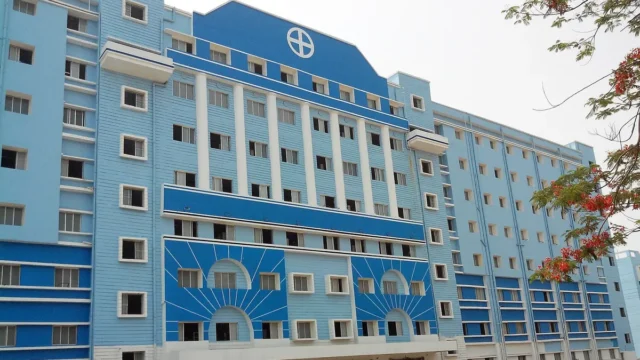
NMC withdraws MSMER-2023: medical colleges lose the fixed penalty rulebook, annual disclosure stays
The National Medical Commission (NMC) has de-notified the Maintenance of Standards of Medical Education Regulations, 2023 (MSMER-2023) by a notification dated 14 October 2026, published in the Gazette on 16 October. Its fixed penalties, including seat cuts and fines of up to ₹5 lakh for false records, go with it. The Annual Disclosure Report stays.
19 Oct 2026
Swavlamban 2026: Navy’s fifth innovation and indigenisation seminar on 26–27 October
At a curtain raiser on 19 October 2026, Vice Chief of the Naval Staff Vice Admiral Ajay Kochhar announced the fifth edition of Swavlamban, the Navy’s flagship innovation and indigenisation seminar. It will be held on 26–27 October at the Manekshaw Centre, New Delhi, where the Navy will release the NAUSETU interface standards and a technology compendium.
19 Oct 2026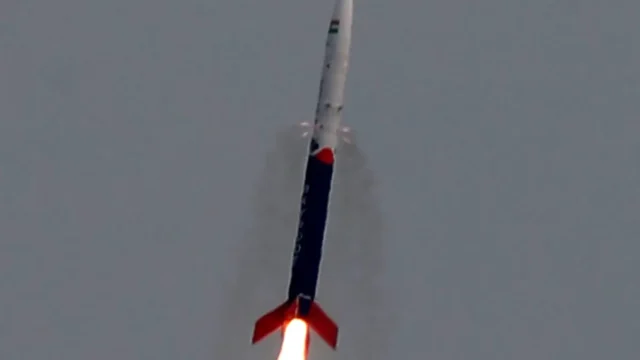
India’s space economy to grow from about $9 billion to $40-45 billion in 7-8 years
On 17 October 2026, Union Minister Dr Jitendra Singh said India’s space economy, worth about USD 9 billion today, should reach USD 40-45 billion in the next seven to eight years. He said the task now is to move from showing what India can do in space to building space companies that can compete and earn worldwide. For that, private firms need steady demand, quick approvals and patient capital. This is the story of space turning from a science mission into an industry.
18 Oct 2026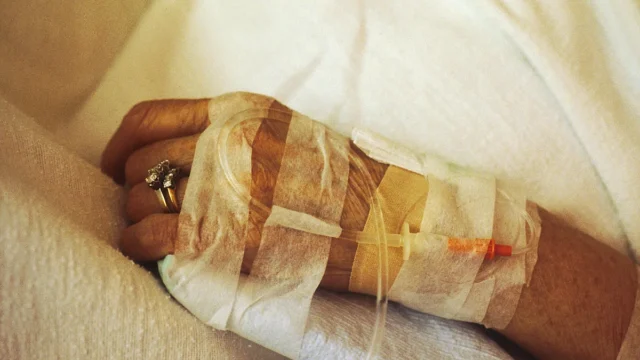
NPPA caps trade margins on 137 anti-cancer drugs: prices to fall up to 70% from 9 November
On 17 October 2026 the National Pharmaceutical Pricing Authority (NPPA) capped trade margins on 137 non-scheduled anti-cancer drugs at 30%, using its special public-interest power under Paragraph 19 of the Drugs (Prices Control) Order, 2013. The Government expects the retail price of these medicines to fall by up to 70%, and the new prices apply from 9 November 2026. The list includes costly immunotherapy drugs such as pembrolizumab and durvalumab.
18 Oct 2026