
Pumped storage hydropower: India’s roadmap for 100 GW of ‘water batteries’ by 2035-36
Next story · 19 OctNMC withdraws MSMER-2023: medical colleges lose the fixed penalty rulebook, annual disclosure stays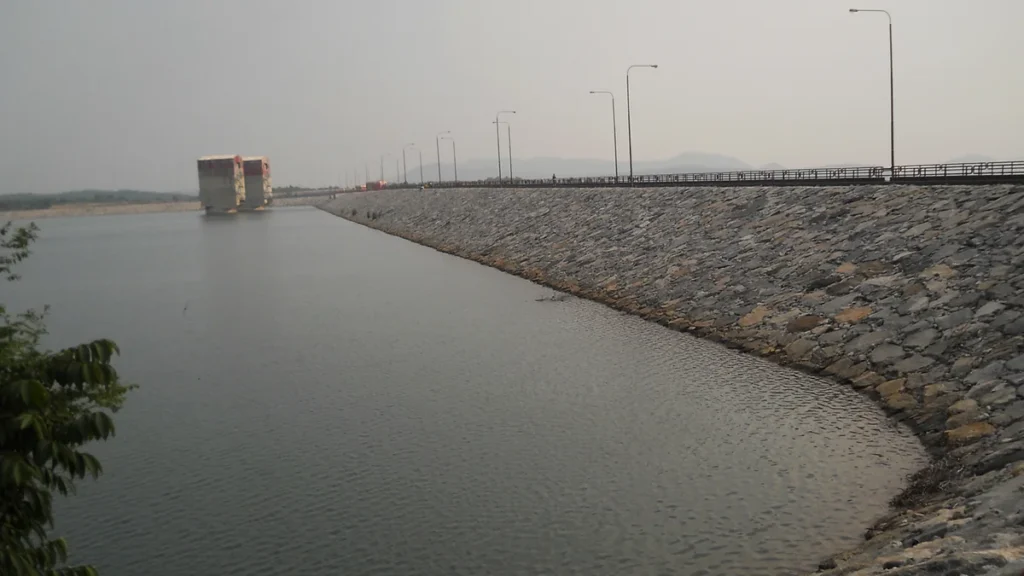
UPSC has already asked about this. Read the story with these questions in mind.
A PIB backgrounder of 19 October 2026 explains how pumped storage projects (PSPs) will store solar and wind power for India’s grid. India runs 7.43 GW of pumped storage today, is building 15.87 GW more and has an assessed potential of 345.38 GW. A roadmap aims to add about 100 GW between 2025-26 and 2035-36.
- Operational
- 7.43 GW
- Under construction
- 15.87 GW
- Potential
- 345.38 GW
- Roadmap
- 100 GW by 2035-36
India’s storage push: what happened?
Solar panels go quiet at sunset, just when homes switch on lights and fans. Electricity is hard to store in bulk, so the grid needs a way to save daytime power for the evening. Pumped storage does this with two reservoirs and gravity. PIB calls it a ‘water battery’, and India now wants a lot more of it.
- 19 Oct 2026: PIB backgrounder says India crossed 300 GW of non-fossil capacity in July 2026, against a 500 GW target for 2030. About 55.29 GW of non-fossil capacity was added in 2025-26 alone.
- CEA projects 73.93 GW of storage by 2031-32: 26.69 GW from PSPs and 47.24 GW from battery storage (BESS).
- Ten PSPs run today; 11 are being built; 8 projects (10.40 GW) are concurred or appraised by CEA, the next stage of the pipeline.
- India ranks fourth in the world in pumped storage, after China, Japan and the US, with 7.18 GW at the end of 2025 (IRENA).
What is pumped storage hydropower?
- Two reservoirs at different heights; water is pumped up when power is surplus and cheap.
- At peak demand, the water flows down through turbines and makes electricity again.
- On-stream schemes have both reservoirs on a river; off-stream open-loop schemes have one.
- Off-stream closed-loop schemes keep both reservoirs away from perennial rivers, so aquatic ecology suffers less.
How does pumped storage compare with battery storage?
| Point | Pumped storage (PSP) | Battery storage (BESS) |
|---|---|---|
| Strength | Long-duration, large-scale storage | Fast response for short needs |
| Typical use | Shifting bulk power across the day | Frequency control, peak trimming |
| Siting | Needs suitable height and water | Near solar parks or cities |
| Build speed | Slow; dams and tunnels | Relatively quick |
| CEA need by 2031-32 | 26.69 GW | 47.24 GW |
Which constitutional and legal provisions apply?
- Electricity is in the Concurrent List (Entry 38).
- Electricity Act, 2003, Section 8: CEA concurrence for hydro schemes above a notified cost.
- 1 Aug 2025 notification: limit ₹3,000 crore; off-stream closed-loop PSPs exempt.
- MoP PSP Guidelines (April 2023) and storage bidding guidelines (February 2025).
How does a water battery work?
From noon sunshine to evening power
- Surplus solar power at midday
- Pumps lift water to upper reservoir
- Water waits as stored energy
- Evening peak: water released downhill
- Turbines feed power to the grid
Which numbers should you remember?
| Number | What it means |
|---|---|
| 320 sites | Assessed sites: 62 on-stream, 258 off-stream |
| 129.72 GW | Western Region potential, the highest; Maharashtra 67.36 GW |
| 159.8 GW | World pumped storage capacity, end-2025 (IRENA) |
| 90 to 50 days | Cut in CEA time for DPR concurrence |
Off-stream sites hold 288.71 GW of the potential, which is why the Government is pushing projects away from rivers. CEA’s pathway would take cumulative PSP capacity to 105.56 GW by 2035-36.
Why does this matter?
| Angle | What to note |
|---|---|
| Energy transition | Storage makes solar and wind usable after sunset. |
| Grid stability | Long-duration storage balances daily swings in supply. |
| Federalism | Electricity is Concurrent; States hold most sites. |
| Investment | Bidding rules and ISTS waiver invite private developers. |
What are the challenges?
- Long construction periods and high upfront cost.
- Forest, land and environmental clearances can delay projects.
- Falling battery prices increase competition for storage contracts.
- On-stream schemes can disturb river ecology and nearby communities.
What should be done next?
- Prioritise off-stream closed-loop sites with smaller ecological footprints.
- Offer long-term storage contracts to assure developers’ revenue.
- Track approvals in real time through the Jal Vidyut DPR portal.
- Plan PSPs and batteries together for different storage durations.
What can Prelims ask on pumped storage?
- PSP: water pumped up during surplus, released through turbines at peak.
- Three types: on-stream, off-stream open-loop, off-stream closed-loop.
- India is fourth globally; China leads with nearly 66 GW.
- ISTS charge waiver: 100% for 25 years if awarded by 30 June 2028.
- Eligible PSPs can get B2 category in environmental appraisal.
- Maharashtra has the highest identified PSP potential.
How to write about energy storage in Mains
Practice question (10 marks, 150 words): Energy storage is the missing link in India’s renewable energy transition. Discuss the role of pumped storage hydropower. (GS-III)
- Intro: 300 GW non-fossil; CEA storage need 73.93 GW.
- How PSPs work; three types; 345 GW potential.
- Policy push: guidelines, ISTS waiver, faster DPR clearance.
- Challenges: cost, time, ecology, battery competition.
- Way out: closed-loop sites, long contracts, hybrid storage.
Image: Upper dam of the Purulia Pumped Storage Project, West Bengal. Paulsubhajit, Wikimedia Commons, CC BY-SA 4.0
How to use this in Mains
If asked: Discuss the challenges of integrating variable renewable energy into India’s power grid. (GS-III)
Quote: “PSPs provide long-duration storage, shifting large quantities of electricity across periods of surplus and demand.”
Use it: Use it after explaining solar variability; then contrast PSPs with batteries for short-duration needs.
If asked: Evaluate the policy measures taken to promote pumped storage projects in India. (GS-III)
Quote: “PSPs awarded for construction by 30 June 2028 are eligible for a 100% ISTS charge waiver.”
Use it: Quote it under fiscal support; add faster DPR clearance and the closed-loop exemption from CEA concurrence.
Exam angle
Prelims: PSP types, CEA, ISTS waiver, IRENA ranking. · Mains GS-III: storage and the clean energy transition.
Practice MCQs
Original practice questions (not PYQs).
With reference to pumped storage projects (PSPs) in India, consider the following statements:
1. In an off-stream closed-loop scheme, neither reservoir is on a river or perennial stream.
2. All pumped storage schemes now require CEA concurrence regardless of cost.
3. The Western Region has the highest identified PSP potential.
How many of the statements given above are correct?
Answer (b) & explanation
Statements 1 and 3 are correct. Off-stream closed-loop schemes are exempt from CEA concurrence under the 1 Aug 2025 notification (PIB).
According to IRENA, which country had the largest installed pumped storage capacity at the end of 2025?
Answer (c) & explanation
China had nearly 66 GW of the 159.8 GW global total; Japan and the US followed; India was fourth.
Under the Seventh Schedule, ‘Electricity’ is a subject in the
Answer (c) & explanation
Electricity is Entry 38 of the Concurrent List.
Questions students ask about this
What is a pumped storage project?
Two reservoirs at different heights. Water is pumped up with surplus power and released through turbines when demand peaks.
How much pumped storage does India have?
7.43 GW in 10 projects, with 15.87 GW under construction (PIB, 19 Oct 2026).
Why is it called a water battery?
It stores electricity as the potential energy of water held in the upper reservoir.
How is it different from batteries?
PSPs suit long-duration, bulk storage; batteries respond fast to short-duration needs.
Keep studying
Go deeper
Official source: PIB Backgrounder, 19 Oct 2026: Pumped Storage Hydropower, Powering India's Clean Energy Transition
facts from cited sources only; faculty review pending