
UPSC Mains 2022 GS Paper 1 Q12: model answer
Discuss the main contributions of Gupta period and Chola period to Indian heritage and culture.
What the question wants
Discuss the main contributions of both the Gupta and Chola periods to Indian heritage and culture.
How to structure it
Discuss two periods; a parallel structure (art, literature, science, institutions) makes comparison easy.
- Gupta: art and architecture
- Gupta: literature and science
- Chola: temples and bronzes
- Chola: literature, institutions, maritime reach
How to think it through
Two golden ages in one question. Keep a table in your head for each: art, literature, science, society. The Guptas give you Kalidasa, Aryabhata and Deogarh; the Cholas give you Thanjavur, Nataraja and Uttaramerur. Split your words evenly; don't let one empire swallow the answer.
Model answer
The Guptas (4th–6th century) in the north and the Cholas (9th–13th century) in the south shaped two classical phases of Indian culture.
Gupta contributions
- Architecture: early structural temples such as the Dashavatara temple at Deogarh and Temple 17 at Sanchi.
- Sculpture: the Sarnath Buddha and the refined Mathura school.
- Literature: Kalidasa's Abhijnanashakuntalam and Meghaduta; the Puranas took shape.
- Science: Aryabhata's Aryabhatiya and Varahamihira; use of the decimal place-value system.
- Nalanda was founded under Kumaragupta I.
Chola contributions
- Architecture: the Brihadeeswara temple (Thanjavur), Gangaikondacholapuram and Darasuram, the UNESCO Great Living Chola Temples.
- Chola bronzes such as Nataraja, cast by the lost-wax method.
- Literature: Kamban's Ramayanam; Tevaram hymns compiled; Sekkizhar's Periya Puranam.
- Institutions: village assemblies recorded in the Uttaramerur inscriptions of Parantaka I.
- Maritime reach: Rajendra I's expedition to Srivijaya and links with Southeast Asia.
Gupta: the classical age
- The Iron Pillar at Mehrauli shows advanced metallurgy; it has not rusted for over 1,600 years.
- Ajanta paintings of caves 1 and 2 belong broadly to the Vakataka period, closely linked with the Guptas.
Chola: the Tamil classical age
- Temples became banks, schools and hospitals; inscriptions record endowments for lamps, music and feeding.
- Kudavolai, the pot-ballot system of Uttaramerur, is often cited as an early form of local democracy.
Comparison
- The Guptas excelled in literature and science; the Cholas in temple architecture, bronze and administration, and in carrying Indian culture across the Bay of Bengal.
Conclusion
The Guptas gave India its classical forms in art, literature and science; the Cholas carried temple art, bronze and local self-government to new heights. Together they form the backbone of India's heritage.
Draw: Two-column table: Gupta vs Chola across art, literature, science, institutions.
Keywords, cases and data to drop in
Deogarh, Sarnath Buddha, Kalidasa, Aryabhata, Brihadeeswara, Nataraja, Uttaramerur, Rajendra I.
Where most answers lose marks
- Spending 200 words on the Guptas and 50 on the Cholas.
Related Mains PYQs
- How will you explain that medieval Indian temple sculptures represent the social life of those days? UPSC 2022 · GS-I
- Discuss the significance of the lion and bull figures in Indian mythology, art, and architecture. UPSC 2022 · GS-I
- Evaluate the nature of the Bhakti literature and its contribution to Indian culture. UPSC 2021 · GS-I
- The rock-cut architecture represents one of the most important sources of our knowledge of early Indian art and history. Discuss. UPSC 2020 · GS-I
Fresh examples from current affairs
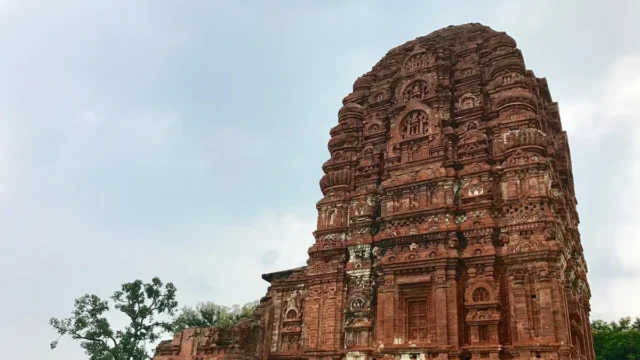
Sirpur in Chhattisgarh enters UNESCO’s Tentative List of World Heritage sites
Sirpur, an archaeological site in Chhattisgarh’s Mahasamund district with Hindu, Buddhist and Jain remains from the 5th to the 12th century CE, has been added to UNESCO’s Tentative List. The ASI now has about a year to prepare a nomination dossier proving its Outstanding Universal Value. Sirpur was once the capital of Dakshina Kosala.
UPSC angle: Prelims: Sirpur location, Lakshmana Temple, dynasties, UNESCO process. · Mains GS-I: heritage conservation and composite culture.
20 Oct 2026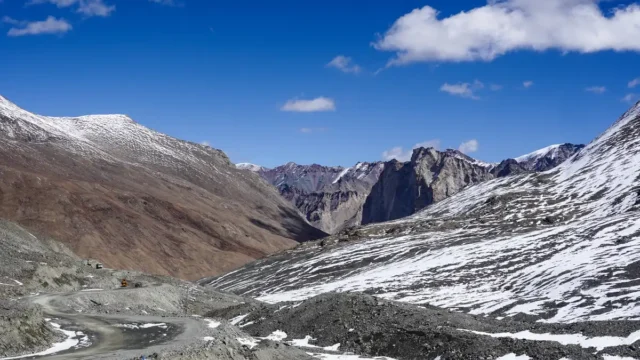
PM inaugurates five Ladakh projects: Nimmu–Padum–Darcha road, Leh terminal, Hanu hydro
On 15 October 2026 the Prime Minister inaugurated, by video conference, five projects worth about ₹3,350 crore in Ladakh: a new passenger terminal at Leh's Kushok Bakula Rimpochee Airport, the 298-km Nimmu–Padum–Darcha road built by BRO, the 9 MW Hanu small hydro project with a 66 kV line, India's first Petroglyph Conservation Park at Sindhu Ghat, and 40 water bodies under Project Him Sarovar.
UPSC angle: Prelims: Shinkun La, Zanskar, Nimmu–Padum–Darcha road, BRO, petroglyphs, Him Sarovar. · Mains GS-III: border infrastructure and security; GS-I: heritage conservation.
15 Oct 2026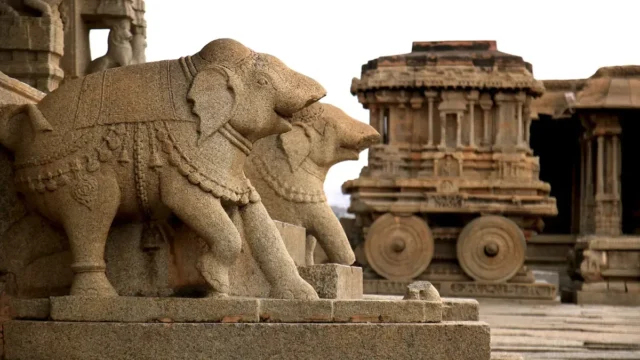
HAL, NCF and ASI sign MoA for Hampi, Taj Mahal and Bekal Fort
On 13 October 2026 HAL, the National Culture Fund and ASI signed an MoA for conservation and visitor works at Hampi, the Taj Mahal and Bekal Fort. HAL has approved about ₹23.60 crore in CSR support over three years; NCF facilitates the projects and ASI supervises them technically.
UPSC angle: Prelims: ASI, NCF, Hampi (UNESCO), Taj Mahal, Bekal Fort. · Mains GS-I: heritage conservation and corporate CSR.
14 Oct 2026
Centres of Excellence approved for five newer classical languages
On 3 October 2026 the Ministry of Education approved five Centres of Excellence for Classical Assamese, Bengali, Marathi, Pali and Prakrit, hosted by Tezpur University, Visva-Bharati, Deccan College Pune, Central University of Odisha and Central University of Gujarat. These five got classical status in October 2024, taking India's total to 11 classical languages.
UPSC angle: Prelims: match language with CoE institution; list of classical languages.
3 Oct 2026Learn the concept
Question text as printed in the official UPSC Civil Services (Main) question paper. The model answer is original Battle IAS work; use it to learn structure, not to memorise.
Want every PYQ in one place? See the Battle IAS PYQ Book.