
UPSC Mains 2013 GS Paper 1 Q25: model answer
It is said that India has substantial reserves of shale oil and gas, which can feed the needs of the country for quarter century. However, tapping of the resource does not appear to be high on the agenda. Discuss critically the availability and issues involved.
What the question wants
Critically discuss India's shale reserves and why their exploitation has not taken off.
How to structure it
Discuss critically: availability, then issues, with a view.
- What shale is
- Availability
- Why not tapped
- Way forward
How to think it through
The USA's shale boom made everyone dream. India has the rocks but not the water, the land titles or the data. That's the honest answer: rich below ground, constrained above it.
Model answer
The US shale revolution turned America into the world's largest oil and gas producer within a decade. India hoped to repeat it: the US EIA (2013) estimated about 96 trillion cubic feet of technically recoverable shale gas in India.
What shale resources are
Oil and gas trapped in fine-grained sedimentary rocks, extracted by horizontal drilling and hydraulic fracturing (fracking).
Availability in India
- Cambay basin (Gujarat), Krishna–Godavari, Cauvery, Assam–Arakan, Damodar valley and the Indo-Gangetic plains.
- ONGC drilled its first shale well near Durgapur in 2013, but early results were modest.
Why it is not high on the agenda
- Water: fracking needs huge volumes of water in already water-stressed basins.
- Land and density: shale basins lie under farmland and villages; land acquisition is difficult.
- Pollution: risk of groundwater contamination and methane leaks.
- Data and technology: limited geological data, high costs, few rigs and experience; Indian shale is often deeper and more clay-rich than American shale.
- Policy: low, administered domestic gas prices that discouraged private investors and earlier uncertainty; the 2013 policy let
only national companies explore.
- Energy transition: focus has shifted to renewables and green hydrogen.
Way forward
- Better mapping, pilot projects and water recycling technologies, or waterless fracking methods.
- Clear regulation for environmental safety.
Shale could add to energy security and cut gas imports, but only if it can be extracted without trading one scarcity, energy, for another, water.
Draw: Cross-section showing a vertical well turning horizontal into a shale layer with fractures.
Keywords, cases and data to drop in
Hydraulic fracturing, horizontal drilling, US EIA 2013, Cambay, KG basin, HELP 2016, methane leakage.
Where most answers lose marks
- Taking the 'quarter century' claim at face value. 'Critically' means testing it.
Related Mains PYQs
- Discuss the natural resource potentials of ‘Deccan Trap’. UPSC 2022 · GS-I
- Examine the potential of wind energy in India and explain the reasons for their limited spatial spread. UPSC 2022 · GS-I
- Describing the distribution of rubber-producing countries, indicate the major environmental issues faced by them. UPSC 2022 · GS-I
- Mention the significance of straits and isthmus in international trade. UPSC 2022 · GS-I
Fresh examples from current affairs

Cauvery panel tells Karnataka to release 3,000 cusecs to Tamil Nadu: Article 262 and the inter-State water dispute
The Cauvery Water Regulation Committee has told Karnataka to ensure 3,000 cusecs of water a day at Biligundlu for 15 days, and the Cauvery Water Management Authority has endorsed it. Tamil Nadu wanted almost five times more, including a claimed backlog. Karnataka says a weak monsoon has left its four Cauvery reservoirs 55% short and most of its taluks in drought. For you, this is a live case study of Article 262, water tribunals and how a dry year turns sharing into a crisis.
UPSC angle: Prelims: Cauvery source and tributaries, Article 262, ISWD Act 1956, CWMA. · Mains GS-II: inter-State water disputes; cooperative federalism.
25 Oct 2026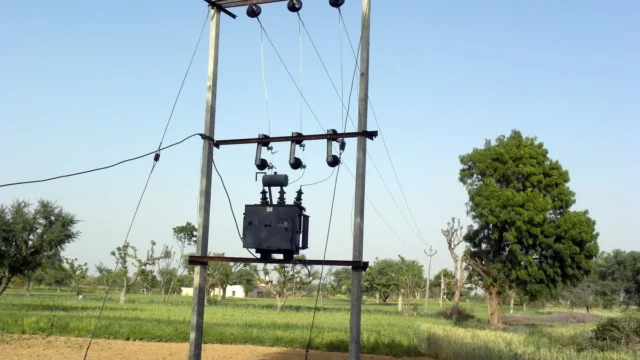
Haryana’s first private power distributor: what a parallel licence means for Gurugram and Nuh
The Haryana Electricity Regulatory Commission (HERC) on 19 October 2026 gave Eleven Power Pvt Ltd a 25-year parallel distribution licence for Gurugram and Nuh. It will be Haryana’s first private distributor and India’s second case of parallel licensing after Mumbai. The State government and power-sector staff oppose it and plan to appeal to the Appellate Tribunal for Electricity.
UPSC angle: Prelims: Section 14, APTEL, Concurrent List Entry 38. · Mains GS-III: discom reform, cross-subsidy, competition.
22 Oct 2026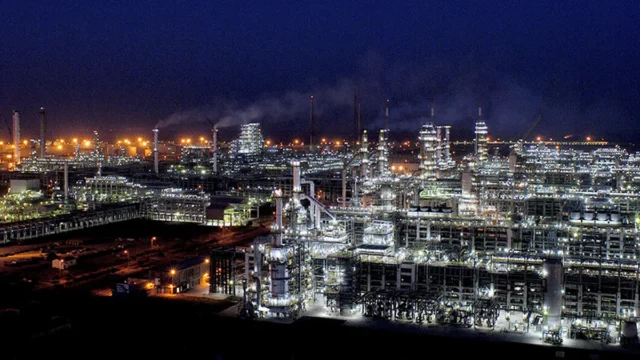
Rubio at Jamnagar: US pitches oil and Venezuelan crude to India’s ‘refining superpower’
US Secretary of State Marco Rubio visited Reliance’s Jamnagar refinery complex in Gujarat on 21 October 2026, a day after calling India a ‘refining superpower’. He wants India to buy more US oil and refine more Venezuelan crude. In Mumbai on 20 October, External Affairs Minister S. Jaishankar also held an unannounced India–US–UAE meeting on energy and connectivity, with the Strait of Hormuz blocked.
UPSC angle: Prelims: Jamnagar, Hormuz, I2U2, IMEC, SPR sites. · Mains GS-II/III: energy security vs strategic autonomy; India–US–UAE.
21 Oct 2026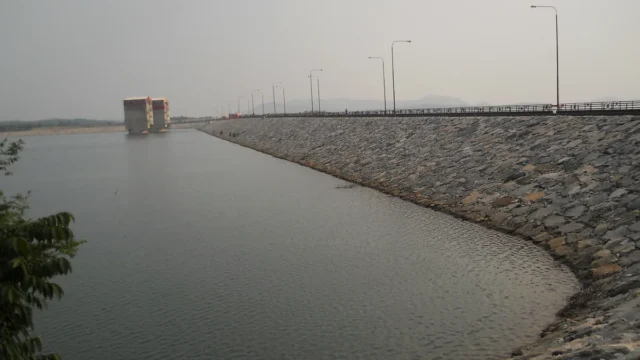
Pumped storage hydropower: India’s roadmap for 100 GW of ‘water batteries’ by 2035-36
A PIB backgrounder of 19 October 2026 explains how pumped storage projects (PSPs) will store solar and wind power for India’s grid. India runs 7.43 GW of pumped storage today, is building 15.87 GW more and has an assessed potential of 345.38 GW. A roadmap aims to add about 100 GW between 2025-26 and 2035-36.
UPSC angle: Prelims: PSP types, CEA, ISTS waiver, IRENA ranking. · Mains GS-III: storage and the clean energy transition.
19 Oct 2026Learn the concept
Question text as printed in the official UPSC Civil Services (Main) question paper. The model answer is original Battle IAS work; use it to learn structure, not to memorise.
Want every PYQ in one place? See the Battle IAS PYQ Book.