
UPSC Mains 2014 GS Paper 1 Q21: model answer
Whereas the British planters had developed tea gardens all along the Shivaliks and Lesser Himalayas from Assam to Himachal Pradesh, in effect they did not succeed beyond the Darjeeling area. Explain.
What the question wants
Explain why British tea gardens across the Shivaliks and Lesser Himalayas did not succeed west of Darjeeling, except in limited areas.
How to structure it
Explain: geographical and economic reasons.
- The attempt
- Climatic reasons
- Soil and slope
- Economic and labour reasons
How to think it through
Tea is fussy: it wants rain spread over the year, no frost, acidic soil and slopes that drain. The eastern Himalaya provide this; going west, rain drops and frost bites. Kangra and Dehradun had small gardens, but the climate refused to cooperate on a big scale.
Model answer
The British planted tea from Assam and Darjeeling to Dehradun, Almora and Kangra in the 19th century. Only Assam and Darjeeling became major tea regions; Kangra survives as a small niche.
Climatic reasons
- Tea needs 150–250 cm of well-distributed rain and high humidity; rainfall decreases from east to west along the Himalayas.
- Winters in the western Himalaya are colder, with frost that damages bushes.
- Long dry spells in the western foothills before the monsoon, which stunt the first flush.
Soil and slope
- Tea needs deep, well-drained, acidic, humus-rich soils; western slopes have thinner, less acidic soils and more erosion on steep, dry hillsides.
Economic reasons
- Shortage of cheap labour; Assam drew indentured labour from Chotanagpur.
- Poor transport to ports; Darjeeling had the railway (1881) and Kolkata.
- Competition from established eastern gardens, which captured the London market.
- Western hill land was also more valuable for grain, orchards and settlement.
Hence Darjeeling marked the western limit of large-scale success, while the Nilgiris in the south, with suitable rain and no frost, became the other big region.
Draw: Himalayan arc with a rainfall gradient arrow from east (high) to west (low).
Keywords, cases and data to drop in
Acidic soil, frost, rainfall gradient, Kangra tea (GI), Darjeeling Himalayan Railway, indentured labour.
Where most answers lose marks
- Giving only climate reasons; labour and transport also mattered.
Related Mains PYQs
- Discuss the natural resource potentials of ‘Deccan Trap’. UPSC 2022 · GS-I
- Examine the potential of wind energy in India and explain the reasons for their limited spatial spread. UPSC 2022 · GS-I
- Describing the distribution of rubber-producing countries, indicate the major environmental issues faced by them. UPSC 2022 · GS-I
- Mention the significance of straits and isthmus in international trade. UPSC 2022 · GS-I
Fresh examples from current affairs

Cauvery panel tells Karnataka to release 3,000 cusecs to Tamil Nadu: Article 262 and the inter-State water dispute
The Cauvery Water Regulation Committee has told Karnataka to ensure 3,000 cusecs of water a day at Biligundlu for 15 days, and the Cauvery Water Management Authority has endorsed it. Tamil Nadu wanted almost five times more, including a claimed backlog. Karnataka says a weak monsoon has left its four Cauvery reservoirs 55% short and most of its taluks in drought. For you, this is a live case study of Article 262, water tribunals and how a dry year turns sharing into a crisis.
UPSC angle: Prelims: Cauvery source and tributaries, Article 262, ISWD Act 1956, CWMA. · Mains GS-II: inter-State water disputes; cooperative federalism.
25 Oct 2026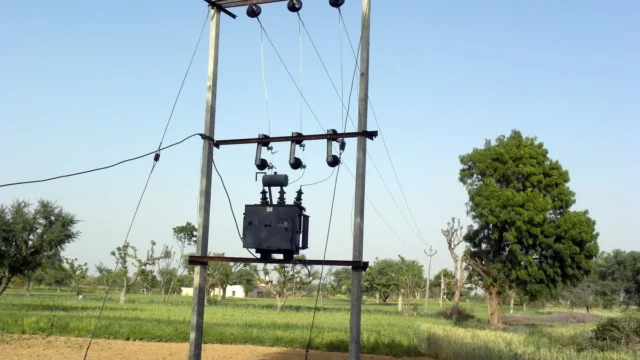
Haryana’s first private power distributor: what a parallel licence means for Gurugram and Nuh
The Haryana Electricity Regulatory Commission (HERC) on 19 October 2026 gave Eleven Power Pvt Ltd a 25-year parallel distribution licence for Gurugram and Nuh. It will be Haryana’s first private distributor and India’s second case of parallel licensing after Mumbai. The State government and power-sector staff oppose it and plan to appeal to the Appellate Tribunal for Electricity.
UPSC angle: Prelims: Section 14, APTEL, Concurrent List Entry 38. · Mains GS-III: discom reform, cross-subsidy, competition.
22 Oct 2026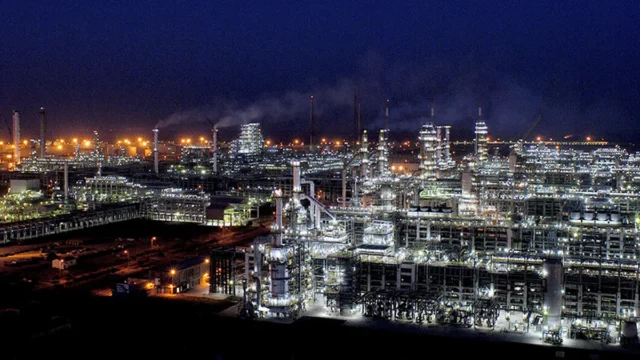
Rubio at Jamnagar: US pitches oil and Venezuelan crude to India’s ‘refining superpower’
US Secretary of State Marco Rubio visited Reliance’s Jamnagar refinery complex in Gujarat on 21 October 2026, a day after calling India a ‘refining superpower’. He wants India to buy more US oil and refine more Venezuelan crude. In Mumbai on 20 October, External Affairs Minister S. Jaishankar also held an unannounced India–US–UAE meeting on energy and connectivity, with the Strait of Hormuz blocked.
UPSC angle: Prelims: Jamnagar, Hormuz, I2U2, IMEC, SPR sites. · Mains GS-II/III: energy security vs strategic autonomy; India–US–UAE.
21 Oct 2026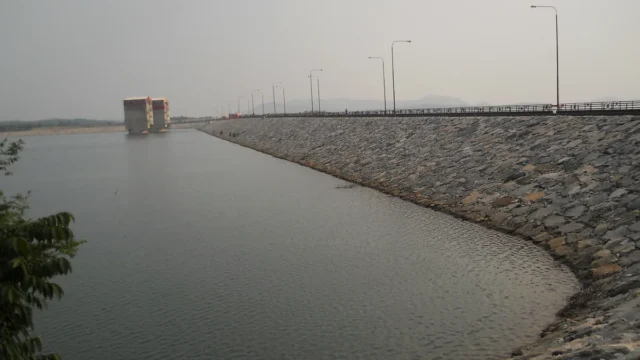
Pumped storage hydropower: India’s roadmap for 100 GW of ‘water batteries’ by 2035-36
A PIB backgrounder of 19 October 2026 explains how pumped storage projects (PSPs) will store solar and wind power for India’s grid. India runs 7.43 GW of pumped storage today, is building 15.87 GW more and has an assessed potential of 345.38 GW. A roadmap aims to add about 100 GW between 2025-26 and 2035-36.
UPSC angle: Prelims: PSP types, CEA, ISTS waiver, IRENA ranking. · Mains GS-III: storage and the clean energy transition.
19 Oct 2026Learn the concept
Question text as printed in the official UPSC Civil Services (Main) question paper. The model answer is original Battle IAS work; use it to learn structure, not to memorise.
Want every PYQ in one place? See the Battle IAS PYQ Book.