
UPSC Mains 2019 GS Paper 2 Q1: model answer
UpdatedDo you think that Constitution of India does not accept principle of strict separation of powers rather it is based on the principle of ‘checks and balance’? Explain.
What the question wants
Explain whether the Constitution prefers checks and balances over strict separation of powers.
How to structure it
Do you think ... Explain: show the fusion, the checks, and the courts' view.
- No strict separation
- Overlaps
- Checks
- Court's view
How to think it through
Article 50 separates the judiciary from the executive in the lower courts only. That is the only explicit separation. Everything else is overlap with checks.
Model answer
Montesquieu wanted three organs in three boxes. India's Constitution builds three organs that overlap and watch each other.
No strict separation
- Parliamentary system: ministers are MPs; the executive is drawn from the legislature.
- Article 50 only asks the State to separate the judiciary from the executive in public services.
- The President has legislative powers (ordinances, Article 123); courts make rules (Article 145).
Checks and balances
- Legislature on executive: questions, no-confidence, committees.
- Executive on legislature: summoning, dissolution, assent.
- Judiciary on both: judicial review (Articles 13, 32, 226).
- Legislature on judiciary: impeachment (Article 124(4)), changing the law after judgments.
The Court's view
Ram Jawaya Kapur (1955) said India has no rigid separation; Indira Gandhi v Raj Narain (1975) and Kesavananda (1973) made separation of powers part of basic structure in a functional sense: no organ may take over another's core.
So the design is checks and balances, with a protected core for each organ. Each organ may borrow a little of another's role, but none may take over its essential function.
Draw: Three overlapping circles with arrows of checks between them.
Keywords, cases and data to drop in
Montesquieu, Article 50, 123, 145, judicial review, impeachment, Ram Jawaya Kapur 1955, Indira Gandhi v Raj Narain 1975, functional separation.
Where most answers lose marks
- Saying India follows strict separation like the USA. It does not.
Related Mains PYQs
- What is meant by judicial legislation? In this context, discuss the verdicts of the apex court allowing “passive euthanasia” and a “living… UPSC 2026 · GS-II
- Comment on the need of administrative tribunals as compared to the court system. Assess the impact of the recent tribunal reforms through… UPSC 2025 · GS-II
- Compare and contrast the President’s power to pardon in India and in the USA. Are there any limits to it in both… UPSC 2025 · GS-II
- “Constitutional morality is the fulcrum which acts as an essential check upon the high functionaries and citizens alike... .” In view of… UPSC 2025 · GS-II
Fresh examples from current affairs
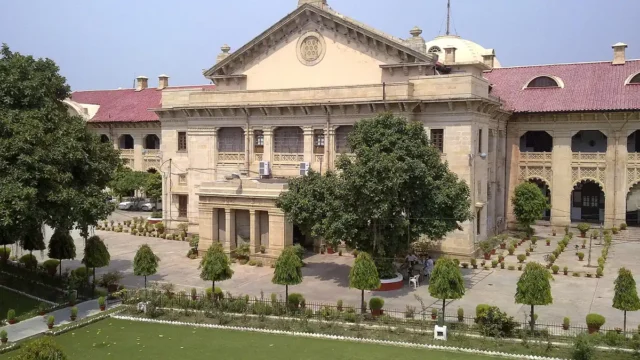
UP proposes school age-record rules after Allahabad HC flags POCSO misuse
The POCSO Act protects children below 18 from sexual offences, and a person's age decides whether it applies. The Allahabad High Court found cases where false school age certificates were used to show a girl as a minor, so that young men aged 19–20 were wrongly booked under POCSO. The U.P. government has now proposed rules on how schools record a child's age at admission. Read it for POCSO, age proof under the Juvenile Justice Act and the RTE Rules.
UPSC angle: Prelims: POCSO Act, JJ Act Section 94, Articles 15(3), 21A. · Mains GS-II: child rights, misuse of protective laws, judicial oversight.
27 Oct 2026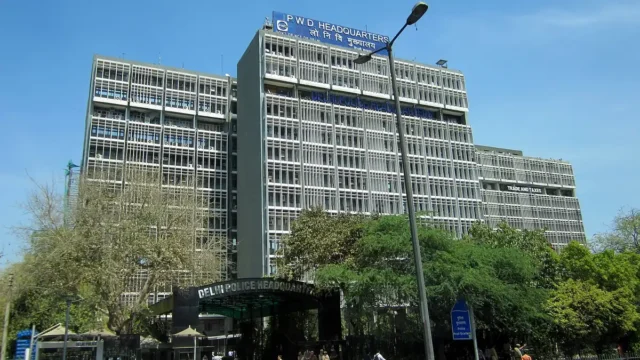
What are the powers of Special Executive Magistrates?
Not every 'magistrate' is a judge. In Delhi, a Special Executive Magistrate (SEM) court, run by a police officer of Assistant Commissioner rank, recently granted bail to two activists even though the police wanted them in custody longer. The case raises a simple question: what can an SEM do, and what can it not? Read it for the BNSS, 2023, Article 50 and the difference between executive and judicial magistrates.
UPSC angle: Prelims: Article 50, executive vs judicial magistrates, BNSS sections, Zero FIR. · Mains GS-II: separation of powers, police reforms, civil liberties.
27 Oct 2026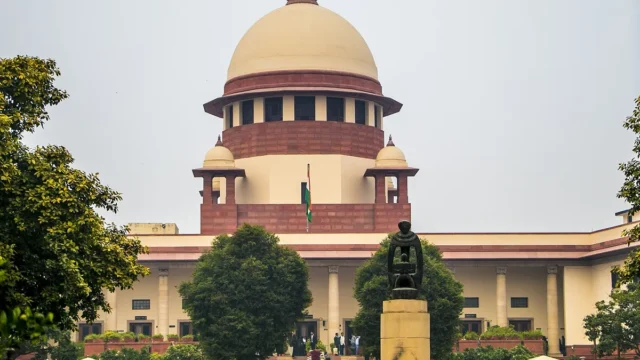
Justice Bhuyan’s remarks on voter deletions: how far can a sitting judge speak, and what is the right to vote?
On October 4, Supreme Court judge Ujjal Bhuyan said a process that strikes millions off the rolls would violate Articles 14 and 326. Former Chief Justice B.R. Gavai objected that a sitting judge should not comment on a pending matter. For you, this connects Article 326, the 1997 judicial code and the Bihar SIR ruling.
UPSC angle: Prelims: Articles 324-326, 61st Amendment, nature of the right to vote, Restatement of 1997. · Mains GS-II: judiciary, judicial accountability and electoral rolls.
26 Oct 2026
‘Sentencing shall not be a lottery’: why India needs a Sentencing Council and guidelines
In India, two people convicted of the same crime can get very different punishments depending on which judge hears the case. An expert opinion piece on 24 October 2026 argues for a Sentencing Council with guidelines, pointing to the Supreme Court’s words in Sunita Devi v. State of Bihar (2024) that ‘sentencing shall not be a mere lottery’. The Centre has asked the Law Commission to examine a national sentencing policy. This topic connects Articles 14 and 21 with criminal justice reform.
UPSC angle: Prelims: Probation of Offenders Act 1958, BNSS hearing on sentence, Concurrent List. · Mains GS-II: judicial reforms, criminal justice.
24 Oct 2026Learn the concept
Question text as printed in the official UPSC Civil Services (Main) question paper. The model answer is original Battle IAS work; use it to learn structure, not to memorise.
Want every PYQ in one place? See the Battle IAS PYQ Book.