
UPSC Mains 2017 GS Paper 3 Q18: model answer
On December 2004, tsunami brought havoc on fourteen countries including India. Discuss the factors responsible for occurrence of tsunami and its effects on life and economy. In the light of guidelines of NDMA (2010) describe the mechanisms for preparedness to reduce the risk during such events.
What the question wants
Discuss the causes of tsunamis, the 2004 tsunami's effects on life and the economy, and preparedness mechanisms under NDMA's 2010 guidelines.
How to structure it
Causes, effects, preparedness.
- What causes tsunamis
- The 2004 event
- Effects
- NDMA 2010 guidelines
- Since 2004
How to think it through
Causes: undersea earthquakes at subduction zones (vertical displacement), submarine landslides, volcanic eruptions (Krakatoa, Hunga Tonga 2022), meteorite. 26 Dec 2004 Mw 9.1 off Sumatra; ~2.3 lakh deaths in 14 countries; India ~10,000+ (TN Nagapattinam, A&N). Effects: deaths, fishing boats and harbours destroyed, saltwater on farmland, tourism, mangroves protected some villages (Pichavaram). NDMA 2010 tsunami guidelines: ITEWC (Hyderabad, INCOIS 2007), hazard and vulnerability maps, coastal zone regulation, bio-shields, structural design, shelters, awareness, drills, evacuation, community-based. Since: INCOIS Indian Ocean regional tsunami service provider; UNESCO Tsunami Ready villages (Venkatraipur and Noliasahi in Odisha, 2020).
Model answer
On 26 December 2004, a magnitude 9.1 earthquake off Sumatra lifted the seabed by several metres. Within hours, waves struck 14 countries, killing about 2.3 lakh people. In India, more than 10,000 died, mostly in Tamil Nadu's Nagapattinam and the Andaman and Nicobar Islands. There was no warning system in the Indian Ocean.
Factors responsible for tsunamis
- Undersea earthquakes at subduction zones, where one plate is thrust under another and the seabed moves vertically.
- Submarine landslides that displace water.
- Volcanic eruptions in or near the sea, such as Krakatoa (1883) and Hunga Tonga (2022).
- Rarely, meteorite impacts.
Effects on life and the economy
- Deaths and injuries, with women and children hit hardest.
- Fishing communities lost boats, nets and harbours.
- Farmland ruined by salt water for years.
- Tourism, ports and coastal infrastructure damaged.
- Psychological trauma and orphaned children.
- Livelihood loss for salt-pan workers and coastal labourers.
- Ecological damage to corals and beaches; villages behind mangroves, as at Pichavaram, suffered less.
- Nuclear safety: the Kalpakkam plant shut down safely, but the scare led to new reviews.
Preparedness under NDMA's 2010 guidelines
- Early warning: the Indian Tsunami Early Warning Centre at INCOIS, Hyderabad (2007), which warns within minutes.
- Hazard and vulnerability maps of the coast.
- Coastal zone regulation and setback lines.
- Bio-shields: mangroves and shelterbelts.
- Tsunami-resistant design for buildings near the shore.
- Shelters and evacuation routes, signposted.
- Awareness, drills and community training.
- Institutional roles for states, districts and the Coast Guard.
- Protecting critical infrastructure like ports and power plants on the coast.
Since 2004
- INCOIS now serves as a regional tsunami service provider for the Indian Ocean.
- Odisha's Venkatraipur and Noliasahi became UNESCO-certified 'Tsunami Ready' communities in 2020.
The 2004 waves came without warning; the next one will not.
Draw: A cross-section: plate subduction, seabed uplift, waves spreading outward.
Keywords, cases and data to drop in
subduction, Sumatra Mw 9.1, 26 Dec 2004, 2.3 lakh deaths, Nagapattinam, A&N, Krakatoa, Hunga Tonga 2022, INCOIS, ITEWC 2007, NDMA tsunami guidelines 2010, bio-shields, Pichavaram mangroves, Tsunami Ready 2020.
Where most answers lose marks
- Skipping NDMA's guidelines, which the question specifies.
Related Mains PYQs
- Discuss how the contradiction between 'rapid infrastructure development' and 'disaster-risk reduction' in ecologically-sensitive areas of India can be managed, with suitable examples. UPSC 2026 · GS-III
- "Community participation is the cornerstone of effective disaster management". Analyse this statement with suitable examples from India. Also discuss the challenges to… UPSC 2026 · GS-III
- What are Tsunamis? How and where are they formed? What are their consequences ? Explain with examples. UPSC 2025 · GS-I
- Seawater intrusion in the coastal aquifers is a major concern in India. What are the causes of seawater intrusion and the remedial… UPSC 2025 · GS-III
Fresh examples from current affairs
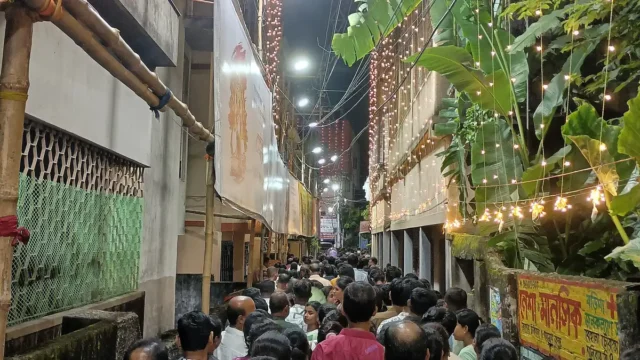
Chorbagan pandal stampede in Kolkata kills 19: what went wrong and how crowds should be managed
Nineteen people were killed and about 25 injured in a stampede at the Chorbagan Sarbojanin Durga Puja pandal in north Kolkata on the evening of 17 October 2026, during Saptami. According to police and the FIR, sudden heavy rain, weak crowd control and an announcement that the pandal could collapse set off the panic. Seven people have been arrested, and West Bengal has set up a six-member SIT.
UPSC angle: Prelims: NDMA, BNSS 163, BNS 105. · Mains GS-III: crowd management and disaster governance.
17 Oct 2026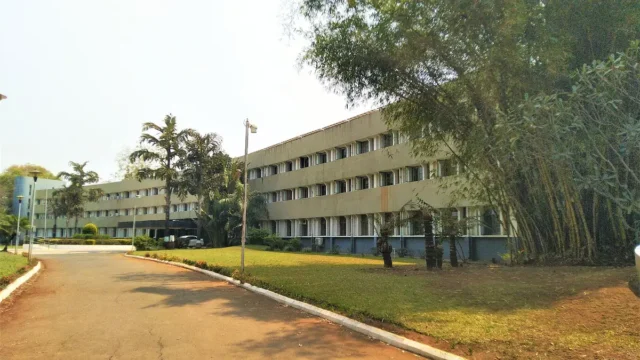
IITM Pune holds first consultation of the Climate Science into Services for India Forum
The Indian Institute of Tropical Meteorology (IITM), Pune, under the Ministry of Earth Sciences, held the first stakeholder consultation of the Climate Science into Services for India Forum (CSSIF) on 17 October 2026. More than 150 participants from over 80 institutions, including RBI, NDRF, NIDM and State climate cells, discussed what climate information each sector needs. Speakers stressed the need for a national Climate Services Information System (CSIS).
UPSC angle: Prelims: IITM, GFCS, INCOIS, NAPCC. · Mains GS-III: climate adaptation and services.
17 Oct 2026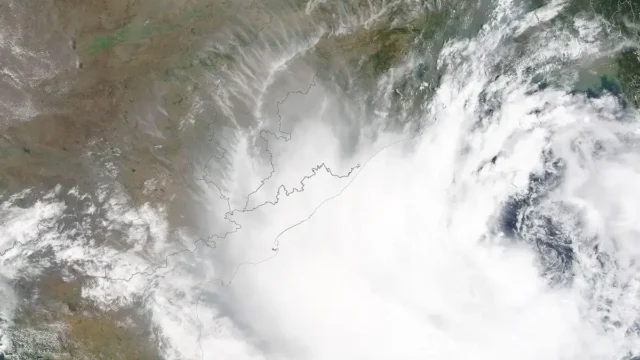
IMD launches a map-based Decision Support System for cyclone and marine warnings
On 12 October 2026 the India Meteorological Department dedicated a Cyclone Warning and Marine Weather Services Decision Support System to the nation. The WebGIS platform shows cyclone track, intensity, winds, rainfall, storm surge and district-wise warnings on one map for disaster managers and the public.
UPSC angle: Prelims: IMD, cone of uncertainty, storm surge. · Mains GS-III: early warning and disaster preparedness.
13 Oct 2026
India offers flood relief to Nepal; PM speaks to Nepal PM
On 26 August 2026 Prime Minister Narendra Modi spoke to Nepal's Prime Minister Balendra Shah and conveyed condolences on the loss of lives in floods in Nepal. He said India is ready to provide all possible humanitarian assistance, and that Indian teams are coordinating closely with Nepalese authorities on rescue and relief.
UPSC angle: Mains: India–Nepal water and flood cooperation.
26 Aug 2026Learn the concept
Question text as printed in the official UPSC Civil Services (Main) question paper. The model answer is original Battle IAS work; use it to learn structure, not to memorise.
Want every PYQ in one place? See the Battle IAS PYQ Book.