
UPSC Mains 2018 GS Paper 3 Q14: model answer
How has the emphasis on certain crops brought about changes in cropping patterns in recent past? Elaborate on the emphasis on millets production and consumption.
What the question wants
Explain how emphasis on certain crops changed cropping patterns, and elaborate on the push for millet production and consumption.
How to structure it
Change, then millets.
- How emphasis shaped patterns
- Consequences
- Why millets
- Measures on production
- Measures on consumption
- Challenges
How to think it through
MSP and procurement for rice and wheat, cheap power and canal water pulled area to cereals; sugarcane in Maharashtra and UP; soybean in Madhya Pradesh. Millets' share fell. Millets are hardy, nutritious and water-light. India's push: 2018 National Year of Millets, nutri-cereals, International Year of Millets 2023, Shree Anna, PDS inclusion.
Model answer
In the 1960s millets such as jowar, bajra and ragi covered about 37 million ha in India; by the 2010s their area had fallen to under 15 million ha. The crops that the state favoured with price and procurement took their place.
How emphasis changed cropping patterns
- Rice and wheat: MSP with assured procurement, free power and canal water spread paddy even to semi-arid Punjab and Haryana.
- Sugarcane in Maharashtra and UP, supported by the state-advised price and sugar mills.
- Soybean spread in Madhya Pradesh after the 1980s oilseeds mission.
- Cotton grew after Bt cotton in 2002.
Consequences
- Groundwater depletion and soil fatigue in cereal belts.
- Nutritional imbalance: more rice and wheat, less coarse grain, pulses and oilseeds.
- Import dependence on edible oil.
Why millets
- Rich in fibre, iron, calcium and protein; low glycaemic index.
- Grow on poor soils with 350–500 mm of rain; climate resilient.
- Need few inputs, suiting small rainfed farmers.
Emphasis on millet production
- 2018: National Year of Millets; millets notified as nutri-cereals.
- International Year of Millets 2023, proposed by India at the UN; branding as Shree Anna.
- MSP increases, millet seed hubs, and a Centre of Excellence at IIMR Hyderabad.
Emphasis on consumption
- Inclusion in PDS, PM POSHAN and anganwadi meals; Odisha Millets Mission and Karnataka's ragi in PDS.
- PLI scheme for millet-based foods, and start-up incubation.
Challenges
- Low yields, weak procurement and a short shelf life of millet flour.
- Processing (dehulling) is laborious, and urban taste habits favour wheat and rice.
- Premium 'millet' snacks reach the rich, while the poor who once ate millets have moved to subsidised rice.
Millets will return to the plate only when they return to the procurement list and the tiffin box together.
Draw: A line graph of millet area from 1960 to 2020 against rice area.
Keywords, cases and data to drop in
MSP bias, cropping pattern, nutri-cereals 2018, IYM 2023, Shree Anna, IIMR Hyderabad, Odisha Millets Mission, PLI for millets, PM POSHAN.
Where most answers lose marks
- Writing only about millets. The first part asks how policy emphasis changed cropping patterns.
Related Mains PYQs
- Describe the various Technology Missions initiated in Indian agriculture and examine their role in food security. UPSC 2026 · GS-III
- How Indian agriculture has been transformed from food scarcity to food surplus level? Explain the various government policies implemented for diversification of… UPSC 2026 · GS-III
- Analyze the role of satellite-based technologies in achieving climate-smart agriculture and food security in India. UPSC 2026 · GS-I
- Explain the factors influencing the decision of the farmers on the selection of high value crops in India. UPSC 2025 · GS-III
Fresh examples from current affairs
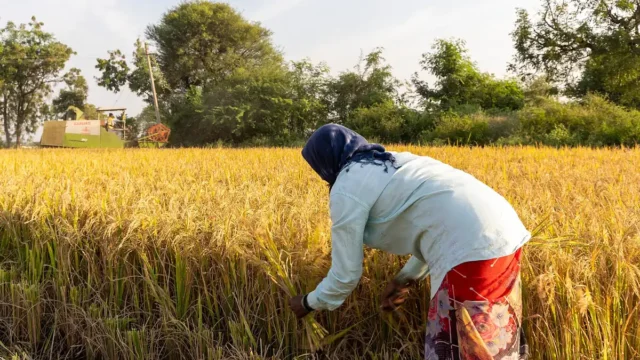
11 crore Farmer IDs created five months early under the Digital Agriculture Mission and Agri Stack
The Centre is building a digital register of farmers, so that each farmer has one verified identity for all schemes. Under the Digital Agriculture Mission, 11 crore Farmer IDs were created by the night of 23 October, five months before the March 2027 deadline. With this ID, farmers need not submit the same papers again and again for loans, crop insurance or relief. For you, this links Agri Stack, the Kisan Credit Card, PMFBY and land-record reform.
UPSC angle: Prelims: Digital Agriculture Mission, Agri Stack, KCC, PMFBY, DILRMP. · Mains GS-III: technology in agriculture; DBT.
25 Oct 2026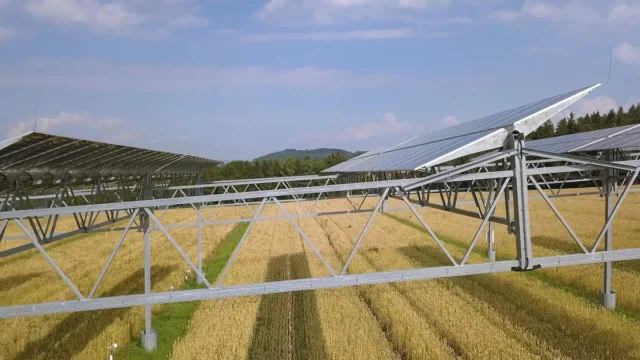
Agrivoltaics World Conference in Delhi: PM-KUSUM’s next phase and the small-farmer test
Opening the 7th Agrivoltaics World Conference at Bharat Mandapam on 21 October 2026, the first in the Global South, Renewable Energy Minister Pralhad Joshi said the next phase of PM-KUSUM will carry one of the world’s most ambitious agrivoltaics programmes. Agriculture Minister Shivraj Singh Chouhan said the policy must work for the 85% of farmers who are small and marginal, with an average holding of just 0.96 hectare.
UPSC angle: Prelims: PM-KUSUM, TERI estimate, capacity numbers. · Mains GS-III: land-energy-food nexus.
22 Oct 2026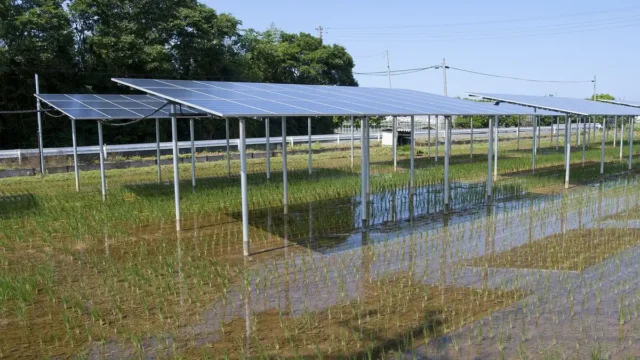
Agrivoltaics: Centre plans a scheme to push solar panels above farms; 5 GW seen in 3–4 years
MNRE Secretary Santosh Kumar Sarangi said on 19 October 2026 that the Centre is planning a central sector scheme to help States adopt agrivoltaics, either standalone or within PM-KUSUM 2.0. He expects capacity to cross 5 GW in three to four years if States notify feed-in tariffs. India hosts the 7th Agrivoltaics World Conference in New Delhi from 21 to 23 October.
UPSC angle: Prelims: agrivoltaics, PM-KUSUM components, feed-in tariffs. · Mains GS-III: energy transition and food security.
20 Oct 2026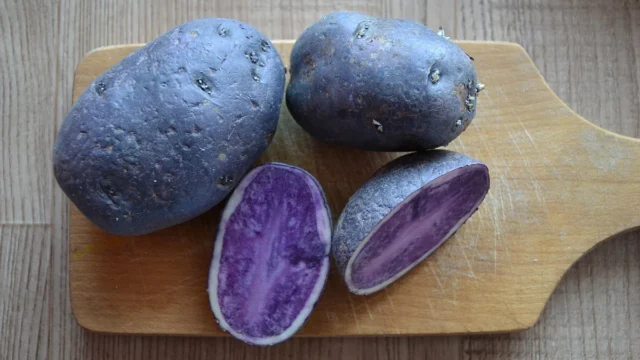
Kufri Jamunia: ICAR-CPRI’s purple potato to fight hidden hunger
A PIB backgrounder of 18 October 2026 puts the spotlight on Kufri Jamunia, a purple-fleshed potato bred by ICAR’s Central Potato Research Institute and released in 2024. It has nearly twice the Vitamin C of a common potato and several times more zinc and iron, along with antioxidants called anthocyanins. The idea is clever: instead of asking people to change what they eat, make the food they already eat more nutritious. That is biofortification.
UPSC angle: Prelims: Kufri Jamunia, CPRI, anthocyanins, biofortification vs fortification. · Mains GS-III: nutrition security; GS-II: hunger.
18 Oct 2026Learn the concept
Question text as printed in the official UPSC Civil Services (Main) question paper. The model answer is original Battle IAS work; use it to learn structure, not to memorise.
Want every PYQ in one place? See the Battle IAS PYQ Book.