
UPSC Mains 2021 GS Paper 3 Q18: model answer
Describe the various causes and the effects of landslides. Mention the important components of the National Landslide Risk Management Strategy.
What the question wants
Describe the causes and effects of landslides and the main components of the National Landslide Risk Management Strategy.
How to structure it
Causes, effects, strategy.
- Scale
- Natural causes
- Human causes
- Effects
- NLRMS components
How to think it through
~12.6% of land area prone (0.42 million sq km) excluding snow (GSI/NDMA). Natural: heavy rain, earthquakes, steep slopes, weak rock, river undercutting, snowmelt, cloudbursts. Human: road cutting, deforestation, quarrying, construction, hydro tunnels, poor drainage. Effects: deaths, roads cut, villages buried, river damming and floods, economic loss, tourism. NLRMS (NDMA 2019): landslide hazard, vulnerability and risk assessment (LHZ mapping); multi-hazard; monitoring and early warning; awareness programmes; capacity building and training; mountain zone regulations and policies; stabilisation and mitigation; special purpose vehicle/landslide management fund; research.
Model answer
In July 2023, a landslide buried much of Irshalwadi, a tribal hamlet in Raigad, Maharashtra, at night. A year later, Wayanad saw one of the deadliest landslides in Kerala's history. About 12.6% of India's land area, outside permanent snow, is prone to landslides (GSI).
Natural causes
- Heavy and intense rainfall, including cloudbursts.
- Earthquakes that loosen slopes in the Himalaya and North-East.
- Steep slopes and weak, fractured rock.
- River undercutting at the base of slopes.
- Snowmelt and glacial activity.
- Wayanad-type slopes where thin soil sits on hard rock and slides when saturated.
Human causes
- Road cutting without slope support.
- Deforestation and loss of root binding.
- Quarrying and mining.
- Unplanned tourism and hotels on unstable slopes, as in Himachal.
- Construction and hydro tunnels on fragile slopes.
- Blocked drainage that saturates the soil.
Effects
- Deaths and burial of villages.
- Roads and power lines cut for days.
- Rivers blocked, forming lakes that may burst later.
- Economic losses in tourism, farming and transport.
- Displacement and psychological trauma.
- Long-term isolation of border and hill villages when roads stay closed.
Components of the National Landslide Risk Management Strategy (NDMA, 2019)
- Hazard mapping: landslide hazard, vulnerability and risk assessment at different scales.
- Monitoring and early warning: sensors, rainfall thresholds and satellite tracking.
- Awareness programmes for communities and officials.
- Capacity building and training of engineers, planners and local bodies.
- Mountain zone regulations and policies on land use and construction.
- Stabilisation and mitigation of known landslide sites.
- Special purpose funding for landslide mitigation projects.
- Research and knowledge sharing with GSI, ISRO and universities.
- Landslide early warning pilots, such as the GSI's regional system in Darjeeling and the Nilgiris.
The best landslide strategy keeps the hill whole and the houses away from its weakest slopes.
Draw: A slope with arrows: rain from above, road cut at the base, sliding mass.
Keywords, cases and data to drop in
12.6% area, GSI, Irshalwadi 2023, Wayanad 2024, cloudburst, river undercutting, road cutting, deforestation, landslide dam, NLRMS 2019, LHZ, early warning, mountain zone regulations, stabilisation.
Where most answers lose marks
- Writing causes and effects without the strategy's components.
Related Mains PYQs
- Discuss how the contradiction between 'rapid infrastructure development' and 'disaster-risk reduction' in ecologically-sensitive areas of India can be managed, with suitable examples. UPSC 2026 · GS-III
- "Community participation is the cornerstone of effective disaster management". Analyse this statement with suitable examples from India. Also discuss the challenges to… UPSC 2026 · GS-III
- What are Tsunamis? How and where are they formed? What are their consequences ? Explain with examples. UPSC 2025 · GS-I
- Seawater intrusion in the coastal aquifers is a major concern in India. What are the causes of seawater intrusion and the remedial… UPSC 2025 · GS-III
Fresh examples from current affairs
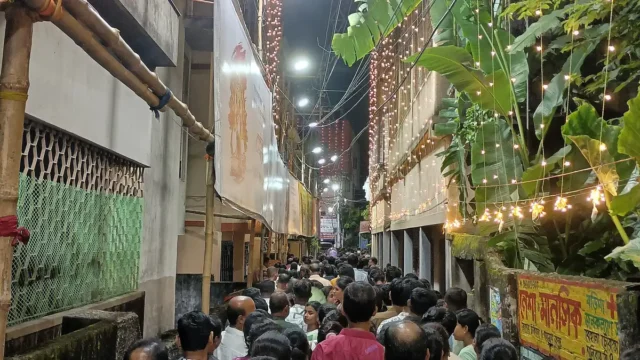
Chorbagan pandal stampede in Kolkata kills 19: what went wrong and how crowds should be managed
Nineteen people were killed and about 25 injured in a stampede at the Chorbagan Sarbojanin Durga Puja pandal in north Kolkata on the evening of 17 October 2026, during Saptami. According to police and the FIR, sudden heavy rain, weak crowd control and an announcement that the pandal could collapse set off the panic. Seven people have been arrested, and West Bengal has set up a six-member SIT.
UPSC angle: Prelims: NDMA, BNSS 163, BNS 105. · Mains GS-III: crowd management and disaster governance.
17 Oct 2026
IITM Pune holds first consultation of the Climate Science into Services for India Forum
The Indian Institute of Tropical Meteorology (IITM), Pune, under the Ministry of Earth Sciences, held the first stakeholder consultation of the Climate Science into Services for India Forum (CSSIF) on 17 October 2026. More than 150 participants from over 80 institutions, including RBI, NDRF, NIDM and State climate cells, discussed what climate information each sector needs. Speakers stressed the need for a national Climate Services Information System (CSIS).
UPSC angle: Prelims: IITM, GFCS, INCOIS, NAPCC. · Mains GS-III: climate adaptation and services.
17 Oct 2026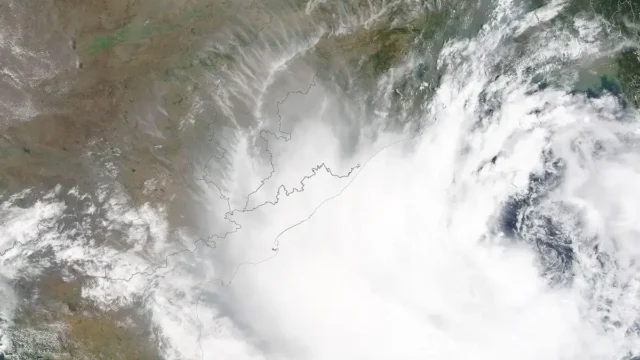
IMD launches a map-based Decision Support System for cyclone and marine warnings
On 12 October 2026 the India Meteorological Department dedicated a Cyclone Warning and Marine Weather Services Decision Support System to the nation. The WebGIS platform shows cyclone track, intensity, winds, rainfall, storm surge and district-wise warnings on one map for disaster managers and the public.
UPSC angle: Prelims: IMD, cone of uncertainty, storm surge. · Mains GS-III: early warning and disaster preparedness.
13 Oct 2026
India offers flood relief to Nepal; PM speaks to Nepal PM
On 26 August 2026 Prime Minister Narendra Modi spoke to Nepal's Prime Minister Balendra Shah and conveyed condolences on the loss of lives in floods in Nepal. He said India is ready to provide all possible humanitarian assistance, and that Indian teams are coordinating closely with Nepalese authorities on rescue and relief.
UPSC angle: Mains: India–Nepal water and flood cooperation.
26 Aug 2026Learn the concept
Question text as printed in the official UPSC Civil Services (Main) question paper. The model answer is original Battle IAS work; use it to learn structure, not to memorise.
Want every PYQ in one place? See the Battle IAS PYQ Book.