
UPSC Mains 2022 GS Paper 3 Q8: model answer
Explain the mechanism and occurrence of cloudburst in the context of the Indian subcontinent. Discuss two recent examples.
What the question wants
Explain the mechanism and occurrence of cloudbursts in the Indian subcontinent and discuss two recent examples.
How to structure it
Mechanism, occurrence, examples.
- Definition
- Mechanism
- Where and when in India
- Two examples
How to think it through
IMD: ≥100 mm/hour over ~20–30 sq km. Mechanism: monsoon moist air forced up by orography (orographic lift), rapid cooling, large cumulonimbus clouds; updrafts hold drops until they become too heavy, then sudden release; sometimes interaction with western disturbances. Occurrence: Himalaya (Uttarakhand, Himachal, J&K, Ladakh), Western Ghats, NE; monsoon months. Examples: Amarnath cave July 2022 (~16 dead); Dharali, Uttarkashi, 5 August 2025 (Kheer Ganga flash flood) — though attribution debated; Kishtwar Chasoti 14 Aug 2025 (~60 dead). Use Amarnath 2022 and Kishtwar 2025.
Model answer
A cloudburst, as defined by the India Meteorological Department, is rainfall of about 100 mm or more in an hour over a small area of roughly 20–30 sq km. It is a month's worth of rain in an hour, falling on one valley.
Mechanism
- Moist monsoon winds are pushed up steep mountain slopes (orographic lifting).
- The air cools quickly and forms tall cumulonimbus clouds.
- Strong updrafts hold up growing raindrops; when they weaken, the water falls all at once.
- Narrow valleys funnel the water into flash floods and debris flows.
Occurrence in India
- Mostly in the Himalaya: Uttarakhand, Himachal Pradesh, Jammu and Kashmir and Ladakh, during the monsoon.
- Also in the Western Ghats and the North-East.
Two recent examples
- Amarnath, July 2022: a localised cloudburst near the holy cave sent a flash flood through the pilgrims' tent camp, killing about 16 people.
- Kishtwar, August 2025: a cloudburst at Chasoti village on the Machail Mata pilgrimage route killed over 60 people.
Cloudbursts are short and local, so warning systems and safe camp siting matter more than relief.
Draw: Moist wind rising over a mountain, a tall cloud, and a sudden downpour into a narrow valley.
Keywords, cases and data to drop in
cloudburst 100 mm/hour, IMD, orographic lifting, cumulonimbus, updraft collapse, western disturbance, flash flood, Amarnath 2022, Kishtwar Chasoti 2025, Himalaya.
Where most answers lose marks
- Defining it as any heavy rainfall. The intensity and small area are key.
Related Mains PYQs
- Discuss how the contradiction between 'rapid infrastructure development' and 'disaster-risk reduction' in ecologically-sensitive areas of India can be managed, with suitable examples. UPSC 2026 · GS-III
- "Community participation is the cornerstone of effective disaster management". Analyse this statement with suitable examples from India. Also discuss the challenges to… UPSC 2026 · GS-III
- What are Tsunamis? How and where are they formed? What are their consequences ? Explain with examples. UPSC 2025 · GS-I
- Seawater intrusion in the coastal aquifers is a major concern in India. What are the causes of seawater intrusion and the remedial… UPSC 2025 · GS-III
Fresh examples from current affairs
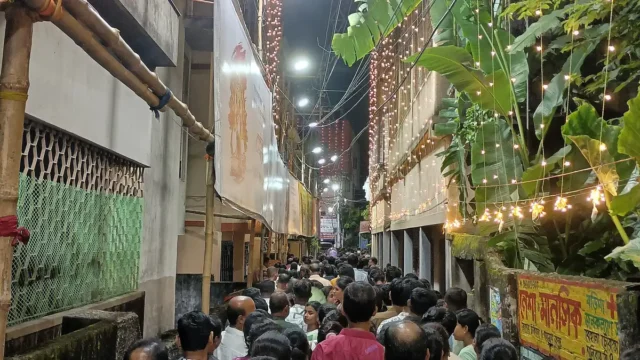
Chorbagan pandal stampede in Kolkata kills 19: what went wrong and how crowds should be managed
Nineteen people were killed and about 25 injured in a stampede at the Chorbagan Sarbojanin Durga Puja pandal in north Kolkata on the evening of 17 October 2026, during Saptami. According to police and the FIR, sudden heavy rain, weak crowd control and an announcement that the pandal could collapse set off the panic. Seven people have been arrested, and West Bengal has set up a six-member SIT.
UPSC angle: Prelims: NDMA, BNSS 163, BNS 105. · Mains GS-III: crowd management and disaster governance.
17 Oct 2026
IITM Pune holds first consultation of the Climate Science into Services for India Forum
The Indian Institute of Tropical Meteorology (IITM), Pune, under the Ministry of Earth Sciences, held the first stakeholder consultation of the Climate Science into Services for India Forum (CSSIF) on 17 October 2026. More than 150 participants from over 80 institutions, including RBI, NDRF, NIDM and State climate cells, discussed what climate information each sector needs. Speakers stressed the need for a national Climate Services Information System (CSIS).
UPSC angle: Prelims: IITM, GFCS, INCOIS, NAPCC. · Mains GS-III: climate adaptation and services.
17 Oct 2026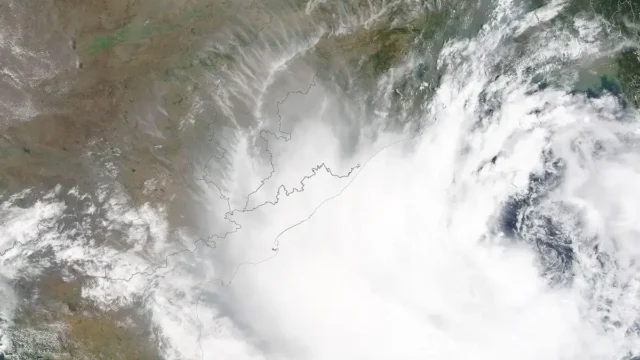
IMD launches a map-based Decision Support System for cyclone and marine warnings
On 12 October 2026 the India Meteorological Department dedicated a Cyclone Warning and Marine Weather Services Decision Support System to the nation. The WebGIS platform shows cyclone track, intensity, winds, rainfall, storm surge and district-wise warnings on one map for disaster managers and the public.
UPSC angle: Prelims: IMD, cone of uncertainty, storm surge. · Mains GS-III: early warning and disaster preparedness.
13 Oct 2026
India offers flood relief to Nepal; PM speaks to Nepal PM
On 26 August 2026 Prime Minister Narendra Modi spoke to Nepal's Prime Minister Balendra Shah and conveyed condolences on the loss of lives in floods in Nepal. He said India is ready to provide all possible humanitarian assistance, and that Indian teams are coordinating closely with Nepalese authorities on rescue and relief.
UPSC angle: Mains: India–Nepal water and flood cooperation.
26 Aug 2026Learn the concept
Question text as printed in the official UPSC Civil Services (Main) question paper. The model answer is original Battle IAS work; use it to learn structure, not to memorise.
Want every PYQ in one place? See the Battle IAS PYQ Book.