
UPSC Mains 2022 GS Paper 3 Q12: model answer
Do you think India will meet 50 percent of its energy needs from renewable energy by 2030? Justify your answer. How will the shift of subsidies from fossil fuels to renewables help achieve the above objective? Explain.
What the question wants
Judge whether India can meet half of its energy needs from renewables by 2030, and explain how moving subsidies from fossil fuels to renewables would help.
How to structure it
Clarify the target, judge, then subsidy shift.
- What the target really is
- Progress
- Reasons for optimism
- Obstacles
- Shifting subsidies
- Verdict
How to think it through
Panchamrit at COP26: 500 GW non-fossil and 50% of energy requirement from renewables by 2030. Updated NDC (2022): 50% of installed electric capacity from non-fossil sources by 2030 — achieved June 2025. Generation share much lower (~25–30% non-fossil in electricity), and primary energy still ~55% coal. Optimism: auctions, falling costs, storage. Obstacles: storage, transmission, discoms, land, cell imports, intermittency, industry heat. Subsidy shift: fossil subsidies fell sharply after petrol (2010) and diesel (2014) decontrol; IISD found fossil support still higher than RE support; shift via storage VGF, green hydrogen, rooftop subsidy, EV incentives, coal cess (now part of GST compensation, ended).
Model answer
At COP26 in Glasgow, India promised in its Panchamrit to meet 50% of its energy requirements from renewables by 2030. The updated NDC of 2022 wrote a narrower version: 50% of installed electricity capacity from non-fossil sources. India met that one in June 2025, five years early. Whether the wider promise will be met is a harder question.
Where India stands
- Non-fossil capacity crossed 300 GW in July 2026, against the 500 GW goal for 2030.
- But capacity is not generation: solar runs for a few hours a day, so non-fossil sources still produce only around a quarter to a third of electricity.
- Electricity is itself only part of total energy; coal, oil and gas still dominate industry, transport and cooking.
Reasons for optimism
- Solar and wind are now the cheapest new power.
- Auctions of about 50 GW a year of renewable capacity.
- Battery storage prices falling, with viability gap funding.
- Green hydrogen mission and electric mobility.
Obstacles
- Storage and evening peaks.
- Transmission lags behind solar parks.
- Weak discom finances and contract delays.
- Imported cells and wafers.
- Hard-to-abate sectors: steel, cement, fertiliser.
How shifting subsidies would help
- Petrol (2010) and diesel (2014) prices were decontrolled, freeing money; IISD studies found fossil fuel subsidies fell sharply after 2014.
- Redirecting funds to rooftop solar, storage, green hydrogen and EV charging lowers clean energy costs.
- Price signals: cheaper clean options change the choices of households and industry.
- Funds for just transition in coal districts like Dhanbad and Korba.
Verdict
- The capacity target is already met; 50% of all energy needs by 2030 is unlikely without storage, grids and a deeper subsidy shift.
The answer is yes for capacity, not yet for energy, and the difference is where the next decade's work lies.
Draw: Two bars: share in capacity (about 50%) vs share in generation (about 30%).
Keywords, cases and data to drop in
Panchamrit, 50% energy requirement, updated NDC 2022, 50% non-fossil capacity June 2025, 500 GW, capacity vs generation, storage VGF, decontrol 2010/2014, IISD, just transition.
Where most answers lose marks
- Treating capacity share and energy share as the same. Clarify the target first.
Related Mains PYQs
- Explain the key challenges for India's energy security. What measures do you suggest for ensuring energy security along with economic growth and… UPSC 2026 · GS-III
- How are startups in India promoting entrepreneurship, innovation and employment? Discuss the global and domestic challenges in their working and suggest suitable… UPSC 2026 · GS-III
- Discuss the rationale of the Production Linked Incentive (PLI) scheme. What are its achievements ? In what way can the functioning and… UPSC 2025 · GS-III
- India aims to become a semiconductor manufacturing hub. What are the challenges faced by the semiconductor industry in India ? Mention the… UPSC 2025 · GS-III
Fresh examples from current affairs

India’s shipbuilding: deliveries set to double, but only 0.5% of global orders
India wants to be a top shipbuilding nation, but its yards held only 0.5% of the world’s order book in September, ranking 12th. China alone holds 64% of all orders. Yet Indian deliveries due in 2026–30 are nearly double those of 2021–25, and a ₹69,725-crore package aims for the top 10 by 2030 and the top five by 2047. For you, this links the Sagarmala Programme, ports like Vizhinjam and India’s manufacturing push.
UPSC angle: Prelims: CGT, Sagarmala, Vizhinjam, BIMCO. · Mains GS-III: manufacturing, infrastructure, maritime security.
25 Oct 2026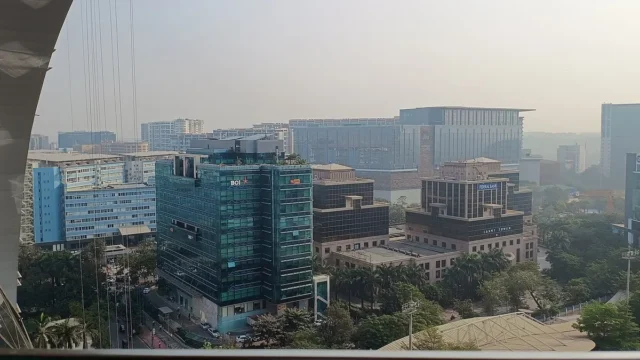
Net FDI positive for third straight month: $3.3 billion in August 2026, says RBI Bulletin
Net foreign direct investment into India was $3.3 billion in August 2026, the third positive month in a row, according to the RBI’s October Bulletin reported by The Hindu on 24 October. Gross inflows were $11.1 billion, almost 68% higher than a year earlier, while outflows rose to $7.7 billion, mainly because foreign firms took profits home. It is a clear turnaround from five months of negative net FDI between August and December 2025.
UPSC angle: Prelims: gross vs net FDI, FDI vs FPI, capital account. · Mains GS-III: investment models, external sector stability.
24 Oct 2026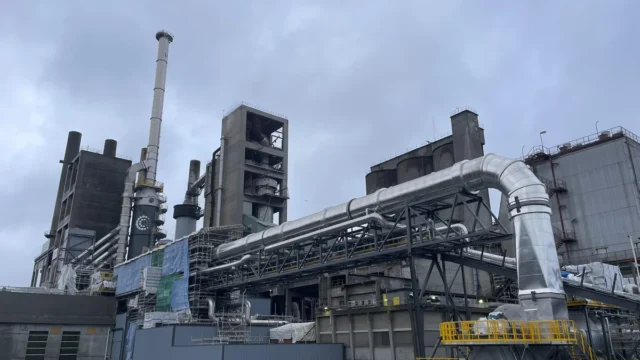
Carbon capture: how India can make its ₹20,000 crore CCUS push count, in three phases
Union Budget 2026 set aside ₹20,000 crore over five years for carbon capture, utilisation and storage (CCUS). An expert piece in the Indian Express (23 October 2026) suggests spending it in three phases: about ₹4,000 crore on research, pilots and mapping storage sites; about ₹9,000 crore on public–private plants; and ₹6,000–7,000 crore on scale-up. The aim is to help steel, cement and refineries cut emissions they cannot easily avoid.
UPSC angle: Prelims: CCUS, DAC, Deccan Traps basalt, CCTS 2023. · Mains GS-III: decarbonising industry; climate finance.
23 Oct 2026
Colour-coded driving licences: draft CMVR amendments for Indian and foreign nationals explained
The Road Transport Ministry has proposed draft amendments to the Central Motor Vehicles Rules, reported on 23 October 2026, under which driving licences for Indian and foreign nationals will have separate colour formats. Licences would also have to show the holder’s blood group, mobile number and emergency contact, the safe-driving tutorial pass mark would rise from 60% to 75%, and changes to name or address would be decided within 15 days at no charge. Stakeholders have 30 days to object.
UPSC angle: Prelims: MV Act 1988, CMVR 1989, Entry 35 Concurrent List, Form 7. · Mains GS-II: governance and road safety.
23 Oct 2026Learn the concept
Question text as printed in the official UPSC Civil Services (Main) question paper. The model answer is original Battle IAS work; use it to learn structure, not to memorise.
Want every PYQ in one place? See the Battle IAS PYQ Book.