
Judicial Review in India: Meaning, Constitutional Basis, Key Cases and Judicial Activism (UPSC Notes + PYQs)
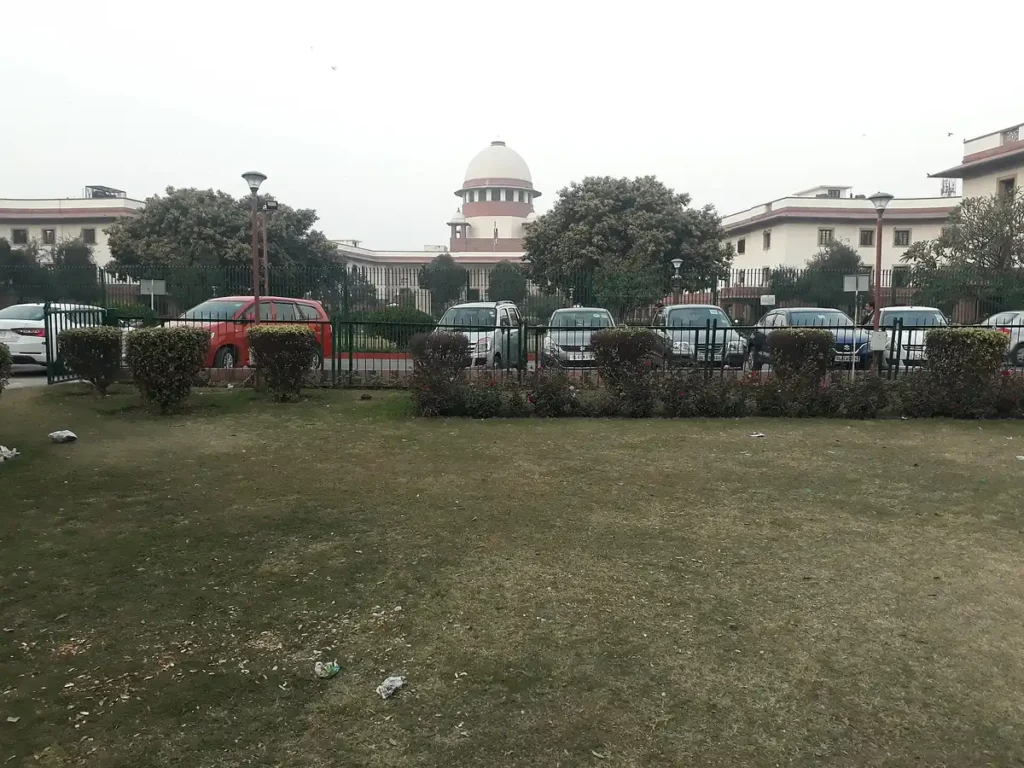
UPSC has already asked about this. Read the story with these questions in mind.
Background: Marbury to Kesavananda
Judicial review means the power of courts to examine laws and executive actions and strike down those that violate the Constitution. The United States Supreme Court asserted it in Marbury v Madison (1803), even though the US Constitution does not mention it. India’s framers wrote the power into the text: Article 13 declares laws inconsistent with Fundamental Rights void, and Articles 32 and 226 give the means to enforce that. Ambedkar saw the courts as guardians of the Constitution in a federal system. Over time, the Supreme Court extended review to constitutional amendments and to the exercise of executive and even Presidential power.
Where the power comes from
The word “judicial review” is not in the Constitution. Article 13(2) says laws inconsistent with Fundamental Rights are void; Articles 32 and 226 give the courts the means to declare them so. The idea comes from the American case Marbury v. Madison (1803), but India’s version is narrower than the US “due process” model and wider than Britain, where Parliament is supreme.
Three kinds of review
- Of constitutional amendments: tested against the basic structure (Kesavananda Bharati, 1973; NJAC case, 2015).
- Of legislation: Parliament and State laws tested against Fundamental Rights and the division of powers.
- Of administrative action: tested for illegality, irrationality and procedural impropriety; proportionality for rights.
- Power given by the Constitution
- Checks validity of laws and actions
- Courts declare law void
- Exercised in every legal system with a written constitution
- A judicial approach, not a power
- Courts expand rights and remedies
- PIL, continuing mandamus, guidelines
- Can slide into overreach
Ninth Schedule is not a safe harbour
Laws placed in the Ninth Schedule were once immune. In I.R. Coelho (2007) the Court held that laws added after 24 April 1973 can be reviewed if they damage the basic structure.
Judicial review, activism and overreach
| Term | Meaning | Example |
|---|---|---|
| Judicial review | Testing validity of laws and actions | Electoral bonds scheme struck down (2024) |
| Judicial activism | Creative interpretation to protect rights where the State is silent | Vishaka guidelines (1997) |
| Judicial overreach | Courts taking over executive or legislative functions | Critics cite liquor-ban near highways order (2016) |
- 1Law challenged by a party or through PIL
- 2Is the subject in the legislature's list?
- 3Does it violate Fundamental Rights or other limits?
- 4Can it be read down or the bad part severed?
- 5Upheld, read down, or struck down
Articles that support judicial review
| Article | Role |
|---|---|
| 13 | Laws violating Fundamental Rights are void |
| 32 and 226 | Writ jurisdiction of the Supreme Court and High Courts |
| 131 | Disputes between the Centre and States |
| 132-136 | Appellate jurisdiction, including special leave |
| 137 | Review of its own judgments |
| 141-142 | Law declared is binding; complete justice |
| 245-246 | Distribution of legislative powers that courts police |
Judicial review in Prelims
Common traps: the phrase “judicial review” does not appear in the Constitution; the power belongs to both the Supreme Court and High Courts; and the Ninth Schedule does not give complete immunity. Judicial review under the Indian model is narrower than in the United States because Article 21 uses “procedure established by law” rather than “due process”, although Maneka Gandhi (1978) narrowed the gap. Parliament cannot take away the power by amendment, since it is part of the basic structure.
Limits the courts set on themselves
Presumption of constitutionality, deference on economic policy (R.K. Garg, 1981), no review of the wisdom of a law, and the “political question” restraint on some matters.
Landmark cases
- Kesavananda Bharati (1973): amendments reviewable on the basic structure ground.
- Indira Gandhi v Raj Narain (1975): free and fair elections protected.
- Minerva Mills (1980): judicial review itself is a basic feature.
- S.R. Bommai (1994): Article 356 proclamations reviewable.
- L. Chandra Kumar (1997): High Courts’ review over tribunals cannot be excluded.
- I.R. Coelho (2007): Ninth Schedule laws after 24 April 1973 reviewable.
- Supreme Court Advocates-on-Record Assn. (2015): NJAC struck down.
Grounds of review
Courts test legislation for legislative competence (is the subject in the right list?), violation of Fundamental Rights and other constitutional limits. They test executive action on the grounds summarised in English law and adopted in India: illegality, irrationality (the Wednesbury test of unreasonableness) and procedural impropriety, with proportionality increasingly used where rights are restricted. Doctrines such as severability, reading down and the presumption of constitutionality let courts save as much of a law as possible.
Debate for Mains
- For: protects rights and federal balance, and keeps all organs within limits.
- Against: unelected judges can substitute their views for those of elected bodies; delays and inconsistency weaken legitimacy.
- Middle ground: restraint in policy matters, activism where rights are at stake, and clear reasons so that judgments persuade.
Judicial Review: UPSC angle
For UPSC CSE
Prelims: constitutional basis, Ninth Schedule review, meaning of judicial review. Mains GS-II: separation of powers; activism vs overreach; accountability of the judiciary.
Judicial Review UPSC PYQs (Prelims)
Questions UPSC has actually asked, from the official papers. Pick an option to check yourself.
In India, Judicial Review implies
Judicial review is the court’s power to test laws and executive action against the Constitution and strike down what conflicts with it. Courts do not judge the wisdom of a law, and they do not vet Bills before assent. Answer as per the official UPSC key · Battle IAS PYQ bankAnswer (a) & why
Consider the following statements :
– 1. The Constitution of India defines its 'basic structure' in terms of federalism, secularism, fundamental rights and democracy.
– 2. The Constitution of India provides for 'judicial review' to safeguard the citizens' liberties and to preserve the ideals on which the Constitution is based.
Which of the statements given above is/are correct?
The basic structure comes from judgments, mainly Kesavananda Bharati (1973). The Constitution does not define it. The phrase “judicial review” does not appear in the text either. The power comes from Articles 13, 32 and 226, and the Court calls it part of the basic structure. UPSC marked both statements wrong. Answer as per the official UPSC key · Battle IAS PYQ bankAnswer (d) & why
Mains PYQs on this topic
Questions from the official UPSC Mains papers (2023-2026 in the Battle IAS Mains bank), newest first. Each links to a model answer.
- UPSC Mains 2026 · GS Paper II · Q12 · 15 marks
What is meant by judicial legislation? In this context, discuss the verdicts of the apex court allowing “passive euthanasia” and a “living will”.
- UPSC Mains 2024 · GS Paper II · Q14 · 15 marks
Explain the reasons for the growth of public interest litigation in India. As a result of it, has the Indian Supreme Court emerged as the world’s most powerful judiciary?
Quick quiz
Which case held that laws in the Ninth Schedule after 1973 are open to judicial review?
I.R. Coelho, 2007.Answer (b)
Judicial review in India is based mainly on
Article 13 declares inconsistent laws void; Articles 32 and 226 provide the remedy.Answer (a)
The NJAC Act was struck down in 2015 because it
The Court held judicial independence is part of the basic structure.Answer (b)
FAQs
Is judicial review mentioned in the Constitution?
The term is not used, but Articles 13, 32 and 226 provide for it.
Can Parliament take away judicial review?
No. It is part of the basic structure.
What is the difference between judicial review and judicial activism?
Review tests validity; activism is the court stepping in creatively to protect rights when other organs fail to act.
What is the doctrine of severability?
Only the unconstitutional part of a law is struck down if it can be separated from the rest.
Which American case introduced judicial review?
Marbury v Madison (1803).
What is the doctrine of reading down?
Interpreting a provision narrowly so that it stays within constitutional limits, instead of striking it down.
What is the presumption of constitutionality?
Courts start by assuming a law is valid; the person challenging it must show that it breaches the Constitution.
Spotted an error? Tell us. We correct within 48 hours.
Image: Pinakpani, Wikimedia Commons, CC BY-SA 4.0
How to use this in Mains
If asked: UPSC Mains 2026, GS-II: What is meant by judicial legislation? In this context, discuss the verdicts of the apex court allowing “passive euthanasia” and a “living will”.
Quote: “Middle ground: restraint in policy matters, activism where rights are at stake, and clear reasons so that judgments persuade.”
Use it: Ideal balanced conclusion.
In the news

Supreme Court: no prior approval under Section 17A needed to probe a bribe demand
In a judgment of 16 October 2026, a Supreme Court Bench of Justices S.V.N. Bhatti and N.V. Anjaria held that investigating a bribe demand by a public servant does not need prior approval under Section 17A of the Prevention of Corruption Act. Asking for a bribe, the court said, is not part of discharging official duties.
19 Oct 2026
CCPA acts against online sale of explosives: 3,940 sellers delisted from seven platforms
The Central Consumer Protection Authority (CCPA) said on 19 October 2026 that 3,940 sellers of regulated explosives such as ammonium nitrate, picric acid and PETN have been delisted from seven online platforms after its action. It has fined Dial4Trade and ExportersIndia ₹10 lakh per order, and other cases are under hearing or investigation.
19 Oct 2026
India to host 61st CIML meeting on legal metrology in New Delhi, 26–28 October
India will host the 61st meeting of the International Committee of Legal Metrology (CIML) for the first time, in New Delhi from 26 to 28 October 2026. The Department of Consumer Affairs is organising it with the International Organization of Legal Metrology (OIML), and more than 100 delegates are expected, PIB said on 19 October.
19 Oct 2026
NMC withdraws MSMER-2023: medical colleges lose the fixed penalty rulebook, annual disclosure stays
The National Medical Commission (NMC) has de-notified the Maintenance of Standards of Medical Education Regulations, 2023 (MSMER-2023) by a notification dated 14 October 2026, published in the Gazette on 16 October. Its fixed penalties, including seat cuts and fines of up to ₹5 lakh for false records, go with it. The Annual Disclosure Report stays.
19 Oct 2026