
UPSC Mains 2013 GS Paper 3 Q11: model answer
Write a note on India's green energy corridor to alleviate the problem of conventional energy.
What the question wants
Write a note on what the Green Energy Corridor is and how it helps reduce dependence on conventional energy.
How to structure it
What, why, how it helps, issues.
- The idea
- Why it is needed
- Components
- How it helps
- Challenges
How to think it through
Renewable energy is concentrated in a few states (Tamil Nadu, Gujarat, Rajasthan, Karnataka) and is variable. Grid needs dedicated transmission to evacuate it. GEC: intra-state and inter-state lines, substations, Renewable Energy Management Centres; funded partly by KfW Germany. Phase II for Ladakh and other states.
Model answer
On a windy afternoon in Tamil Nadu, wind farms used to be shut down because the grid had no room for their power. The Green Energy Corridor (GEC) was planned to stop that waste.
Why it was needed
- Renewable energy is concentrated in a few states, far from the big markets.
- Wind and solar are variable; the grid must absorb swings.
- Without lines, power is curtailed and investors lose money.
What it includes
- Intra-state transmission in renewable-rich states.
- Inter-state lines by POWERGRID to move power across regions.
- Renewable Energy Management Centres to forecast and schedule supply.
- Support from Germany's KfW and central grants.
- Phase II (2022) for seven more states, and a special line for Ladakh's solar.
How it reduces dependence on conventional energy
- More renewable power reaches users, so less coal is burnt.
- Balancing across regions smooths variability.
- Green Energy Open Access rules (2022) let industries buy this power directly.
- It underpins the target of 500 GW of non-fossil capacity by 2030.
- Lower risk attracts more solar and wind investment.
Challenges
- Land and right of way for towers.
- Storage remains limited.
- Discom finances and payment delays.
- Grid stability: with more inverter-based power, frequency control and spinning reserves get harder.
- Lines take longer to build than solar parks, which take about two years.
The corridor turns sunshine and wind in one state into electricity for factories in another.
Draw: A map sketch: renewable states in the west and south, lines to load centres in the north.
Keywords, cases and data to drop in
GEC, intra-state and inter-state transmission, REMCs, POWERGRID, KfW, Phase II 2022, Ladakh, curtailment, ISTS.
Where most answers lose marks
- Defining it in two lines. A note must show the problem, the parts and the limits.
Related Mains PYQs
- Explain the key challenges for India's energy security. What measures do you suggest for ensuring energy security along with economic growth and… UPSC 2026 · GS-III
- How are startups in India promoting entrepreneurship, innovation and employment? Discuss the global and domestic challenges in their working and suggest suitable… UPSC 2026 · GS-III
- Discuss the rationale of the Production Linked Incentive (PLI) scheme. What are its achievements ? In what way can the functioning and… UPSC 2025 · GS-III
- India aims to become a semiconductor manufacturing hub. What are the challenges faced by the semiconductor industry in India ? Mention the… UPSC 2025 · GS-III
Fresh examples from current affairs

India’s shipbuilding: deliveries set to double, but only 0.5% of global orders
India wants to be a top shipbuilding nation, but its yards held only 0.5% of the world’s order book in September, ranking 12th. China alone holds 64% of all orders. Yet Indian deliveries due in 2026–30 are nearly double those of 2021–25, and a ₹69,725-crore package aims for the top 10 by 2030 and the top five by 2047. For you, this links the Sagarmala Programme, ports like Vizhinjam and India’s manufacturing push.
UPSC angle: Prelims: CGT, Sagarmala, Vizhinjam, BIMCO. · Mains GS-III: manufacturing, infrastructure, maritime security.
25 Oct 2026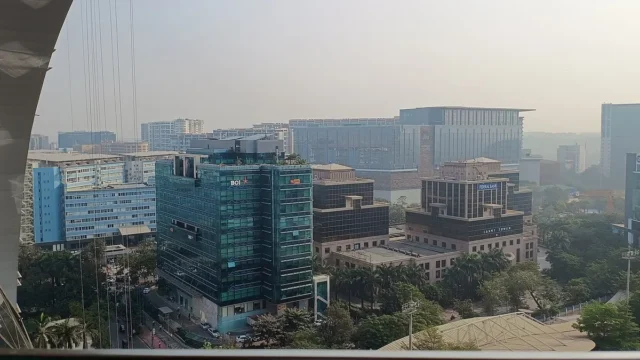
Net FDI positive for third straight month: $3.3 billion in August 2026, says RBI Bulletin
Net foreign direct investment into India was $3.3 billion in August 2026, the third positive month in a row, according to the RBI’s October Bulletin reported by The Hindu on 24 October. Gross inflows were $11.1 billion, almost 68% higher than a year earlier, while outflows rose to $7.7 billion, mainly because foreign firms took profits home. It is a clear turnaround from five months of negative net FDI between August and December 2025.
UPSC angle: Prelims: gross vs net FDI, FDI vs FPI, capital account. · Mains GS-III: investment models, external sector stability.
24 Oct 2026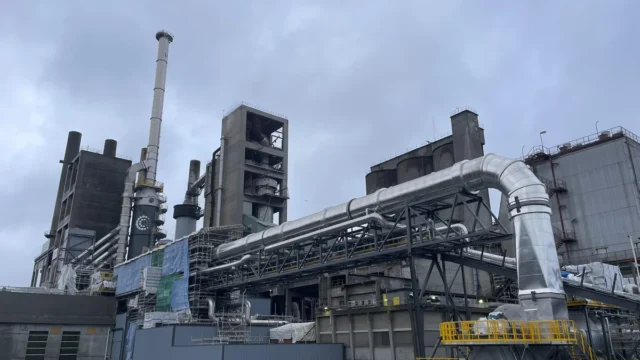
Carbon capture: how India can make its ₹20,000 crore CCUS push count, in three phases
Union Budget 2026 set aside ₹20,000 crore over five years for carbon capture, utilisation and storage (CCUS). An expert piece in the Indian Express (23 October 2026) suggests spending it in three phases: about ₹4,000 crore on research, pilots and mapping storage sites; about ₹9,000 crore on public–private plants; and ₹6,000–7,000 crore on scale-up. The aim is to help steel, cement and refineries cut emissions they cannot easily avoid.
UPSC angle: Prelims: CCUS, DAC, Deccan Traps basalt, CCTS 2023. · Mains GS-III: decarbonising industry; climate finance.
23 Oct 2026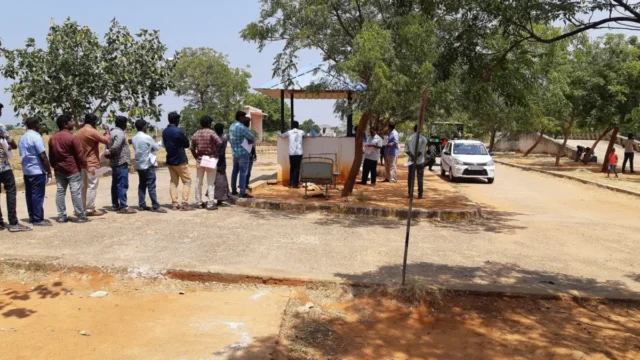
Colour-coded driving licences: draft CMVR amendments for Indian and foreign nationals explained
The Road Transport Ministry has proposed draft amendments to the Central Motor Vehicles Rules, reported on 23 October 2026, under which driving licences for Indian and foreign nationals will have separate colour formats. Licences would also have to show the holder’s blood group, mobile number and emergency contact, the safe-driving tutorial pass mark would rise from 60% to 75%, and changes to name or address would be decided within 15 days at no charge. Stakeholders have 30 days to object.
UPSC angle: Prelims: MV Act 1988, CMVR 1989, Entry 35 Concurrent List, Form 7. · Mains GS-II: governance and road safety.
23 Oct 2026Learn the concept
Question text as printed in the official UPSC Civil Services (Main) question paper. The model answer is original Battle IAS work; use it to learn structure, not to memorise.
Want every PYQ in one place? See the Battle IAS PYQ Book.