
UPSC Mains 2014 GS Paper 3 Q4: model answer
“In the villages itself, no form of credit organization will be suitable except the cooperative society.” – All India Rural Credit Survey. Discuss this statement in the background of agricultural finance in India. What constraints and challenges do financial institutions supplying agricultural finance face? How can technology be used to better reach and serve rural clients?
What the question wants
Discuss the Rural Credit Survey's claim about cooperatives, the constraints lenders to farmers face, and how technology can reach rural clients.
How to structure it
Statement, constraints, technology.
- Context of the Survey
- How far it holds today
- Constraints and challenges
- Technology solutions
- Conclusion
How to think it through
The 1954 All India Rural Credit Survey (Gorwala Committee) found moneylenders supplied most farm credit and said 'cooperation has failed, but cooperation must succeed'. Cooperatives still matter, but commercial banks and RRBs now give most farm credit. Constraints: no collateral, high cost per loan, weak cooperatives. Technology: KCC, digitised land records, PACS computerisation, mobile banking.
Model answer
In 1951–52 the All India Rural Credit Survey found that cooperatives supplied barely 3% of farm credit while moneylenders supplied about 70%. Its verdict, 'cooperation has failed, but cooperation must succeed', shaped a generation of policy.
How far the statement holds
- Strengths: a cooperative is local, knows the borrower and can lend on trust.
- Reality today: commercial banks give the bulk of farm credit; cooperatives and RRBs share the rest.
- About 1 lakh PACS still reach almost every village, so the idea is alive even if the claim of 'no other form' is not.
Constraints and challenges
- No collateral: tenants and sharecroppers lack titles.
- High transaction cost of many small loans.
- Weak cooperatives: political interference, poor governance, high NPAs.
- Risk: monsoon failure and price crashes; loan waivers damage repayment culture.
- Skewed flow: credit goes to better-off farmers and to agri-business, not to the marginal farmer, often for consumption, not investment.
Technology as a bridge
- Kisan Credit Card on RuPay, and the Modified Interest Subvention Scheme.
- Computerisation of PACS on a common ERP since 2023, linking them to district banks.
- Digitised land records and Agri Stack farmer IDs to verify borrowers.
- Banking correspondents, Aadhaar-enabled payments and satellite crop data to price risk.
- Multi-purpose PACS that also run storage, fertiliser shops and common service centres, so a loan comes with a business.
The Survey was right about closeness and wrong about exclusivity; technology lets a bank be as close as a cooperative.
Draw: A pie chart of farm credit sources in 1951–52 (moneylenders vs cooperatives) beside one for today.
Keywords, cases and data to drop in
AIRCS 1954, Gorwala Committee, PACS, three-tier cooperative, RRBs, KCC, interest subvention, PACS computerisation, banking correspondents, Agri Stack.
Where most answers lose marks
- Simply agreeing with the quotation. 'Discuss in the background' means test it against today's credit structure.
Related Mains PYQs
- Describe the various Technology Missions initiated in Indian agriculture and examine their role in food security. UPSC 2026 · GS-III
- How Indian agriculture has been transformed from food scarcity to food surplus level? Explain the various government policies implemented for diversification of… UPSC 2026 · GS-III
- Analyze the role of satellite-based technologies in achieving climate-smart agriculture and food security in India. UPSC 2026 · GS-I
- Explain the factors influencing the decision of the farmers on the selection of high value crops in India. UPSC 2025 · GS-III
Fresh examples from current affairs
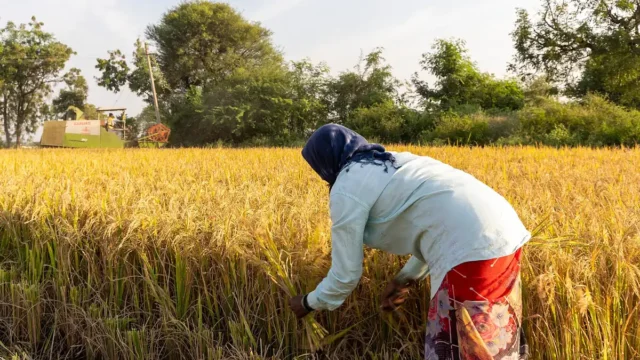
11 crore Farmer IDs created five months early under the Digital Agriculture Mission and Agri Stack
The Centre is building a digital register of farmers, so that each farmer has one verified identity for all schemes. Under the Digital Agriculture Mission, 11 crore Farmer IDs were created by the night of 23 October, five months before the March 2027 deadline. With this ID, farmers need not submit the same papers again and again for loans, crop insurance or relief. For you, this links Agri Stack, the Kisan Credit Card, PMFBY and land-record reform.
UPSC angle: Prelims: Digital Agriculture Mission, Agri Stack, KCC, PMFBY, DILRMP. · Mains GS-III: technology in agriculture; DBT.
25 Oct 2026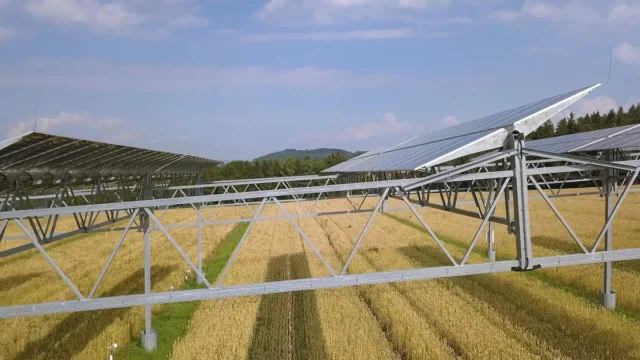
Agrivoltaics World Conference in Delhi: PM-KUSUM’s next phase and the small-farmer test
Opening the 7th Agrivoltaics World Conference at Bharat Mandapam on 21 October 2026, the first in the Global South, Renewable Energy Minister Pralhad Joshi said the next phase of PM-KUSUM will carry one of the world’s most ambitious agrivoltaics programmes. Agriculture Minister Shivraj Singh Chouhan said the policy must work for the 85% of farmers who are small and marginal, with an average holding of just 0.96 hectare.
UPSC angle: Prelims: PM-KUSUM, TERI estimate, capacity numbers. · Mains GS-III: land-energy-food nexus.
22 Oct 2026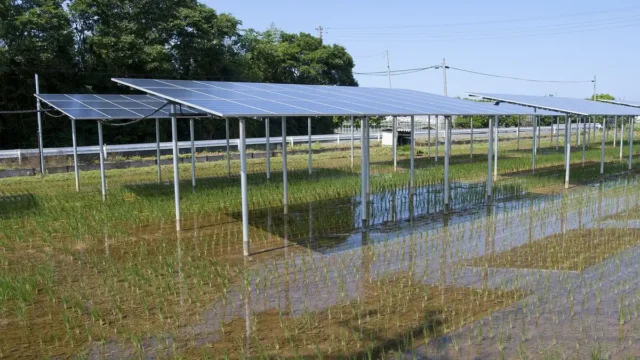
Agrivoltaics: Centre plans a scheme to push solar panels above farms; 5 GW seen in 3–4 years
MNRE Secretary Santosh Kumar Sarangi said on 19 October 2026 that the Centre is planning a central sector scheme to help States adopt agrivoltaics, either standalone or within PM-KUSUM 2.0. He expects capacity to cross 5 GW in three to four years if States notify feed-in tariffs. India hosts the 7th Agrivoltaics World Conference in New Delhi from 21 to 23 October.
UPSC angle: Prelims: agrivoltaics, PM-KUSUM components, feed-in tariffs. · Mains GS-III: energy transition and food security.
20 Oct 2026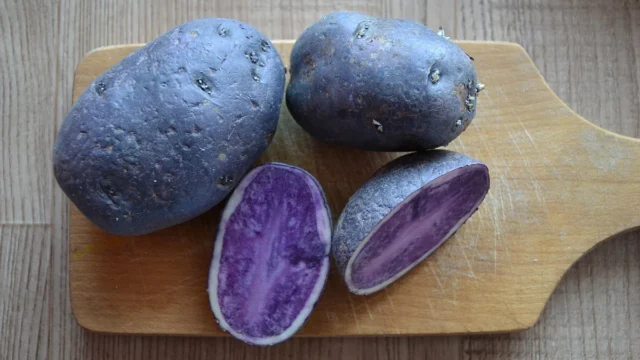
Kufri Jamunia: ICAR-CPRI’s purple potato to fight hidden hunger
A PIB backgrounder of 18 October 2026 puts the spotlight on Kufri Jamunia, a purple-fleshed potato bred by ICAR’s Central Potato Research Institute and released in 2024. It has nearly twice the Vitamin C of a common potato and several times more zinc and iron, along with antioxidants called anthocyanins. The idea is clever: instead of asking people to change what they eat, make the food they already eat more nutritious. That is biofortification.
UPSC angle: Prelims: Kufri Jamunia, CPRI, anthocyanins, biofortification vs fortification. · Mains GS-III: nutrition security; GS-II: hunger.
18 Oct 2026Learn the concept
Question text as printed in the official UPSC Civil Services (Main) question paper. The model answer is original Battle IAS work; use it to learn structure, not to memorise.
Want every PYQ in one place? See the Battle IAS PYQ Book.