
UPSC Mains 2015 GS Paper 3 Q16: model answer
The frequency of earthquakes appears to have increased in the Indian subcontinent. However, India’s preparedness for mitigating their impact has significant gaps. Discuss various aspects.
What the question wants
Discuss the gaps in India's preparedness to reduce earthquake impacts.
How to structure it
Risk, gaps, fixes.
- India's seismic risk
- Gaps
- Measures
How to think it through
~59% of land prone to moderate to severe quakes; zones II–V (BIS revised seismic zonation 2025 added zone VI? — BIS IS 1893 2025 draft new map with Himalayan arc in zone VI; uncertain, avoid). Nepal 2015 triggered question. Gaps: non-engineered buildings, poor code enforcement (IS 1893, IS 13920), no retrofitting of old schools/hospitals, urban density (Delhi zone IV), lack of microzonation, few trained masons, weak EOCs, low awareness and drills, insurance near zero, limited early warning. Measures: NDMA earthquake guidelines 2007, National Building Code 2016, techno-legal regime, retrofitting, microzonation, NDRF, mason training, EEW in Uttarakhand (IIT Roorkee), BhuDEV app.
Model answer
The Nepal earthquake of April 2015 killed about 9,000 people and was felt across North India. It was a reminder that about 59% of India's land lies in zones prone to moderate or severe earthquakes, including Delhi and the whole Himalayan arc.
Gaps in preparedness
- Unsafe buildings: most homes are non-engineered, built without engineers.
- Weak enforcement of the seismic codes (IS 1893, IS 13920) and the National Building Code.
- Old schools and hospitals not retrofitted.
- Dense, unplanned cities with narrow lanes where rescue is hard.
- Little microzonation of city soils, though soft soils amplify shaking.
- Few trained masons and engineers in small towns.
- Low awareness and rare drills.
- Hardly any insurance cover for homes.
- Emergency operation centres that are weak in many districts.
- Lifeline infrastructure such as bridges and power stations rarely checked for seismic safety.
- Bhuj (2001) showed apartments collapsing because of soft storeys and poor concrete.
Measures
- NDMA's earthquake guidelines and a techno-legal regime that links building approval to codes.
- Retrofitting of lifeline buildings first.
- Microzonation of cities in zones IV and V.
- Mason training and certification.
- Earthquake early warning, as piloted in Uttarakhand, and the BhuDEV app.
- NDRF teams and community drills.
- Seismic safety audits before approving high-rise buildings.
- Insurance linked to safe construction.
Earthquakes do not kill people; buildings do.
Draw: A map of seismic zones with the Himalaya and Kutch in the highest zone.
Keywords, cases and data to drop in
59% area, seismic zones, Nepal 2015, non-engineered buildings, IS 1893, IS 13920, NBC 2016, techno-legal regime, retrofitting, microzonation, mason training, EEW Uttarakhand, NDRF.
Where most answers lose marks
- Claiming earthquakes have become more frequent. The question says 'appears'; focus on preparedness gaps.
Related Mains PYQs
- Discuss how the contradiction between 'rapid infrastructure development' and 'disaster-risk reduction' in ecologically-sensitive areas of India can be managed, with suitable examples. UPSC 2026 · GS-III
- "Community participation is the cornerstone of effective disaster management". Analyse this statement with suitable examples from India. Also discuss the challenges to… UPSC 2026 · GS-III
- What are Tsunamis? How and where are they formed? What are their consequences ? Explain with examples. UPSC 2025 · GS-I
- Seawater intrusion in the coastal aquifers is a major concern in India. What are the causes of seawater intrusion and the remedial… UPSC 2025 · GS-III
Fresh examples from current affairs
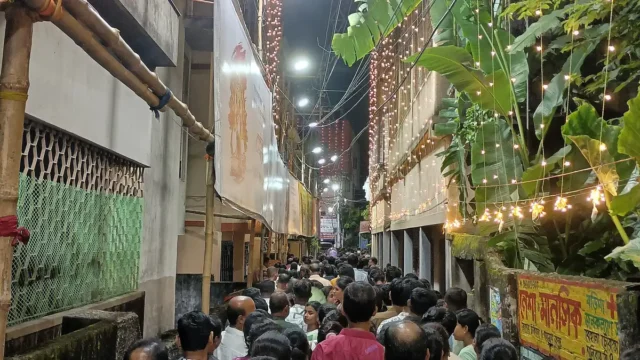
Chorbagan pandal stampede in Kolkata kills 19: what went wrong and how crowds should be managed
Nineteen people were killed and about 25 injured in a stampede at the Chorbagan Sarbojanin Durga Puja pandal in north Kolkata on the evening of 17 October 2026, during Saptami. According to police and the FIR, sudden heavy rain, weak crowd control and an announcement that the pandal could collapse set off the panic. Seven people have been arrested, and West Bengal has set up a six-member SIT.
UPSC angle: Prelims: NDMA, BNSS 163, BNS 105. · Mains GS-III: crowd management and disaster governance.
17 Oct 2026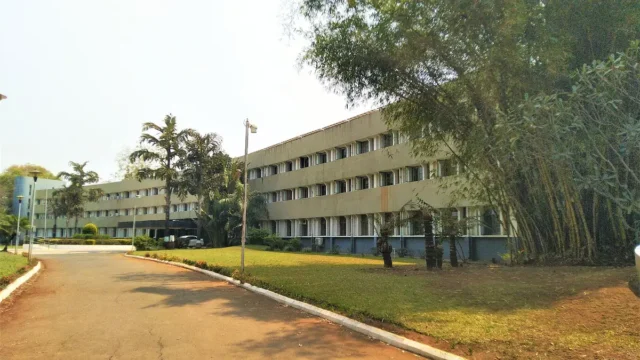
IITM Pune holds first consultation of the Climate Science into Services for India Forum
The Indian Institute of Tropical Meteorology (IITM), Pune, under the Ministry of Earth Sciences, held the first stakeholder consultation of the Climate Science into Services for India Forum (CSSIF) on 17 October 2026. More than 150 participants from over 80 institutions, including RBI, NDRF, NIDM and State climate cells, discussed what climate information each sector needs. Speakers stressed the need for a national Climate Services Information System (CSIS).
UPSC angle: Prelims: IITM, GFCS, INCOIS, NAPCC. · Mains GS-III: climate adaptation and services.
17 Oct 2026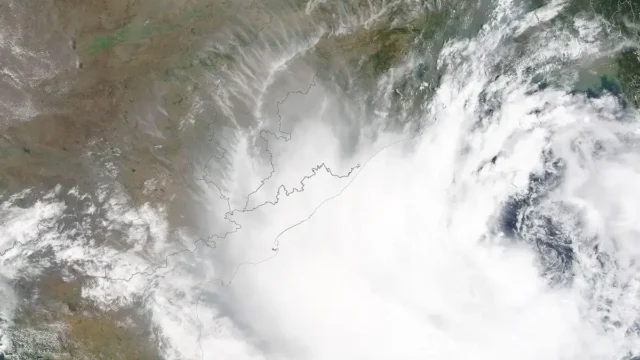
IMD launches a map-based Decision Support System for cyclone and marine warnings
On 12 October 2026 the India Meteorological Department dedicated a Cyclone Warning and Marine Weather Services Decision Support System to the nation. The WebGIS platform shows cyclone track, intensity, winds, rainfall, storm surge and district-wise warnings on one map for disaster managers and the public.
UPSC angle: Prelims: IMD, cone of uncertainty, storm surge. · Mains GS-III: early warning and disaster preparedness.
13 Oct 2026
India offers flood relief to Nepal; PM speaks to Nepal PM
On 26 August 2026 Prime Minister Narendra Modi spoke to Nepal's Prime Minister Balendra Shah and conveyed condolences on the loss of lives in floods in Nepal. He said India is ready to provide all possible humanitarian assistance, and that Indian teams are coordinating closely with Nepalese authorities on rescue and relief.
UPSC angle: Mains: India–Nepal water and flood cooperation.
26 Aug 2026Learn the concept
Question text as printed in the official UPSC Civil Services (Main) question paper. The model answer is original Battle IAS work; use it to learn structure, not to memorise.
Want every PYQ in one place? See the Battle IAS PYQ Book.