
UPSC Mains 2016 GS Paper 3 Q4: model answer
What are ‘Smart Cities’? Examine their relevance for urban development in India. Will it increase rural-urban differences? Give arguments for ‘Smart Villages’ in the light of PURA and RURBAN Mission.
What the question wants
Define smart cities, assess their relevance for urban India, judge whether they widen the rural–urban gap, and argue for smart villages through PURA and RURBAN.
How to structure it
Four parts as asked.
- What smart cities are
- Relevance
- Rural–urban gap
- Smart villages: PURA and RURBAN
How to think it through
Smart Cities Mission 2015: 100 cities, area-based development (retrofit, redevelop, greenfield) and pan-city ICT solutions; Integrated Command and Control Centres. Relevance: 35–40% urban, 60% of GDP. Gap: funds concentrated, migration pull. PURA (Kalam, 2004): urban amenities in rural areas. SPMRM (2016): 300 clusters. Ended March 2025.
Model answer
Dr A.P.J. Abdul Kalam argued that if villages got urban amenities, people would not have to leave them. His idea, PURA, is a useful way to judge the Smart Cities Mission.
What smart cities are
- The Smart Cities Mission (2015) chose 100 cities for area-based development: retrofitting, redevelopment and greenfield projects.
- Pan-city solutions using ICT: Integrated Command and Control Centres, smart meters, intelligent transport.
Relevance
- Cities produce about 60% of GDP; their efficiency drives growth.
- Better water, sanitation, mobility and safety.
- Data-based governance: ICCCs were used to track COVID-19 in 2020.
- Record: the Mission formally ended in March 2025 after most of its 8,000-odd projects were completed, though critics noted that area-based projects served small parts of each city.
Will it widen rural–urban differences?
- Yes, if funds and jobs concentrate in a few cities, pulling migrants into slums.
- No, if cities act as growth centres that draw produce and labour from surrounding villages.
- The answer depends on whether city planning reaches the peri-urban fringe and small towns.
The case for smart villages
- PURA (2004): roads, electronic and knowledge connectivity for village clusters.
- Shyama Prasad Mukherji Rurban Mission (2016): 300 clusters with economic activity, skills and amenities.
- Reduces distress migration and city congestion.
- Uses BharatNet, e-governance and solar power.
- Keeps agro-processing and services close to farms, so value stays in the village.
- Builds markets that make city investments viable too.
Smart cities and smart villages are two halves of the same plan.
Draw: A hub and spoke: a smart city at the centre, Rurban clusters around it.
Keywords, cases and data to drop in
Smart Cities Mission 2015, 100 cities, area-based development, ICCC, PURA, Kalam, SPMRM 2016, 300 clusters, BharatNet, distress migration.
Where most answers lose marks
- Ignoring PURA and RURBAN, which the question names.
Related Mains PYQs
- Explain the key challenges for India's energy security. What measures do you suggest for ensuring energy security along with economic growth and… UPSC 2026 · GS-III
- How are startups in India promoting entrepreneurship, innovation and employment? Discuss the global and domestic challenges in their working and suggest suitable… UPSC 2026 · GS-III
- Discuss the rationale of the Production Linked Incentive (PLI) scheme. What are its achievements ? In what way can the functioning and… UPSC 2025 · GS-III
- India aims to become a semiconductor manufacturing hub. What are the challenges faced by the semiconductor industry in India ? Mention the… UPSC 2025 · GS-III
Fresh examples from current affairs
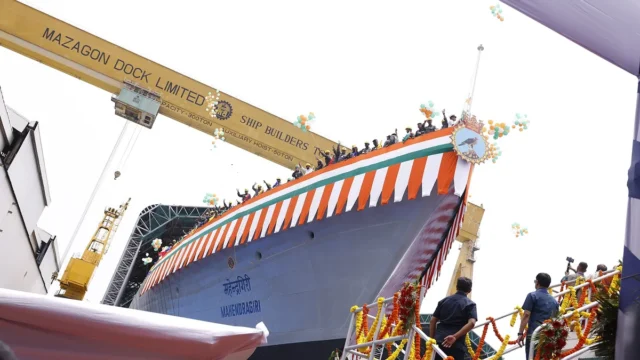
India’s shipbuilding: deliveries set to double, but only 0.5% of global orders
India wants to be a top shipbuilding nation, but its yards held only 0.5% of the world’s order book in September, ranking 12th. China alone holds 64% of all orders. Yet Indian deliveries due in 2026–30 are nearly double those of 2021–25, and a ₹69,725-crore package aims for the top 10 by 2030 and the top five by 2047. For you, this links the Sagarmala Programme, ports like Vizhinjam and India’s manufacturing push.
UPSC angle: Prelims: CGT, Sagarmala, Vizhinjam, BIMCO. · Mains GS-III: manufacturing, infrastructure, maritime security.
25 Oct 2026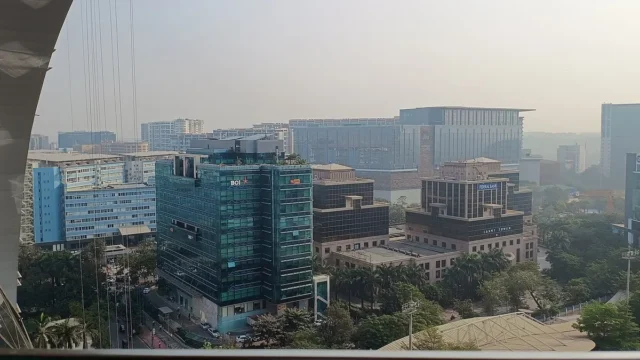
Net FDI positive for third straight month: $3.3 billion in August 2026, says RBI Bulletin
Net foreign direct investment into India was $3.3 billion in August 2026, the third positive month in a row, according to the RBI’s October Bulletin reported by The Hindu on 24 October. Gross inflows were $11.1 billion, almost 68% higher than a year earlier, while outflows rose to $7.7 billion, mainly because foreign firms took profits home. It is a clear turnaround from five months of negative net FDI between August and December 2025.
UPSC angle: Prelims: gross vs net FDI, FDI vs FPI, capital account. · Mains GS-III: investment models, external sector stability.
24 Oct 2026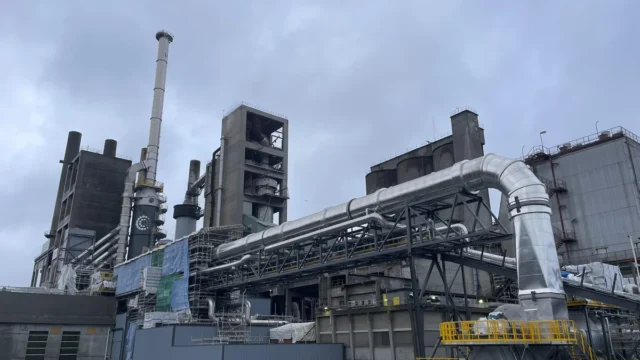
Carbon capture: how India can make its ₹20,000 crore CCUS push count, in three phases
Union Budget 2026 set aside ₹20,000 crore over five years for carbon capture, utilisation and storage (CCUS). An expert piece in the Indian Express (23 October 2026) suggests spending it in three phases: about ₹4,000 crore on research, pilots and mapping storage sites; about ₹9,000 crore on public–private plants; and ₹6,000–7,000 crore on scale-up. The aim is to help steel, cement and refineries cut emissions they cannot easily avoid.
UPSC angle: Prelims: CCUS, DAC, Deccan Traps basalt, CCTS 2023. · Mains GS-III: decarbonising industry; climate finance.
23 Oct 2026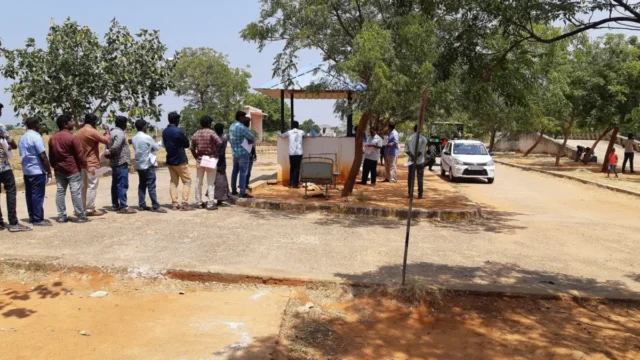
Colour-coded driving licences: draft CMVR amendments for Indian and foreign nationals explained
The Road Transport Ministry has proposed draft amendments to the Central Motor Vehicles Rules, reported on 23 October 2026, under which driving licences for Indian and foreign nationals will have separate colour formats. Licences would also have to show the holder’s blood group, mobile number and emergency contact, the safe-driving tutorial pass mark would rise from 60% to 75%, and changes to name or address would be decided within 15 days at no charge. Stakeholders have 30 days to object.
UPSC angle: Prelims: MV Act 1988, CMVR 1989, Entry 35 Concurrent List, Form 7. · Mains GS-II: governance and road safety.
23 Oct 2026Learn the concept
Question text as printed in the official UPSC Civil Services (Main) question paper. The model answer is original Battle IAS work; use it to learn structure, not to memorise.
Want every PYQ in one place? See the Battle IAS PYQ Book.