
UPSC Mains 2017 GS Paper 3 Q12: model answer
“Industrial growth rate has lagged-behind in the overall growth of Gross-Domestic-Product (GDP) in the post-reform period.” Give reasons. How far the recent changes in Industrial-Policy are capable of increasing the industrial growth rate?
What the question wants
Explain why industrial growth trailed overall GDP growth after 1991, and assess whether recent policy changes can raise it.
How to structure it
Reasons, then policy assessment.
- The lag
- Reasons
- Recent changes
- How far they can work
How to think it through
Manufacturing share stuck ~15–17% since 1991; services led growth. Reasons: infrastructure, land, labour laws, cost of capital, small firms, skill gaps, tariff cuts exposing industry, China competition, twin balance sheet, demand. Recent changes (2014–17 and later): Make in India, ease of doing business, GST, IBC, corporate tax cut 2019 (15% for new units), PLI 2020, Labour Codes 2025, PM Gati Shakti, National Manufacturing Mission 2025. Assessment: helped electronics and pharma; share still not 25%.
Model answer
Since 1991 India's services sector has grown faster than its factories, and manufacturing's share of GVA has stayed around 15–17%. China and Vietnam took a different road and became workshops of the world. India skipped a stage.
Why industry lagged
- Infrastructure: costly power, slow ports and logistics at around 13–14% of GDP for years.
- Land acquisition delays and high land prices.
- Rigid labour laws that kept firms small.
- High cost of capital and the twin balance sheet crisis after 2012.
- Skill gaps in the workforce.
- Competition from China after tariff cuts, especially in electronics and toys.
- Weak domestic demand in rural India.
- Inverted duties that made inputs costlier than finished imports.
- Low R&D and slow technology adoption among small firms.
Recent changes in industrial policy
- Make in India (2014) and ease of doing business reforms.
- GST (2017): one national market.
- IBC (2016): faster exit and recovery of bad loans.
- Corporate tax cut (2019): 15% for new manufacturing units.
- PLI schemes (2020) in 14 sectors.
- PM Gati Shakti (2021) and the National Logistics Policy (2022).
- Labour Codes in force from November 2025.
- National Manufacturing Mission announced in the 2025–26 Budget.
How far they can work
- Successes: mobile phone exports grew from almost nothing to over $20 billion a year; pharma and drones gained.
- Limits: manufacturing's share has not risen much; PLI favours large firms; MSMEs still struggle with credit.
- Results depend on state-level land and power reforms, and on trade deals.
- Jobs: PLI created about 14.6 lakh jobs by June 2026 (DPIIT), modest against the need.
Policy has removed many old brakes; India's factories now need demand, skills and markets to accelerate.
Draw: A two-line chart: GDP growth vs industrial growth since 1991.
Keywords, cases and data to drop in
manufacturing share 15–17%, premature deindustrialisation, logistics cost, twin balance sheet, Make in India, GST, IBC, corporate tax 15%, PLI, Gati Shakti, NLP 2022, Labour Codes, National Manufacturing Mission.
Where most answers lose marks
- Giving reasons without evaluating 'how far' the new policies can help.
Related Mains PYQs
- Explain the key challenges for India's energy security. What measures do you suggest for ensuring energy security along with economic growth and… UPSC 2026 · GS-III
- How are startups in India promoting entrepreneurship, innovation and employment? Discuss the global and domestic challenges in their working and suggest suitable… UPSC 2026 · GS-III
- Discuss the rationale of the Production Linked Incentive (PLI) scheme. What are its achievements ? In what way can the functioning and… UPSC 2025 · GS-III
- India aims to become a semiconductor manufacturing hub. What are the challenges faced by the semiconductor industry in India ? Mention the… UPSC 2025 · GS-III
Fresh examples from current affairs

India’s shipbuilding: deliveries set to double, but only 0.5% of global orders
India wants to be a top shipbuilding nation, but its yards held only 0.5% of the world’s order book in September, ranking 12th. China alone holds 64% of all orders. Yet Indian deliveries due in 2026–30 are nearly double those of 2021–25, and a ₹69,725-crore package aims for the top 10 by 2030 and the top five by 2047. For you, this links the Sagarmala Programme, ports like Vizhinjam and India’s manufacturing push.
UPSC angle: Prelims: CGT, Sagarmala, Vizhinjam, BIMCO. · Mains GS-III: manufacturing, infrastructure, maritime security.
25 Oct 2026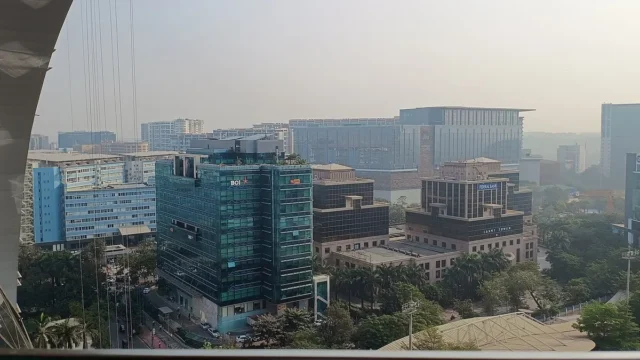
Net FDI positive for third straight month: $3.3 billion in August 2026, says RBI Bulletin
Net foreign direct investment into India was $3.3 billion in August 2026, the third positive month in a row, according to the RBI’s October Bulletin reported by The Hindu on 24 October. Gross inflows were $11.1 billion, almost 68% higher than a year earlier, while outflows rose to $7.7 billion, mainly because foreign firms took profits home. It is a clear turnaround from five months of negative net FDI between August and December 2025.
UPSC angle: Prelims: gross vs net FDI, FDI vs FPI, capital account. · Mains GS-III: investment models, external sector stability.
24 Oct 2026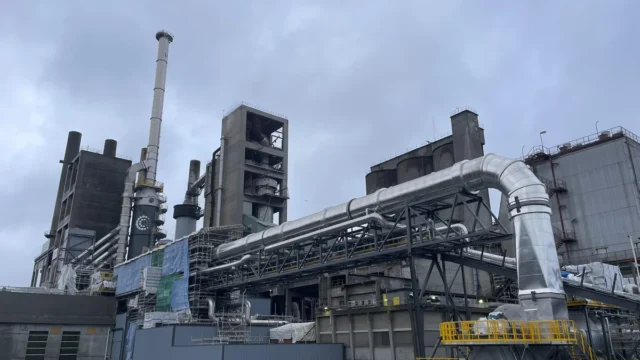
Carbon capture: how India can make its ₹20,000 crore CCUS push count, in three phases
Union Budget 2026 set aside ₹20,000 crore over five years for carbon capture, utilisation and storage (CCUS). An expert piece in the Indian Express (23 October 2026) suggests spending it in three phases: about ₹4,000 crore on research, pilots and mapping storage sites; about ₹9,000 crore on public–private plants; and ₹6,000–7,000 crore on scale-up. The aim is to help steel, cement and refineries cut emissions they cannot easily avoid.
UPSC angle: Prelims: CCUS, DAC, Deccan Traps basalt, CCTS 2023. · Mains GS-III: decarbonising industry; climate finance.
23 Oct 2026
Colour-coded driving licences: draft CMVR amendments for Indian and foreign nationals explained
The Road Transport Ministry has proposed draft amendments to the Central Motor Vehicles Rules, reported on 23 October 2026, under which driving licences for Indian and foreign nationals will have separate colour formats. Licences would also have to show the holder’s blood group, mobile number and emergency contact, the safe-driving tutorial pass mark would rise from 60% to 75%, and changes to name or address would be decided within 15 days at no charge. Stakeholders have 30 days to object.
UPSC angle: Prelims: MV Act 1988, CMVR 1989, Entry 35 Concurrent List, Form 7. · Mains GS-II: governance and road safety.
23 Oct 2026Learn the concept
Question text as printed in the official UPSC Civil Services (Main) question paper. The model answer is original Battle IAS work; use it to learn structure, not to memorise.
Want every PYQ in one place? See the Battle IAS PYQ Book.