
UPSC Mains 2020 GS Paper 1 Q17: model answer
Examine the status of forest resources of India and its resultant impact on climate change.
What the question wants
Examine the status of India's forests and their impact on climate change.
How to structure it
Examine the status ... and its resultant impact: data, then climate link.
- Status
- Quality concerns
- Climate impact
- Policies
- Conclusion
How to think it through
India's forest cover is stable on paper, but stable doesn't mean healthy. Plantations and orchards count as 'cover'; a dense old forest and a eucalyptus row look the same to a satellite. Then link to carbon sinks and the NDC target.
Model answer
The India State of Forest Report (ISFR) 2021 put forest and tree cover at about 24.6% of India's area, with forest cover alone around 21.7%, below the National Forest Policy's goal of 33%.
Status
- Distribution: largest areas in Madhya Pradesh, Arunachal Pradesh, Chhattisgarh, Odisha and Maharashtra; the North-East has the highest share of land under forest.
- Trends: total cover has risen slightly, mainly from open forests, plantations and tree cover outside forests on farms.
- Losses: decline in the North-East due to shifting cultivation and development.
- Mangroves: about 4,992 sq km, with the Sundarbans as the largest.
Quality concerns
- Very dense forest is only about 3% of India's area.
- Fragmentation by roads, mines and dams; invasive species like Lantana.
- Forest fires increasingly frequent, especially in Uttarakhand and central India.
- Grazing and fuelwood pressure from forest-dependent communities.
Impact on climate change
- Carbon sink: forest carbon stock about 7,200 million tonnes; India's NDC aims for an additional 2.5–3 billion tonnes of CO₂ sink by 2030.
- Local climate: forests regulate rainfall, temperature and humidity; deforestation weakens moisture recycling and raises local temperatures.
- Soil carbon in forest floors is often larger than the carbon in trees, and is lost when land is cleared.
- Adaptation: forests protect watersheds, recharge springs, coasts (mangroves against cyclones) and biodiversity.
- Degradation turns sinks into sources: fires and clearing release carbon.
Policies
- Green India Mission, CAMPA funds, Nagar Van Yojana, REDD+, Forest Rights Act involving communities.
- The 2023 amendment to the Forest Conservation Act has raised concerns about protecting unrecorded forests.
Conclusion
India's forests are a key climate asset, but quantity on paper must become quality on the ground. Community management and restoration of degraded forests matter more than counting plantations.
Draw: Pie chart of very dense, moderately dense and open forest.
Keywords, cases and data to drop in
ISFR 2021, 24.62%, NFP 1988 (33%), carbon stock 7,204 MT, NDC sink target, Green India Mission, CAMPA, FCA amendment 2023.
Where most answers lose marks
- Quoting forest cover without discussing quality or climate impact.
Related Mains PYQs
- Discuss the natural resource potentials of ‘Deccan Trap’. UPSC 2022 · GS-I
- Examine the potential of wind energy in India and explain the reasons for their limited spatial spread. UPSC 2022 · GS-I
- Describing the distribution of rubber-producing countries, indicate the major environmental issues faced by them. UPSC 2022 · GS-I
- Mention the significance of straits and isthmus in international trade. UPSC 2022 · GS-I
Fresh examples from current affairs

Cauvery panel tells Karnataka to release 3,000 cusecs to Tamil Nadu: Article 262 and the inter-State water dispute
The Cauvery Water Regulation Committee has told Karnataka to ensure 3,000 cusecs of water a day at Biligundlu for 15 days, and the Cauvery Water Management Authority has endorsed it. Tamil Nadu wanted almost five times more, including a claimed backlog. Karnataka says a weak monsoon has left its four Cauvery reservoirs 55% short and most of its taluks in drought. For you, this is a live case study of Article 262, water tribunals and how a dry year turns sharing into a crisis.
UPSC angle: Prelims: Cauvery source and tributaries, Article 262, ISWD Act 1956, CWMA. · Mains GS-II: inter-State water disputes; cooperative federalism.
25 Oct 2026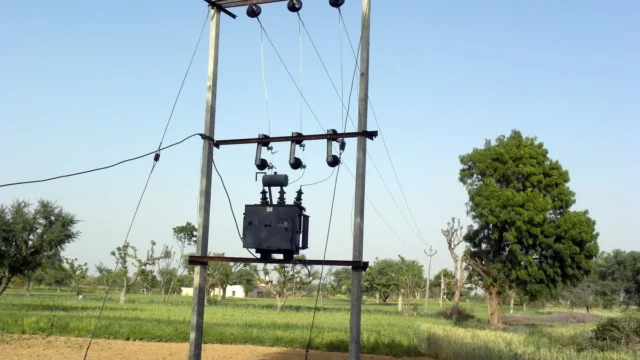
Haryana’s first private power distributor: what a parallel licence means for Gurugram and Nuh
The Haryana Electricity Regulatory Commission (HERC) on 19 October 2026 gave Eleven Power Pvt Ltd a 25-year parallel distribution licence for Gurugram and Nuh. It will be Haryana’s first private distributor and India’s second case of parallel licensing after Mumbai. The State government and power-sector staff oppose it and plan to appeal to the Appellate Tribunal for Electricity.
UPSC angle: Prelims: Section 14, APTEL, Concurrent List Entry 38. · Mains GS-III: discom reform, cross-subsidy, competition.
22 Oct 2026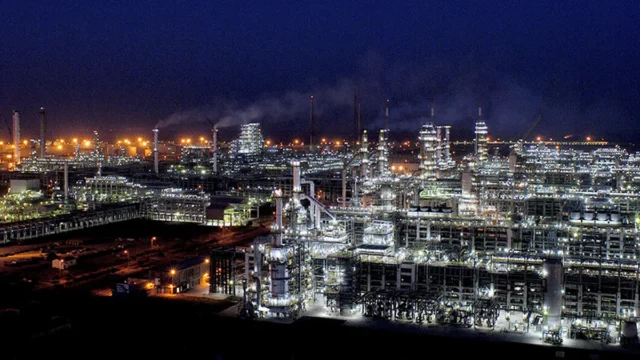
Rubio at Jamnagar: US pitches oil and Venezuelan crude to India’s ‘refining superpower’
US Secretary of State Marco Rubio visited Reliance’s Jamnagar refinery complex in Gujarat on 21 October 2026, a day after calling India a ‘refining superpower’. He wants India to buy more US oil and refine more Venezuelan crude. In Mumbai on 20 October, External Affairs Minister S. Jaishankar also held an unannounced India–US–UAE meeting on energy and connectivity, with the Strait of Hormuz blocked.
UPSC angle: Prelims: Jamnagar, Hormuz, I2U2, IMEC, SPR sites. · Mains GS-II/III: energy security vs strategic autonomy; India–US–UAE.
21 Oct 2026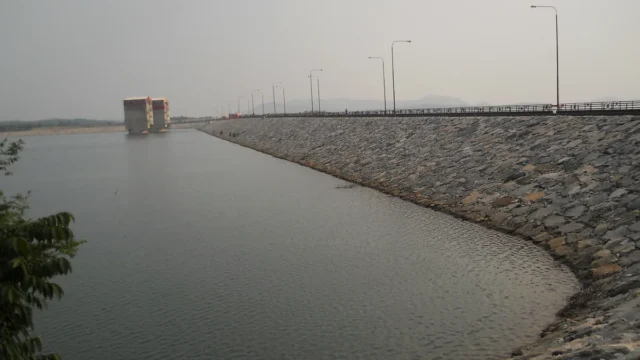
Pumped storage hydropower: India’s roadmap for 100 GW of ‘water batteries’ by 2035-36
A PIB backgrounder of 19 October 2026 explains how pumped storage projects (PSPs) will store solar and wind power for India’s grid. India runs 7.43 GW of pumped storage today, is building 15.87 GW more and has an assessed potential of 345.38 GW. A roadmap aims to add about 100 GW between 2025-26 and 2035-36.
UPSC angle: Prelims: PSP types, CEA, ISTS waiver, IRENA ranking. · Mains GS-III: storage and the clean energy transition.
19 Oct 2026Learn the concept
Question text as printed in the official UPSC Civil Services (Main) question paper. The model answer is original Battle IAS work; use it to learn structure, not to memorise.
Want every PYQ in one place? See the Battle IAS PYQ Book.