
UPSC Mains 2020 GS Paper 3 Q3: model answer
What are the main constraints in transport and marketing of agricultural produce in India?
What the question wants
Identify the main constraints in transporting and marketing agricultural produce in India.
How to structure it
Transport, then marketing.
- Scale of the problem
- Transport constraints
- Marketing constraints
- Way forward
How to think it through
Transport: poor rural roads, few reefer vehicles, multiple handling, high freight and tolls, inter-state barriers, weak rail-farm link. Marketing: few mandis, APMC restrictions, intermediaries, lack of grading and storage, price information gaps, delayed payments, small lots. Kisan Rail, e-NAM, AIF.
Model answer
A truck of Nashik onions reaching Guwahati may lose part of its cargo to heat and handling on the way. Post-harvest losses cost India about ₹1.53 lakh crore a year (NABCONS, 2022), and a large share happens in transport and marketing.
Transport constraints
- Poor last-mile roads from field to market, especially in hill and tribal areas.
- Few refrigerated vehicles; perishables travel in open trucks.
- Repeated loading and unloading, which bruises produce.
- High freight costs and fuel prices relative to crop value.
- Weak rail link: Kisan Rail was useful but had limited reach.
Marketing constraints
- Too few regulated markets for the area they serve.
- Long chains of intermediaries and high commissions.
- No grading or storage at the farm gate, so farmers sell at harvest.
- Poor price information and delayed payments.
- Small lots that give farmers no bargaining power.
Way forward
- Rural roads under PMGSY, cold chains and pack houses under AIF and PMKSY.
- e-NAM, FPOs and gramin haats upgraded as GrAMs.
Better roads and fairer markets together decide whether a good harvest becomes a good income.
Draw: A field-to-city map with loss points marked.
Keywords, cases and data to drop in
post-harvest loss ₹1.53 lakh crore, NABCONS, reefer trucks, Kisan Rail, PMGSY, mandi density, e-NAM, GrAMs, FPOs, AIF.
Where most answers lose marks
- Writing only about marketing. The question asks about transport too.
Related Mains PYQs
- Describe the various Technology Missions initiated in Indian agriculture and examine their role in food security. UPSC 2026 · GS-III
- Explain the factors responsible for inefficiency of agri-produce marketing. How e-commerce helps to reduce inefficiency of agri-produce marketing? Explain. UPSC 2026 · GS-III
- How Indian agriculture has been transformed from food scarcity to food surplus level? Explain the various government policies implemented for diversification of… UPSC 2026 · GS-III
- Analyze the role of satellite-based technologies in achieving climate-smart agriculture and food security in India. UPSC 2026 · GS-I
Fresh examples from current affairs
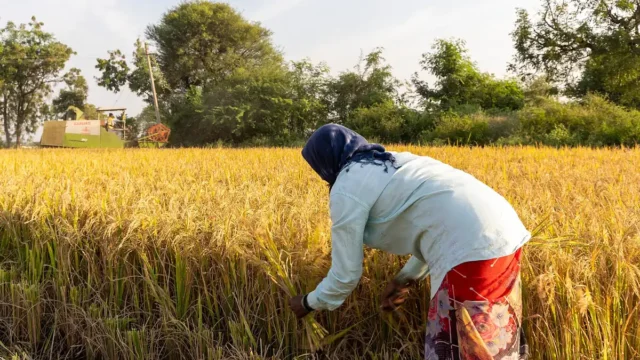
11 crore Farmer IDs created five months early under the Digital Agriculture Mission and Agri Stack
The Centre is building a digital register of farmers, so that each farmer has one verified identity for all schemes. Under the Digital Agriculture Mission, 11 crore Farmer IDs were created by the night of 23 October, five months before the March 2027 deadline. With this ID, farmers need not submit the same papers again and again for loans, crop insurance or relief. For you, this links Agri Stack, the Kisan Credit Card, PMFBY and land-record reform.
UPSC angle: Prelims: Digital Agriculture Mission, Agri Stack, KCC, PMFBY, DILRMP. · Mains GS-III: technology in agriculture; DBT.
25 Oct 2026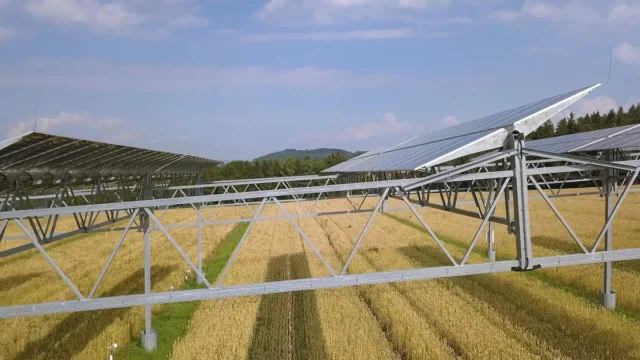
Agrivoltaics World Conference in Delhi: PM-KUSUM’s next phase and the small-farmer test
Opening the 7th Agrivoltaics World Conference at Bharat Mandapam on 21 October 2026, the first in the Global South, Renewable Energy Minister Pralhad Joshi said the next phase of PM-KUSUM will carry one of the world’s most ambitious agrivoltaics programmes. Agriculture Minister Shivraj Singh Chouhan said the policy must work for the 85% of farmers who are small and marginal, with an average holding of just 0.96 hectare.
UPSC angle: Prelims: PM-KUSUM, TERI estimate, capacity numbers. · Mains GS-III: land-energy-food nexus.
22 Oct 2026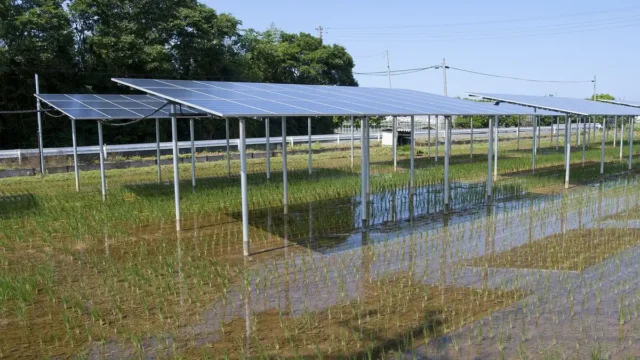
Agrivoltaics: Centre plans a scheme to push solar panels above farms; 5 GW seen in 3–4 years
MNRE Secretary Santosh Kumar Sarangi said on 19 October 2026 that the Centre is planning a central sector scheme to help States adopt agrivoltaics, either standalone or within PM-KUSUM 2.0. He expects capacity to cross 5 GW in three to four years if States notify feed-in tariffs. India hosts the 7th Agrivoltaics World Conference in New Delhi from 21 to 23 October.
UPSC angle: Prelims: agrivoltaics, PM-KUSUM components, feed-in tariffs. · Mains GS-III: energy transition and food security.
20 Oct 2026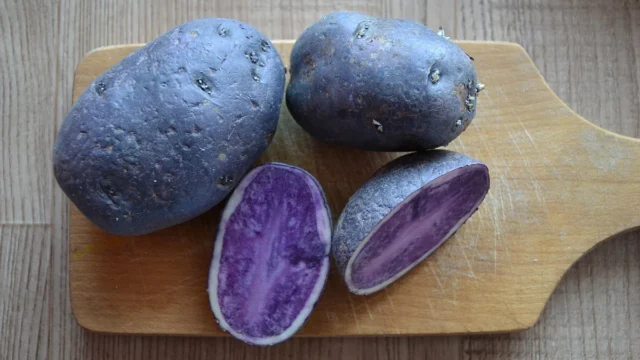
Kufri Jamunia: ICAR-CPRI’s purple potato to fight hidden hunger
A PIB backgrounder of 18 October 2026 puts the spotlight on Kufri Jamunia, a purple-fleshed potato bred by ICAR’s Central Potato Research Institute and released in 2024. It has nearly twice the Vitamin C of a common potato and several times more zinc and iron, along with antioxidants called anthocyanins. The idea is clever: instead of asking people to change what they eat, make the food they already eat more nutritious. That is biofortification.
UPSC angle: Prelims: Kufri Jamunia, CPRI, anthocyanins, biofortification vs fortification. · Mains GS-III: nutrition security; GS-II: hunger.
18 Oct 2026Learn the concept
Question text as printed in the official UPSC Civil Services (Main) question paper. The model answer is original Battle IAS work; use it to learn structure, not to memorise.
Want every PYQ in one place? See the Battle IAS PYQ Book.