
UPSC Mains 2026 GS3 Q4: model answer
Explain the factors responsible for inefficiency of agri-produce marketing. How e-commerce helps to reduce inefficiency of agri-produce marketing? Explain.
What the question wants
Two parts: causes of inefficiency in the mandi chain; specific ways e-commerce (e-NAM, B2B platforms, FPO stores, ONDC) cuts those costs.
How to structure it
Intro: farmer's share of the consumer rupee. Body: causes in a list; e-commerce remedies mapped to each cause. Conclusion: digital needs physical backing (grading, storage).
- 1Causes in a list
- 2E-commerce remedies mapped to each cause
Model answer
An Indian farmer often gets a third or less of the consumer's price for fruit and vegetables. The chain is long and fragmented.
| Cause | Digital remedy |
|---|---|
| Few, distant mandis | e-NAM: 1,400+ mandis online |
| Many intermediaries | FPO selling on e-NAM / ONDC |
| No price information | Agmarknet, app-based price discovery |
| Delayed payment | Online payment to farmer account |
| No grading | Assaying at e-NAM mandis (still thin) |
Why marketing is inefficient
- APMC yards are far apart, so small farmers sell to village traders.
- Layers of commission agents, each adding margins.
- Licence barriers limit buyers.
- No grading or storage, so distress sales follow harvest.
- Poor price information, late payments.
How e-commerce helps
- e-NAM (2016) links 1,400+ mandis with online bidding and direct payment.
- FPOs on e-NAM and ONDC pool lots and reach city buyers.
- B2B agri platforms buy at the farm gate with assaying.
- Agmarknet shows prices across markets.
Platforms cut paperwork but cannot replace roads, cold storage and assaying labs, which is why inter-state e-NAM trade stays small. Digital and physical reform must move together.
Keywords, cases and data to drop in
APMC commission agents e-NAM 2016 FPOs ONDC assaying and grading post-harvest loss price discovery farm-gate sale
Where most answers lose marks
- Listing government schemes without tying each to a cause of inefficiency.
- Treating e-commerce as a full solution; mention infrastructure limits.
- Writing about MSP instead of marketing.
Same theme in Prelims
Which among the following is/are the objective(s) of the Rainfed Area Development (RAD) initiative under the National Mission for Sustainable Agriculture (NMSA) ?
- 1. Encouraging monoculture in rainfed areas
- 2. Increasing rice cultivation in irrigated regions
- 3. Enhancing productivity and minimising climatic risks through Integrated Farming Systems (IFS)
Select the answer using the code given below :
Answer (d) & explanation
Only objective 3 belongs to RAD (d). Item 3 is right: Rainfed Area Development (RAD), an area-based part of the National Mission for Sustainable Agriculture (NMSA), promotes Integrated Farming Systems. It grows crops along with horticulture, livestock, fishery and agro-forestry, so a farmer in a dry area has more than one income source when the rain fails. Item 1 is wrong: monoculture raises risk. Item 2 is wrong: irrigated rice has nothing to do with a rainfed programme.
Notice why it matters: about half of India's net sown area is rainfed, growing much of its pulses, millets and oilseeds. NMSA is one of the eight missions under the National Action Plan on Climate Change (2008). Related: Per Drop More Crop for micro-irrigation.
statement 2 talks of "irrigated regions" in a scheme named "Rainfed". Read the scheme's own name before the statements.
Answer as per the official UPSC answer key.
Consider the following statements :
Statement I :
Of the two major ethanol producers in the world, i.e., Brazil and the United States of America, the former produces more ethanol than the latter.
Statement II :
Unlike in the United States of America where corn is the principal feedstock for ethanol production, sugarcane is the principal feedstock for ethanol production in Brazil.
Which one of the following is correct in respect of the above statements?
Answer (d) & explanation
Statement I is wrong, Statement II is right (d). Statement II is right: the USA makes ethanol mostly from corn (maize), while Brazil uses sugarcane. Statement I is wrong: it reverses the ranking. The USA is the largest ethanol producer, with over half of world output; Brazil is second. So options (a), (b) and (c) fail.
Notice India's place: now third, using cane juice, molasses, and surplus grains such as rice and maize. India reached 20% ethanol blending in petrol (E20) in 2025, five years ahead of the old target. The Global Biofuels Alliance, launched at India's G20 in 2023, includes the USA and Brazil.
Brazil's ethanol cars are famous, so it "feels" like number one. The USA produces more.
Answer as per the official UPSC answer key.
Consider the following statements about turmeric during the year 2022-23 :
- I. India is the largest producer and exporter of turmeric in the world.
- II. More than 30 varieties of turmeric are grown in India.
- III. Maharashtra, Telangana, Karnataka and Tamil Nadu are major turmeric producing States in India.
Which of the statements given above are correct?
Answer (d) & explanation
All three statements are correct (d). Statement I is right: in 2022-23, India grew over 75% of the world's turmeric and had more than 62% of world trade. Statement II is right: more than 30 varieties are grown in over 20 States. Statement III is right: the major producers are Maharashtra, Telangana, Karnataka and Tamil Nadu. These lines come from the government's note on setting up the National Turmeric Board (2023).
Notice the board, based at Nizamabad in Telangana, which promotes turmeric research, exports and value addition. Turmeric's active compound is curcumin. Famous GI-tagged varieties include Erode turmeric, Lakadong turmeric of Meghalaya and Kandhamal Haladi of Odisha.
Answer as per the official UPSC answer key.
Fresh examples from current affairs
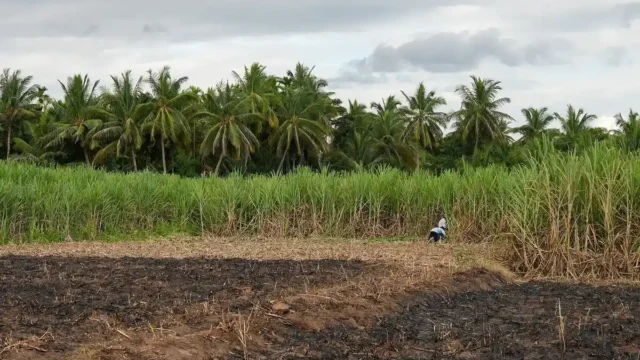
Ramesh Chand committee to examine sugarcane farmers’ and sugar sector issues
On 14 October 2026 the Centre set up a committee under Prof. Ramesh Chand, former NITI Aayog Member, on issues raised by sugarcane farmers. It will examine returns to cane growers, the ex-mill Minimum Selling Price of sugar, how sugar recovery is tested, weighment at mills, and deductions on mechanically harvested cane.
UPSC angle: Prelims: chair, terms of reference, ex-mill MSP of sugar. · Mains GS-III: cane pricing, sugar sector economics, farm incomes.
14 Oct 2026
Cotton Corporation of India showcases procurement reforms: digital slot booking, traceability, Kasturi Cotton
The Textiles Ministry, through the Cotton Corporation of India, held a reform showcase in Hyderabad on 6 October 2026 under Reform Utsav 2026. It covered the Kapas Kisan digital platform for registration, slot booking and Aadhaar-enabled payments, traceability and the Kasturi Cotton Bharat brand, and the High-Density Planting System to lift yields.
UPSC angle: Prelims: CCI, Kasturi. · Mains GS-III: MSP procurement, textiles.
4 Oct 2026
Sugar stock limit for bulk consumers relaxed to 30 days; retail prices down ~10%
On 18 September 2026 the Government relaxed the stock limit for bulk sugar consumers from 15 to 30 days, on the condition that the extra stock comes only from sugar imported under the Advance Authorisation Scheme and Tariff Rate Quota. Retail prices have fallen about 10% from their August peak, but ex-mill prices have fallen nearly 25%.
UPSC angle: Prelims: what a Tariff Rate Quota is. · Mains: Are stock limits an effective anti-inflation tool?
18 Sep 2026
NAFED launches e-auction portal NAFEX.in
The Cooperation Ministry launched NAFED's e-auction portal NAFEX.in in New Delhi on 23 June 2026. Payments for produce are to reach farmers' bank accounts within 48 hours. NAFED serves more than 74 lakh farmers. Over the next two years, NCCF and NAFED are to buy pulses directly from farmers. A scholarship from 1% of NAFED profits was also announced.
UPSC angle: Prelims: NAFED, NCCF roles.
23 Jun 2026Learn the concept
Question text as printed in the official UPSC question paper: https://www.upsc.gov.in/sites/default/files/QP-CSM-26-010926-GENERAL-STUDIES-PAPER-III.pdf The model answer is original Battle IAS work; use it to learn structure, not to memorise.