
Chapter 5 · Topic 5.2 · Prelims + Mains2 of 3
Biotechnology: Cloning, tissue culture and GM crops
Key points
- SCNT: nucleus of body cell into empty egg. Dolly after 276 attempts.
- Mitochondrial donation: MST (before) and PNT (after fertilisation).
- Totipotency: any plant cell can regrow a whole plant. Meristem is virus-free.
- Bt cotton: first GM crop (March 2002), only one approved for cultivation.
- DMH-11: GEAC approval 18 October 2022, barnase/barstar, 28.15% higher yield.
- GEAC works under the EP Act, 1986. GM food needs approval under FSS Act Section 22.
4 PYQs 2013–2026
Prelims box: facts and traps
| Item | Fact |
|---|---|
| Bt brinjal | GEAC cleared 14 October 2009, moratorium February 2010 |
| Bollgard II genes | cry1Ac and cry2Ab |
| Bt cotton yield 2022-23 | 443 kg/ha |
- The GEAC cleared the environmental release of Bt brinjal on 14 October 2009, before the Union government imposed a moratorium in February 2010.
- Trap (Prelims 2018): GM mustard is not pest-resistant and was not made by IARI and PAU.
Cloning, stem cells and reproductive technology
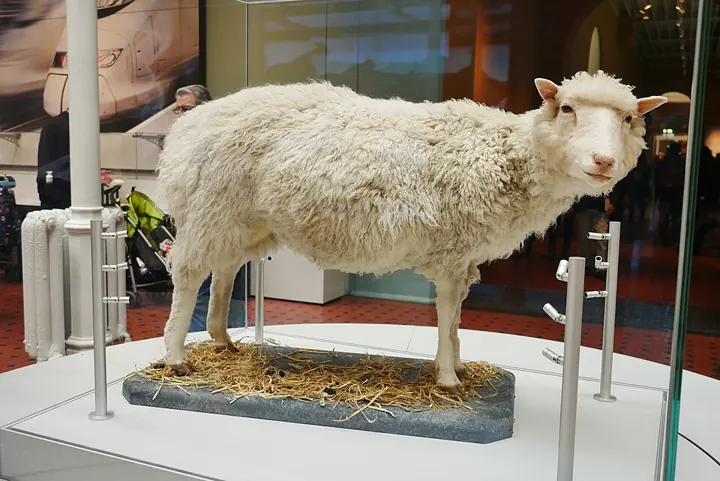
In reproductive cloning, researchers take a mature body cell, such as a skin cell, from the animal they want to copy. They move its DNA into an egg cell whose own nucleus has been removed, and place the embryo in a surrogate mother. This is somatic cell nuclear transfer (SCNT). Think of it as moving a new hard disk into an empty computer. After 276 attempts, Scottish researchers produced Dolly, the first mammal cloned from an adult cell, from the udder cell of a 6-year-old sheep (NHGRI, Cloning Fact Sheet). So SCNT is used for reproductive cloning of animals (Prelims 2017: answer (c)).
What is the application of Somatic Cell Nuclear Transfer Technology ?
- Production of biolarvicides
- Manufacture of biodegradable plastics
- Reproductive cloning of animals
- Production of organisms free of diseases
Show answer
Answer: (c) · UPSC official key
Stem cells (see the Biology chapter) are the other half of this field. Embryonic stem cells can form every cell type. Induced pluripotent stem cells (iPSCs) are adult cells reprogrammed in the lab to behave like them. Their uses include testing drugs and making cells and tissues for transplant (NIH Stem Cell Information).
Mitochondria are the cell’s power stations, and they carry a little DNA of their own that a child gets only from the mother. Mitochondrial donation helps people with severe mitochondrial disease avoid passing it to their children. Eggs or embryos are made using the parents’ nuclear DNA and healthy donated mitochondria. Two techniques are approved by the UK Parliament (HFEA, UK fertility regulator):
- maternal spindle transfer (MST), done on eggs before fertilisation,
- pronuclear transfer (PNT), done on embryos after fertilisation.
So pronuclear transfer is used to prevent mitochondrial diseases in offspring (Prelims 2020: answer (d)). Mitochondrial replacement therapy can be done either before or after in vitro fertilisation, and a child inherits mitochondrial diseases entirely from the mother (Prelims 2021: answer (c), both).
In the context of recent advances in human reproductive technology, “Pronuclear Transfer” is used for
- fertilization of egg in vitro by the donor sperm
- genetic modification of sperm producing cells
- development of stem cells into functional embryos
- prevention of mitochondrial diseases in offspring
Show answer
Answer: (d) · UPSC official key
In the context of hereditary diseases, consider the following statements : 1. Passing on mitochondrial diseases from parent to child can be prevented by mitochondrial replacement therapy either before or after in vitro fertilization of egg. 2. A child inherits mitochondrial diseases entirely from mother and not from father. Which of the statements given above is/are correct?
- 1 only
- 2 only
- Both 1 and 2
- Neither 1 nor 2
Show answer
Answer: (c) · UPSC official key
Results so far: the Newcastle team reported eight babies born after pronuclear transfer, four girls and four boys, to seven women at high risk of passing on serious mitochondrial DNA disease. All eight show no signs of the disease (Newcastle Hospitals NHS Foundation Trust, reporting two papers in The New England Journal of Medicine, a measured clinical result).
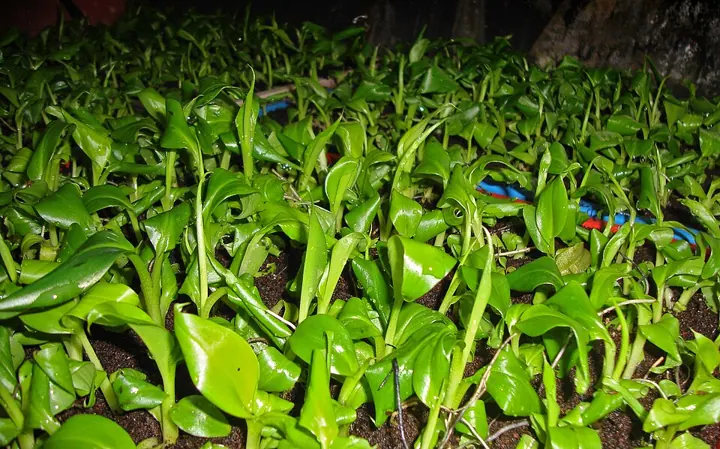
Plant tissue culture works on a simple idea. Whole plants can be regrown from explants, any part of a plant taken out and grown in a test tube under sterile (germ-free) conditions in special nutrient media. This power to grow a whole plant from any cell or explant is called totipotency. The medium must provide a carbon source such as sucrose, inorganic salts, vitamins, amino acids and growth regulators such as auxins and cytokinins (NCERT Biology, Class 12, Chapter 10).
Producing thousands of plants this way is called micro-propagation. The plants are genetically identical to the parent, and are called somaclones. Tomato, banana and apple are produced commercially like this. Even if a plant is infected with a virus, its meristem (the growing tip, apical and axillary) is free of virus. So meristem culture yields virus-free plants, which has been done for banana, sugarcane and potato (NCERT Biology, Class 12, Chapter 10).
The steps run like this (NCERT Science, Class 10, Chapter 7):
- tissue from the growing tip is placed in an artificial medium, where the cells divide to form a callus (a lump of cells),
- the callus moves to a medium with hormones for growth and differentiation,
- plantlets are then placed in soil.
Many plants can be grown from one parent in disease-free conditions. Banana farmers now receive mass-produced healthy plantlets from the shoot tip (NCERT Science, Class 9, Chapter 11).
GM crops in India and their regulation
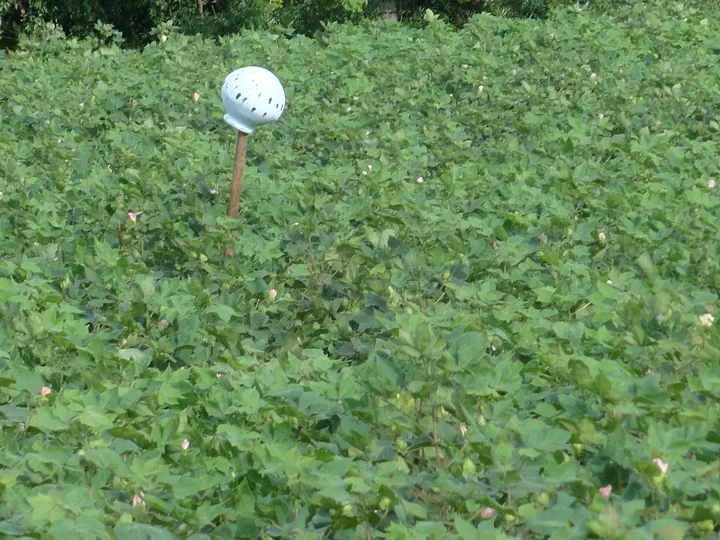
Bt crops carry genes from the soil bacterium Bacillus thuringiensis. Its crystal protein is an inactive toxin that becomes active in the alkaline gut of an insect. It punches holes in the gut lining and kills the insect. Humans are safe because our stomach is acidic. The genes cryIAc and cryIIAb control cotton bollworms (NCERT Biology, Class 12, Chapter 10). Bt cotton (Bollgard I), with the cry1Ac gene, was the first GM crop commercialised in India, in March 2002. Bt cotton (Bollgard II), with cry1Ac and cry2Ab, followed (PIB, 7 Apr 2008). So Bollgard I and II relate to developing genetically modified crop plants (Prelims 2021: answer (b)), and the aim of Bt brinjal was to make it pest-resistant (Prelims 2011: answer (a)).
Bollgard I and Bollgard II technologies are mentioned in the context of
- clonal propagation of crop plants
- developing genetically modified crop plants
- production of plant growth substances
- production of biofertilizers
Show answer
Answer: (b) · UPSC official key
A genetically engineered form of brinjal, known as the Bt-brinjal, has been developed. The objective of this is
- To make it pest-resistant
- To improve its taste and nutritive qualities
- To make it drought-resistant
- To make its shelf-life longer
Show answer
Answer: (a) · UPSC official key
Bt brinjal uses a bacterial gene, not one from a fungus, and its seeds are not terminator seeds (seeds that will not grow a second time). Public resistance rested on health fears and the concern that it may harm biodiversity (Prelims 2012: answer (c), 3 and 4 only). Pest resistance is not the only goal. NCERT lists tolerance to abiotic stresses (cold, drought, salt, heat), lower post-harvest losses, better use of minerals and more nutrition, such as vitamin A enriched golden rice (NCERT Biology, Class 12, Chapter 10). UPSC accepted drought tolerance, higher nutritive value and longer shelf life, but not growing in spaceships (Prelims 2012: answer (c), 1, 2 and 4 only).
What are the reasons for the people’s resistance to the introduction of Bt brinjal in India? 1. Bt brinjal has been created by inserting a gene from a soil fungus into its genome. 2. The seeds of Bt brinjal are terminator seeds and therefore, the farmers have to buy the seeds before every season from the seed companies. 3. There is an apprehension that the consumption of Bt brinjal may have adverse impact on health. 4. There is some concern that the introduction of Bt brinjal may have adverse effect on the biodiversity. Select the correct answer using the codes given below :
- 1, 2 and 3 only
- 2 and 3 only
- 3 and 4 only
- 1, 2, 3 and 4
Show answer
Answer: (c) · UPSC official key
Other than resistance to pests, what are the prospects for which genetically engineered plants have been created? 1. To enable them to withstand drought 2. To increase the nutritive value of the produce 3. To enable them to grow and do photosynthesis in spaceships and space stations 4. To increase their shelf life Select the correct answer using the codes given below :
- 1 and 2 only
- 3 and 4 only
- 1, 2 and 4 only
- 1, 2, 3 and 4
Show answer
Answer: (c) · UPSC official key
GM mustard hybrid DMH-11 and its parental lines were approved for environmental release, for seed production and testing, at the GEAC meeting of 18 October 2022. In biosafety trials (2010-11 to 2014-15) DMH-11 gave a 28.15% higher yield than the check variety Varuna (PIB, 7 Feb 2023, a measured trial result). It is not pest-resistant. Its barnase and barstar genes create male sterility and then restore fertility, so it has the genes that allow cross-pollination and hybridisation (Prelims 2018: answer (b), 2 only).
With reference to the Genetically Modified mustard (GM mustard) developed in India, consider the following statements : 1. GM mustard has the genes of a soil bacterium that give the plant the property of pest-resistance to a wide variety of pests. 2. GM mustard has the genes that allow the plant cross-pollination and hybridization. 3. GM mustard has been developed jointly by the IARI and Punjab Agricultural University. Which of the statements given above is/are correct ?
- 1 and 3 only
- 2 only
- 2 and 3 only
- 1, 2 and 3
Show answer
Answer: (b) · UPSC official key
Regulation works at two levels:
- The Rules 1989 for genetically engineered organisms are notified under the Environment (Protection) Act, 1986. The Genetic Engineering Appraisal Committee (GEAC) of MoEFCC approves environmental and commercial release (PIB, 6 Aug 2024, ICAR Lok Sabha reply, 5 Aug 2025). NCERT uses the committee’s older name, Genetic Engineering Approval Committee (Prelims 2015: answer (c), Environment (Protection) Act, 1986).
- For food, Section 22 of the Food Safety and Standards Act, 2006 says that, save as otherwise provided, no person shall manufacture, distribute, sell or import genetically modified articles of food.
UPSC’s answer: the law bans the import of GM food without the approval of the competent authority, but India does import apples from the USA (Prelims 2024: answer (d)).
The Genetic Engineering Appraisal Committee is constituted under the
- Food Safety and Standards Act, 2006
- Geographical Indications of Goods (Registration and Protection) Act, 1999
- Environment (Protection) Act, 1986
- Wildlife (Protection) Act, 1972
Show answer
Answer: (c) · UPSC official key
Consider the following statements : Statement-I : India does not import apples from the United States of America. Statement-II : In India, the law prohibits the import of Genetically Modified food without the approval of the competent authority. Which one of the following is correct in respect of the above statements ?
- Both Statement-I and Statement-II are correct and Statement-II explains Statement-I
- Both Statement-I and Statement-II are correct, but Statement-II does not explain Statement-I
- Statement-I is correct, but Statement-II is incorrect
- Statement-I is incorrect, but Statement-II is correct
Show answer
Answer: (d) · UPSC official key
| Bt cotton in India (only GM crop approved for commercial cultivation) | 2021-22 | 2022-23 | Status |
|---|---|---|---|
| Area (lakh ha) | 123.72 | 129.27 | measured |
| Production (lakh bales) | 311.18 | 336.60 | measured |
| Yield (kg/ha) | 428 | 443 | measured |
Source: PIB, Ministry of Agriculture and Farmers Welfare, 6 Aug 2024 (PRID 2042234), Lok Sabha written reply, Annexure (all-India totals).
What UPSC asks: Prelims: SCNT made Dolly, totipotency, Bt cotton is the only GM crop. Mains: MST before and PNT after fertilisation, mitochondrial DNA from mother, somaclones, virus-free meristem, DMH-11 barnase/barstar, GEAC under EPA 1986.
Mains box: analysis and answer points
- GM crops: yield vs biosafety debate.
- Reproductive tech: ethics of cloning and mitochondrial donation.
Practice
Practice MCQs (8)
What is the present regulatory status of Bt brinjal for cultivation in India?
Answer (a) & explanation
Bt brinjal, carrying the event EE-1 with the cry1Ac gene against the fruit and shoot borer, was developed by Mahyco. The GEAC recommended its environmental release on 14 October 2009. Faced with protests from farmers' groups, scientists and several State governments, the then Environment Minister held public consultations in several cities and, on 9 February 2010, announced a moratorium on its release until independent studies established its safety to the satisfaction of both the public and professionals. That moratorium has never been lifted, so Bt brinjal is not approved for cultivation in India. Ironically, neighbouring Bangladesh approved Bt brinjal varieties built on the same Indian event in 2013 and has grown them since 2014. The brinjal, it seems, needed a visa rather than a gene.
Herbicide-tolerant Bt (HTBt) cotton has frequently been in the news in India. Which one of the following best describes its status?
Answer (b) & explanation
HTBt cotton stacks the Bollgard II insect-resistance genes with a gene for tolerance to glyphosate (the Roundup Ready Flex trait). It has not been approved for commercial cultivation in India. The GEAC has repeatedly examined the application, reconstituted an expert committee in 2025 and asked for more data in 2026, but no approval has been granted. Meanwhile, unauthorised HTBt seed has spread through informal channels in Maharashtra, Telangana, Gujarat and other States, because it lets farmers spray glyphosate to kill weeds instead of paying for manual weeding. Enforcement agencies have seized such seed under the Seeds Act and the Environment (Protection) Act. So the honest summary is 'not approved, but not absent'. Weeds don't read notifications, and neither, it seems, do some seed dealers.
The Flavr Savr tomato, the first genetically engineered whole food approved for sale in the United States in 1994, was modified to
Answer (a) & explanation
Flavr Savr, developed by the Californian company Calgene, was approved by the US Food and Drug Administration in 1994. It carried an antisense copy of the gene for polygalacturonase, an enzyme that breaks down pectin in the cell walls as the fruit ripens. By reducing the enzyme, the fruit softened more slowly, so it could be left on the vine longer to develop flavour and still survive shipping. It is the classic example of antisense or gene- silencing technology in agriculture, the same family of methods that later gave us RNA interference for pest control. Commercially, it did not last long, because of production and cost problems, and it was withdrawn within a few years. A tomato that kept fresh longer could not keep its company alive for long, which is a lesson in business, not biology.
With reference to Bt brinjal, consider the following statements:
1. India's Genetic Engineering Appraisal Committee recommended its environmental release in 2009.
2. The Bt brinjal varieties released in Bangladesh carry the same transgenic event that was developed in India.
3. Its target pest is the brinjal fruit and shoot borer.
Which of the statements given above are correct?
Answer (d) & explanation
All three are correct. The GEAC cleared the environmental release of Bt brinjal on 14 October 2009, before the Union government imposed a moratorium in February 2010. The technology then crossed the border: the Bangladesh Agricultural Research Institute, working with Cornell University under a USAID-backed programme, back-crossed Mahyco's event EE-1 into local varieties, Bangladesh's biosafety committee approved four of them on 30 October 2013, and the first seedlings were handed to 20 farmers on 22 January 2014. The pest in both cases is the brinjal fruit and shoot borer (Leucinodes orbonalis), a moth larva that tunnels into shoots and fruits and drives farmers to spray very frequently. That is why Bt brinjal promised such a large cut in pesticide use, and why it became the test case for food crops in South Asia.
With reference to the 'CaMV 35S promoter' often used in genetically modified plants, consider the following statements:
1. It is derived from a virus that infects plants.
2. It drives strong expression of the gene placed after it in most tissues of the plant.
3. It is a restriction enzyme that cuts DNA at a specific palindromic sequence.
Which of the statements given above is/are correct?
Answer (b) & explanation
A promoter is a stretch of DNA in front of a gene where RNA polymerase binds to start transcription; it decides when, where and how strongly the gene is expressed. The CaMV 35S promoter comes from the cauliflower mosaic virus, a plant virus, and it is a strong, largely constitutive promoter: it keeps the gene switched on in most tissues for most of the time. That is why it has been used in many first-generation GM plants and why GM detection kits often screen for 35S sequences in food and seed. Statement 3 confuses two kinds of tools. Restriction enzymes such as EcoRI are proteins that cut DNA at specific palindromic sites; a promoter is a piece of DNA, not an enzyme, and it cuts nothing. One is a switch, the other is a pair of scissors; neither should be mistaken for the other in an exam hall.
With reference to the 'Rules, 1989' that form the core of India's regulation of genetically engineered organisms, consider the following statements:
1. They were framed under the Environment (Protection) Act, 1986.
2. Besides genetically engineered organisms and cells, they also cover hazardous micro- organisms.
3. They are administered entirely by the Department of Biotechnology, with no role for State or district authorities.
Which of the statements given above are correct?
Answer (a) & explanation
The full name gives most of the answer: the Rules for the Manufacture, Use, Import, Export and Storage of Hazardous Micro-organisms, Genetically Engineered Organisms or Cells, 1989. They were notified on 5 December 1989 using powers under sections 6, 8 and 25 of the Environment (Protection) Act, 1986, and came into force in 1993. As the title shows, they reach beyond GM crops to hazardous micro-organisms, whether modified or not. Rule 4 sets up six competent authorities at several levels: the RDAC, RCGM and IBSC at the advisory and research end, the GEAC at the environmental-release end, and the State Biotechnology Coordination Committee and District Level Committee for monitoring on the ground. So the system is deliberately multi-level, and statement 3 fails.
Consider the following statements regarding herbicide-tolerant Bt (HTBt) cotton:
1. Its herbicide tolerance comes from the cp4-epsps gene, which allows the plant to survive glyphosate.
2. The Genetic Engineering Appraisal Committee approved it for commercial cultivation in 2025.
3. It also carries the insect-resistance genes of Bollgard II.
Which of the statements given above are correct?
Answer (c) & explanation
Glyphosate kills plants by blocking the enzyme EPSPS, which is needed to make aromatic amino acids through the shikimate pathway. The cp4-epsps gene, taken from an Agrobacterium strain, codes for a form of the enzyme that glyphosate cannot block, so the plant keeps growing while weeds around it die. In HTBt cotton (event MON 88913 stacked with the Bollgard II event MON 15985), this trait is combined with the cry1Ac and cry2Ab genes, so statements 1 and 3 are right. Statement 2 is wrong: the GEAC has not approved HTBt cotton. In 2025 the committee only reconstituted an expert panel to re-examine the data, and in 2026 it sought more data on performance under Indian conditions. The spread of illegal seed shows the demand, but demand is not a licence; otherwise, every traffic jam would count as permission to drive on the footpath.
Consider the following pairs of genetically engineered crops and their traits:
1. Bt brinjal : Resistance to fruit and shoot borer
2. DMH-11 mustard : Genetic male sterility and fertility restoration for hybrid seed production
3. Golden Rice : Provitamin A in the grain
4. Flavr Savr tomato : Tolerance to drought
How many of the pairs given above are correctly matched?
Answer (c) & explanation
Pairs 1, 2 and 3 are correct. Bt brinjal carries cry1Ac against the brinjal fruit and shoot borer. DMH-11 uses the barnase-barstar system to create male sterility in one parent and restore fertility in the hybrid, which makes commercial hybrid seed possible in a self-pollinating crop. Golden Rice makes beta-carotene, which the body converts into vitamin A. Pair 4 is wrong: the Flavr Savr tomato was engineered for delayed softening, through suppression of the cell-wall enzyme polygalacturonase, not for drought tolerance. Abiotic-stress traits such as drought tolerance came much later in GM crops, for example in some maize and wheat events abroad. Matching questions of this kind reward a simple one-line memory card for each crop: pest, sterility, vitamin, shelf life. Four cards, four seconds.
0 / 0 correct
Prelims PYQs on this topic (2)
Which of the following statements with regard to GenomeIndia Project is/are correct ?
- 1. It is a part of the Human Genome Project.
- 2. The project is funded by the Department of Biotechnology (DBT), Government of India.
- 3. Its primary aim is to build a catalogue of genetic diversity of the Indian population.
Select the answer using the code given below :
Answer (b) & explanation
Statements 2 and 3 are correct (b). Statement 2 is right: GenomeIndia (2020) is funded by the Department of Biotechnology. Statement 3 is right: it sequenced 10,000 genomes from many Indian communities to build a catalogue of the country's genetic variation, and the data was released in 2025. Statement 1 is wrong: the international Human Genome Project was a separate effort that ended in 2003. So options (a), (c) and (d) fail.
Notice the uses: finding gene variants behind diseases common in India, such as sickle cell and thalassaemia, and building personalised medicine. The data is stored at the Indian Biological Data Centre in Faridabad. A larger follow-up aims to sequence one million genomes.
Answer as per the official UPSC answer key.
Mycorrhizal biotechnology has been used in rehabilitating degraded sites because mycorrhiza enables the plants to
- 1. resist drought and increase absorptive area
- 2. tolerate extremes of pH
- 3. resist disease infestation
Select the correct answer using the codes given below.
Answer (d) & explanation
All three are correct (d). Mycorrhiza is a partnership between a fungus and plant roots. The fungal threads extend the absorbing area of roots far into the soil, helping the plant take up water and resist drought (1). They help plants tolerate extremes of pH, salinity and heavy metals in poor soils (2). They also protect roots against soil pathogens by forming a barrier and competing with them (3). This is why mycorrhizal inoculants are used to rehabilitate degraded sites such as mine spoils. So (a), (b) and (c) leave out real benefits.
Notice the main benefit: mycorrhiza greatly improves phosphorus uptake. About 80% of land plants form such partnerships. TERI in India developed mycorrhizal biofertilisers for wasteland reclamation. Trap: all three effects are documented.
Answer as per the official UPSC answer key.
Mains PYQs on this topic (2)
- UPSC Mains 2026 · GS Paper III · Q5Explain by giving two examples, how biotechnology has helped the Indian farmers in processing their perishable crops.How to approach: Intro: scale of post-harvest loss. Body: example 1 and example 2 in depth, with one or two shorter mentions. Conclusion: scale through FPOs and food parks.
- UPSC Mains 2025 · GS Paper III · Q6How can India achieve energy independence through clean technology by 2047 ? How can biotechnology can play a crucial role in this endeavour ?How to approach: Intro: goal and import bill. Body: (1) Clean technology path; (2) Role of biotechnology. Conclusion: combine solar, wind, nuclear and bio-energy with domestic s…
Write an answer
In 150 words, explain the significance of Biotechnology with one recent example.
Flashcards (8)
What is SCNT used for?
Reproductive cloning of animals (Dolly).
Pronuclear transfer prevents?
Mitochondrial diseases in offspring.
Name the two UK-approved mitochondrial
donation techniques. Maternal spindle transfer (MST) and pronuclear transfer (PNT).
Why culture the meristem?
It is virus-free, giving virus-free plants.
Plants from micropropagation are called?
Somaclones.
India's only GM crop approved for
commercial cultivation? Bt cotton (2002).
Genes in Bollgard II?
cry1Ac and cry2Ab.
GEAC works under which Act?
Environment (Protection) Act, 1986.
Read more: related explainers
- GM Crops in India: Technology, Bt Cotton, Bt Brinjal, GM Mustard, Regulation by GEAC and Genome-Edited Rice
- BioE3 Policy: Biotechnology for Economy, Environment and Employment, Biomanufacturing Hubs, Biofoundries and India's $300 Billion Bioeconomy Goal
- CRISPR-Cas9 Gene Editing: How It Works, Uses in Medicine and Agriculture, Genome-Edited Crops in India, Regulation and Ethical Questions
In the news
- 24 Oct 2026NVS-03 launch on 30 October: can ISRO’s new satellite bring NavIC back to life?
- 22 Oct 2026eMudhra weak-key flaw: browsers block 8 certificates; what it means for India’s web trust
- 21 Oct 2026Japan’s MMX mission lifts off for Mars to bring back a sample of Phobos by 2031
- 21 Oct 2026Open-weight AI models: why Big Tech gives them away and what it means for India
 Next topic · 5.3 →Biotechnology: Biofertilizers, biofuels and the bioeconomy
Syllabus: GS-III · Awareness in the fields of IT, Space, Computers, robotics, nano-technology, bio-…