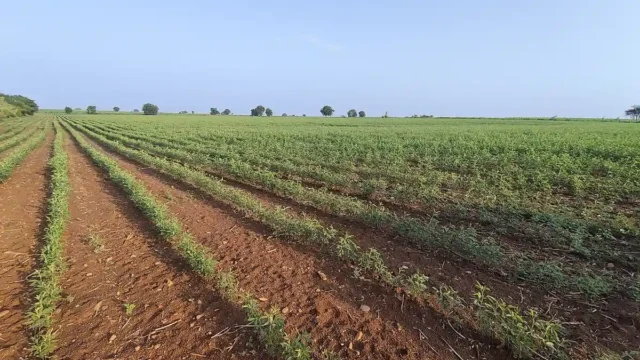
PM Dhan-Dhaanya Krishi Yojana for UPSC: aims, 100 district selection, convergence of 36 schemes, outlay, monitoring, issues and way forward, with PYQs.
Insurance sector for UPSC: history, IRDAI, 100% FDI under the 2025 amendment, penetration and density, Bima Trinity, schemes, challenges and way forward.
Indian Ports Act 2025 for UPSC: why colonial maritime laws were replaced, Maritime State Development Council, Carriage of Goods by Sea Act,…
Previous-year questions
Attempt them here.
UPSC Prelims 2026 · GS Paper I
Which one of the following correctly represents the three key sub-indices of the Financial Inclusion Index (FI-Index) of the Reserve Bank of India (RBI) ?
Answer (c) & explanation
The sub-indices are Access, Usage and Quality (c). The RBI launched the FI-Index in August 2021. It covers banking, investments, insurance, postal services and pension, and gives one value between 0 and 100. Its three parameters are Access (35%), Usage (45%) and Quality (20%). Options (a), (b) and (d) list areas or ideas that are not its sub-indices; GDP contribution and affordability are not parameters.
Notice the logic: usage has the most weight, because an account that is never used does not mean real inclusion. Quality includes financial literacy and consumer protection. The index is published every July, and it has risen steadily, helped by Jan Dhan (2014) and UPI.
Which one of the following best describes the key objective of India's 'Open Network for Digital Commerce' (ONDC) initiative ?
Answer (c) & explanation
ONDC aims to break the dominance of large platforms (c). The Open Network for Digital Commerce, a DPIIT initiative (2021-22), is an open set of rules, like UPI for shopping. A buyer on one app can buy from a seller listed on another app. This interoperability lets small sellers reach buyers without joining a giant platform. Option (a) is wrong: it does not give the government control of transactions. Option (b) is wrong: private players can join; they are not replaced. Option (d) is wrong: it does not force UPI payments.
Notice ONDC's design: it is a not-for-profit company and part of India's Digital Public Infrastructure, along with Aadhaar, UPI and DigiLocker. It now covers food, groceries and mobility too.
Trap
options (a), (b) and (d) use strong words: "all", "replace", "mandate". A public digital platform usually opens a market; it does not take it over.
Which one of the following statements about Unified Payments Interface (UPI) and Central Bank Digital Currency (Digital Rupee) is not correct ?
Answer (d) & explanation
Statement (d) is not correct (d). Under UPI, money moves between bank accounts; the deposit is a liability of the bank. The Digital Rupee (e₹) is like a currency note in digital form, a direct liability of the RBI, not of users or banks. Option (a) is correct: UPI is a payment system, while the e-rupee is sovereign currency. Option (b) is correct: an e-rupee transfer moves value from wallet to wallet with no separate settlement. Option (c) is correct: e-rupee wallet transactions do not appear in bank statements.
Notice the legal base: the RBI Act was amended in 2022 to let the RBI issue a CBDC. Pilots began that year in wholesale (e₹-W) and retail (e₹-R) forms.
Trap
a "not correct" question. Look for the statement that puts the RBI's liability on someone else.
Which of the following statements about Real-World Assets (RWA) Tokenization are correct ?
1. Tokenization is the process of turning real world assets into digital tokens using blockchain technology.
2. Tokenization of real world assets offers 24x7 access, promoting financial inclusion.
3. Tokenization of real world assets will allow the access to high growth investment opportunities for individuals in India.
Select the answer using the code given below :
Answer (a) & explanation
All three statements are correct (a). Statement 1 is right: tokenization turns a real asset, like a building, bond or gold, into digital tokens recorded on a blockchain. Statement 2 is right: tokens can be traded 24x7, which widens financial inclusion. Statement 3 is right: small, fractional tokens let ordinary individuals get into high-growth investments that once needed crores. So options (b), (c) and (d) fail.
Notice the risks: unclear regulation, cyber threats and weak investor protection. In India, related steps include Fractional Ownership Platforms and REITs and InvITs, which already let small investors own slices of real estate and infrastructure. The RBI is also testing tokenized deposits and government securities in sandbox pilots.
A bond whose proceeds are used only to finance or refinance a combination of both environmental and social projects is called :
Answer (c) & explanation
This is a sustainability bond (c). Under the ICMA principles followed worldwide, a bond that funds a mix of environmental and social projects is a sustainability bond. Option (a) is wrong: a green bond funds only environmental projects, like solar power. Option (b) is wrong: a social bond funds only social projects, like affordable housing. Option (d) is wrong: a sovereign bond is any bond issued by a national government, whatever its use.
Notice India's practice: India has issued Sovereign Green Bonds since January 2023, with the money going to projects like metro rail and renewable energy. A sustainability-linked bond is different: its money can go anywhere, but its interest rate depends on meeting ESG targets.
Trap
"Green Bond" is the most familiar term. The words "both environmental and social" point to the combined label.
Which of the following statements about M1xchange's role in Micro, Small & Medium Enterprises (MSMEs) financing is/are correct ?
1. M1xchange provides collateral based loans to MSMEs.
2. M1xchange facilitates discounting of invoices and Bills of Exchange for MSMEs.
3. M1xchange functions as a credit rating agency for MSMEs.
Select the answer using the code given below :
Answer (b) & explanation
Only statement 2 is correct (b). Statement 2 is right: M1xchange is an RBI-licensed TReDS platform (Trade Receivables Discounting System) where an MSME's invoices and bills of exchange are discounted. Statement 1 is wrong: it does not give collateral-based loans; financing is without collateral, backed by the big buyer's credit. Statement 3 is wrong: it is not a credit rating agency. So options (a), (c) and (d) fail.
Notice how TReDS works: an MSME uploads an invoice raised on a large buyer, and banks bid to discount it, so the MSME gets cash fast. The other platforms are RXIL and Invoicemart. Companies with turnover above ₹250 crore and CPSEs must join TReDS, easing delayed payments to MSMEs.
Which one of the following best describes the 'Crowding Out Effect' in the context of fiscal policy ?
Answer (b) & explanation
Crowding out means government borrowing raises interest rates and cuts private investment (b). When the government borrows heavily, it competes with companies for the same pool of savings. Interest rates rise, and some private projects no longer pay, so private investment is pushed out. Option (a) is wrong: it describes the opposite, "crowding in". Option (c) is wrong: higher taxes usually reduce, not raise, private spending. Option (d) is wrong: government spending does affect aggregate demand.
Notice the policy link: this is why high fiscal deficits worry the RBI and investors. India's FRBM Act (2003) set limits on deficits. The Centre aims to cut its fiscal deficit below 4.5% of GDP and then shift to a debt-to-GDP target.
Which of the following statements about insurance in aviation sector is/are correct ?
1. 'Aviation Hull Insurance' covers the physical aircraft, including the body, engine, and on-board equipment.
2. Under the Montreal Convention, adopted in 1999 by over 130 countries, including India, airlines are strictly liable to pay compensation to the family/nominee of every deceased passenger without requiring the family to prove fault.
Select the answer using the code given below :
Answer (c) & explanation
Both statements are correct (c). Statement 1 is right: hull insurance covers the aircraft itself, its body, engines and on-board equipment. Statement 2 is right: under the Montreal Convention, 1999, which India joined in 2009, the airline is strictly liable for a passenger's death or injury up to a set limit, so the family need not prove fault for that first tier. So options (a), (b) and (d) fail.
Notice the tiers: above that limit, the airline can escape further payment only by proving it was not negligent. The convention replaced the older Warsaw Convention (1929). In India, it is applied through the Carriage by Air Act, 1972. Passenger and third-party claims fall under liability insurance, not hull cover.
The Department of Financial Services will run a nationwide campaign from 21 October to 31 December 2026 to saturate financial inclusion schemes in 2.70 lakh gram panchayats and urban local bodies. Bank camps will enrol people in PMJJBY, PMSBY and APY, open Jan Dhan accounts, finish re-KYC and nominations, and spread awareness on digital frauds and unclaimed deposits.
UPSC angle: Prelims: scheme parameters of PMJJBY, PMSBY, APY, PMJDY. · Mains GS-III: inclusive growth and financial inclusion.
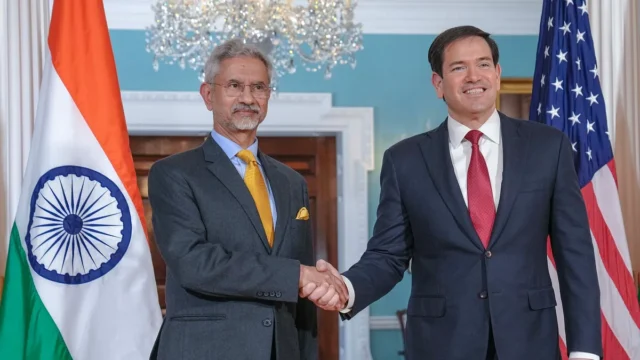
US Secretary of State Marco Rubio began his second India visit of the year in Mumbai on 20 October 2026 and met External Affairs Minister S. Jaishankar on trade, energy, technology and defence. Rubio said the two sides are ‘very, very close’ to a trade deal with ‘a small number of items left’, and praised India’s progress in diversifying energy supplies.
The India–New Zealand Free Trade Agreement came into force on 20 October 2026. From day one, New Zealand charges no customs duty on any Indian export, the first time India has got full duty-free access on all tariff lines at entry into force. New Zealand has also committed to facilitate USD 20 billion of investment into India, while dairy, sugar and edible oils stay protected.
UPSC angle: Prelims: FTA dates, Centres of Excellence, visa quotas, TRQ items. · Mains GS-II/III: FTAs with developed economies and farm safeguards.
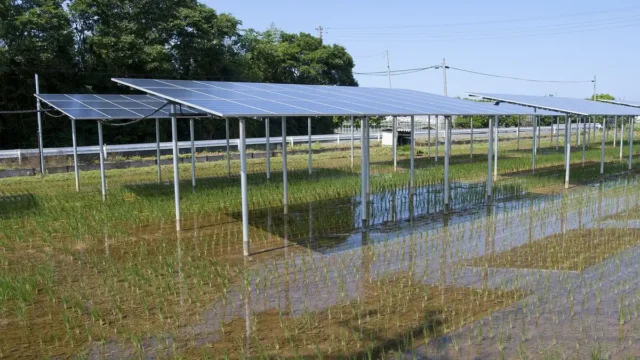
MNRE Secretary Santosh Kumar Sarangi said on 19 October 2026 that the Centre is planning a central sector scheme to help States adopt agrivoltaics, either standalone or within PM-KUSUM 2.0. He expects capacity to cross 5 GW in three to four years if States notify feed-in tariffs. India hosts the 7th Agrivoltaics World Conference in New Delhi from 21 to 23 October.
UPSC angle: Prelims: agrivoltaics, PM-KUSUM components, feed-in tariffs. · Mains GS-III: energy transition and food security.
A PIB backgrounder of 19 October 2026 explains how pumped storage projects (PSPs) will store solar and wind power for India’s grid. India runs 7.43 GW of pumped storage today, is building 15.87 GW more and has an assessed potential of 345.38 GW. A roadmap aims to add about 100 GW between 2025-26 and 2035-36.
UPSC angle: Prelims: PSP types, CEA, ISTS waiver, IRENA ranking. · Mains GS-III: storage and the clean energy transition.
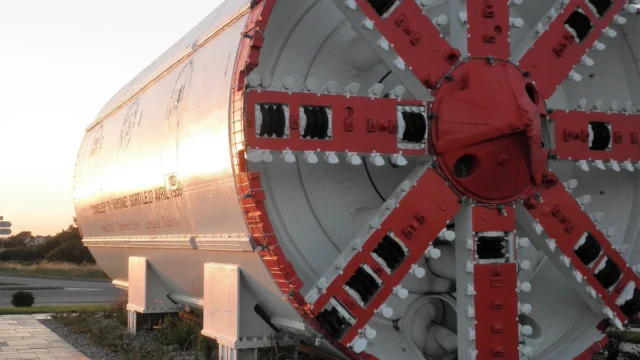
On 19 October 2026 China’s Commerce Ministry announced export controls on tunnel boring machines (TBMs) and related items from 18 November, calling them clearly dual-use. India imports TBMs for metro, rail and border tunnels and has faced customs delays on Chinese machines since 2024. China also announced controls on some drones.
UPSC angle: Prelims: export control regimes, SCOMET, Wassenaar, MTCR. · Mains GS-II/III: China dependence and supply-chain resilience.