
UPSC Mains 2018 GS Paper 1 Q4: model answer
UpdatedWhy is Indian Regional Navigational Satellite System (IRNSS) needed? How does it help in navigation?
What the question wants
Explain why India needs its own regional navigation satellite system and how it works for navigation.
How to structure it
Two parts: Why needed and How it helps.
- What it is
- Why India needs it
- How it works
- Uses
How to think it through
During the 1999 Kargil conflict India reportedly could not get GPS data for the region. That story explains the 'why'. The 'how' is simple geometry: know your distance from at least four satellites and you know where you are.
Model answer
During the Kargil conflict of 1999, India is reported to have been denied GPS data for the region. That experience drove ISRO to build its own system, the Indian Regional Navigation Satellite System (IRNSS), now called NavIC.
Why it is needed
- Strategic autonomy: no dependence on foreign systems (GPS, GLONASS) that can be switched off in a crisis.
- Accuracy over India: better than 20 m for civilian users, and finer encrypted service for the military.
- Coverage: India and up to 1,500 km around it, covering the Indian Ocean region.
How it helps navigation
- Seven satellites (three geostationary, four geosynchronous) are always visible over India.
- A receiver measures signal travel time from several satellites to fix position, speed and time.
- Uses two frequency bands (L5 and S), reducing errors from the ionosphere.
- Ground stations and atomic clocks keep timing precise; new NVS satellites add the L1 band for phones.
Uses
- Fishermen's alerts, aircraft and ship navigation, disaster management, vehicle tracking (mandatory for public vehicles), timing for banks and power grids, mobile phones.
Draw: Indian map with seven satellite positions around it.
Keywords, cases and data to drop in
NavIC, seven satellites, L5 and S band, Kargil 1999, SPS and RS services, NVS-01 (2023).
Where most answers lose marks
- Confusing NavIC with GAGAN, which only augments GPS.
Related Mains PYQs
- Discuss the natural resource potentials of ‘Deccan Trap’. UPSC 2022 · GS-I
- Examine the potential of wind energy in India and explain the reasons for their limited spatial spread. UPSC 2022 · GS-I
- Describing the distribution of rubber-producing countries, indicate the major environmental issues faced by them. UPSC 2022 · GS-I
- Mention the significance of straits and isthmus in international trade. UPSC 2022 · GS-I
Fresh examples from current affairs
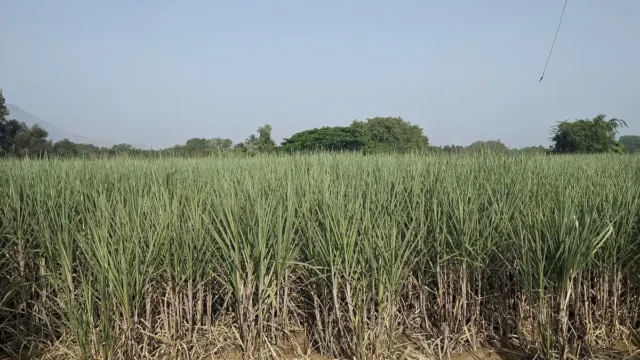
Rules amended to allow E100 in flex-fuel vehicles
Ethanol is an alcohol made from sugarcane, grain and other crops, and it can be mixed with petrol. The Ministry of Road Transport and Highways (MoRTH) has changed the Central Motor Vehicles Rules, 1989 to allow E100, fuel that is 100% ethanol, in flex-fuel vehicles. Read it for what E20, E85 and E100 mean, who needs to switch (no one, yet) and the National Policy on Biofuels.
UPSC angle: Prelims: E20/E85/E100, flex-fuel vehicles, National Policy on Biofuels feedstocks. · Mains GS-III: energy security and biofuels.
27 Oct 2026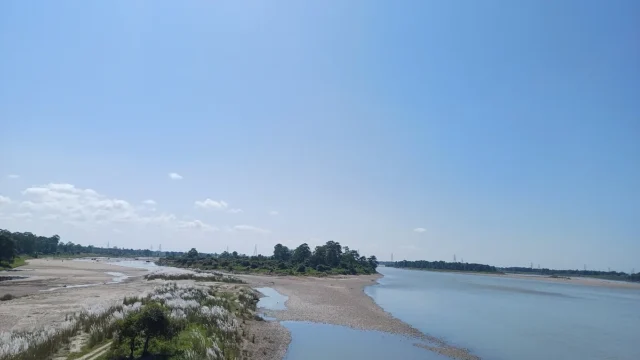
Violence over Subansiri dam hearing in Arunachal
Arunachal Pradesh has some of India's biggest hydropower potential, and some of its sharpest protests. A shutdown in Upper Subansiri district turned violent, and the public hearing on the 1,605-MW Subansiri Upper Hydroelectric Project had to be called off. Days earlier, Pasighat saw a similar protest against the Siang project. Read it for the Brahmaputra's tributaries, public hearings and the China angle.
UPSC angle: Prelims: Brahmaputra tributaries and names, EIA public hearing. · Mains GS-I/III: displacement, hydropower, India-China water issues.
27 Oct 2026
Cauvery panel tells Karnataka to release 3,000 cusecs to Tamil Nadu: Article 262 and the inter-State water dispute
The Cauvery Water Regulation Committee has told Karnataka to ensure 3,000 cusecs of water a day at Biligundlu for 15 days, and the Cauvery Water Management Authority has endorsed it. Tamil Nadu wanted almost five times more, including a claimed backlog. Karnataka says a weak monsoon has left its four Cauvery reservoirs 55% short and most of its taluks in drought. For you, this is a live case study of Article 262, water tribunals and how a dry year turns sharing into a crisis.
UPSC angle: Prelims: Cauvery source and tributaries, Article 262, ISWD Act 1956, CWMA. · Mains GS-II: inter-State water disputes; cooperative federalism.
25 Oct 2026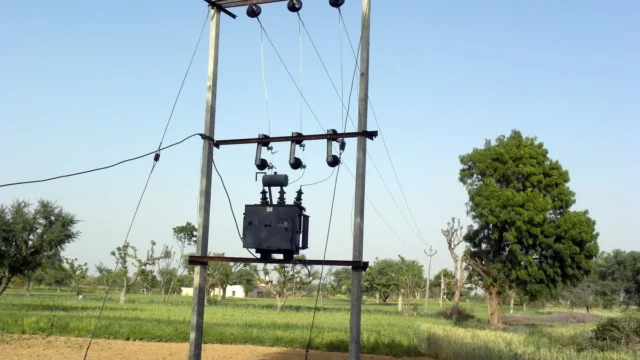
Haryana’s first private power distributor: what a parallel licence means for Gurugram and Nuh
The Haryana Electricity Regulatory Commission (HERC) on 19 October 2026 gave Eleven Power Pvt Ltd a 25-year parallel distribution licence for Gurugram and Nuh. It will be Haryana’s first private distributor and India’s second case of parallel licensing after Mumbai. The State government and power-sector staff oppose it and plan to appeal to the Appellate Tribunal for Electricity.
UPSC angle: Prelims: Section 14, APTEL, Concurrent List Entry 38. · Mains GS-III: discom reform, cross-subsidy, competition.
22 Oct 2026Learn the concept
Question text as printed in the official UPSC Civil Services (Main) question paper. The model answer is original Battle IAS work; use it to learn structure, not to memorise.
Want every PYQ in one place? See the Battle IAS PYQ Book.