
UPSC Mains 2014 GS Paper 2 Q5: model answer
Instances of President’s delay in commuting death sentences has come under public debate as denial of justice. Should there be a time limit specified for the President to accept/reject such petitions? Analyse.
What the question wants
Analyse whether the President should have a fixed time limit to decide mercy petitions in death cases.
How to structure it
Should there be ... Analyse: the power, the delay problem, the arguments both ways, a balanced position.
- Article 72
- The delay problem
- For a time limit
- Against
- Middle path
How to think it through
The answer was overtaken by the Court in 2014 itself: in Shatrughan Chauhan, delay became a ground for commuting death to life. So the time limit already exists in effect; the question is whether to write it down.
Model answer
Devender Pal Singh Bhullar waited eight years for his mercy petition to be decided. In 2014 his death sentence was commuted, partly because of that delay. When the State takes years to say yes or no, the waiting becomes a second punishment.
The power
Article 72 lets the President pardon, commute, remit, respite or reprieve; he acts on the advice of the Union Cabinet (Maru Ram, 1980). The decision is open to limited judicial review (Kehar Singh, 1989; Epuru Sudhakar, 2006).
The problem
Petitions in the 2000s waited up to 12 years; the Home Ministry often sat on files.
The case for a time limit
- Article 21: inordinate delay is cruel; Shatrughan Chauhan (2014) commuted 15 death sentences on this ground.
- Certainty for victims' families too.
- Prevents political use of timing.
The case against
- Each case needs care, especially new evidence or mental illness.
- A rigid limit might push hasty rejections.
- It may intrude into a constitutional discretion.
A middle path
- A fixed guideline (say three months) in the Home Ministry's rules, not the Constitution.
- Shatrughan Chauhan's guidelines: 14 days' notice before execution, copies of rejection to the convict, mental health checks.
- In 2022–23 the Supreme Court also pressed States to decide petitions quickly.
A time frame for the government, not a stopwatch on the President, gives justice without haste. That also protects the dignity of the office, which should never look like it is waiting for a convenient date.
Draw: A timeline: conviction → appeals → mercy petition → (delay) → commutation, with the Article 21 hook.
Keywords, cases and data to drop in
Article 72, 161, Maru Ram 1980, Kehar Singh 1989, Epuru Sudhakar 2006, Shatrughan Chauhan 2014, Bhullar, Article 21, delay as ground for commutation.
Where most answers lose marks
- Ignoring Shatrughan Chauhan. It is the strongest fact in the answer.
Related Mains PYQs
- What is meant by judicial legislation? In this context, discuss the verdicts of the apex court allowing “passive euthanasia” and a “living… UPSC 2026 · GS-II
- Comment on the need of administrative tribunals as compared to the court system. Assess the impact of the recent tribunal reforms through… UPSC 2025 · GS-II
- Compare and contrast the President’s power to pardon in India and in the USA. Are there any limits to it in both… UPSC 2025 · GS-II
- “Constitutional morality is the fulcrum which acts as an essential check upon the high functionaries and citizens alike... .” In view of… UPSC 2025 · GS-II
Fresh examples from current affairs

‘Sentencing shall not be a lottery’: why India needs a Sentencing Council and guidelines
In India, two people convicted of the same crime can get very different punishments depending on which judge hears the case. An Indian Express ‘Experts Explain’ piece on 24 October 2026 argues for a Sentencing Council with guidelines, pointing to the Supreme Court’s words in Sunita Devi v. State of Bihar (2024) that ‘sentencing shall not be a mere lottery’. The Centre has asked the Law Commission to examine a national sentencing policy. This topic connects Articles 14 and 21 with criminal justice reform.
UPSC angle: Prelims: Probation of Offenders Act 1958, BNSS hearing on sentence, Concurrent List. · Mains GS-II: judicial reforms, criminal justice.
24 Oct 2026
Supreme Court: no prior approval under Section 17A needed to probe a bribe demand
In a judgment of 16 October 2026, a Supreme Court Bench of Justices S.V.N. Bhatti and N.V. Anjaria held that investigating a bribe demand by a public servant does not need prior approval under Section 17A of the Prevention of Corruption Act. Asking for a bribe, the court said, is not part of discharging official duties.
UPSC angle: Prelims: Sections 7, 7A, 17A and 19 of the PC Act. · Mains GS-II/GS-IV: honest officers versus accountability.
19 Oct 2026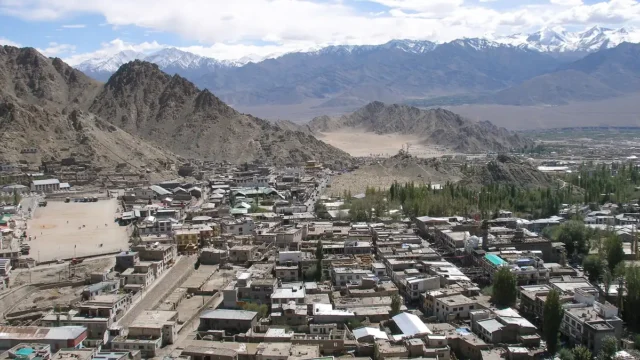
CJI Surya Kant inaugurates the first permanent High Court bench in Leh
On 18 October 2026 Chief Justice of India Surya Kant inaugurated a permanent bench of the High Court of Jammu and Kashmir and Ladakh in Leh. Until now, a person in Ladakh who wanted to file a writ petition had to travel to Srinagar or Jammu, across high passes and harsh winters. The bench was made possible by a regulation that the President promulgated on 27 August and that came into force on 5 September. It is a simple idea with a big effect: bring the court to the people.
UPSC angle: Prelims: Arts. 214, 231, 241, 226, 39A; common High Court. · Mains GS-II: access to justice, judicial infrastructure.
18 Oct 2026
Three High Court Chief Justices appointed as Supreme Court judges
On 5 October 2026 the President appointed three High Court Chief Justices as judges of the Supreme Court: Justice Sunita Agarwal (Gujarat), Justice Devendra Kumar Upadhyaya (Delhi) and Justice Aparesh Kumar Singh (Telangana). The first two have Allahabad as their parent High Court and the third Jharkhand.
UPSC angle: Prelims: Article 124. · Mains GS-II: judicial appointments.
5 Oct 2026Learn the concept
Question text as printed in the official UPSC Civil Services (Main) question paper. The model answer is original Battle IAS work; use it to learn structure, not to memorise.
Want every PYQ in one place? See the Battle IAS PYQ Book.