
UPSC Mains 2016 GS Paper 2 Q3: model answer
“The Indian party system is passing through a phase of transition which looks to be full of contradictions and paradoxes.” Discuss.
What the question wants
Discuss the contradictions in India's changing party system.
How to structure it
Discuss a quoted claim: describe the phases, then list paradoxes in pairs.
- Phases
- Paradoxes
- Causes
- Way forward
How to think it through
Write the paradoxes as pairs: 'more parties, fewer real choices', 'more democracy in elections, less inside parties'. Pairs look like a teacher wrote them and score well.
Model answer
India had one dominant party till 1967, a coalition era from 1989 to 2014, single-party majorities in 2014 and 2019, and in 2024 a coalition again, led by a party with 240 seats. Few democracies have changed their party system this often.
Phases
'Congress system' (Rajni Kothari), multi-party coalitions, a new dominant-party phase, and now a coalition with a dominant core.
Paradoxes
- More parties, fewer real ideologies: over 2,500 registered parties, yet most fight on welfare and identity.
- Democracy outside, dynasty inside: parties contest elections but rarely hold internal polls.
- National parties, regional faces: national parties depend on State leaders.
- Anti-incumbency and loyalty together: voters punish governments and yet re-elect strong welfare States.
- Ideology and alliances: parties ally with opponents after the vote.
- Cash and clean politics: demands for transparency while election spending rises; the electoral bonds scheme was
struck down in 2024.
Causes
Caste and regional identities, welfare politics, money, media and the anti-defection law.
Way forward
Inner-party democracy laws, state funding (Indrajit Gupta Committee, 1998), and transparency in funding.
The paradoxes show a democracy still finding its shape. Transition is not a disease; it is how a young, plural electorate tests its choices. The risk lies only if parties stop renewing themselves from within, through open elections, new leaders and honest accounts.
Draw: A timeline of party system phases with seat counts of the largest party.
Keywords, cases and data to drop in
Congress system, Rajni Kothari, 1967, 1989, 2014, 2024, coalition dharma, inner-party democracy, Indrajit Gupta Committee, electoral bonds verdict 2024.
Where most answers lose marks
- Writing election history only. The question asks for paradoxes; label them.
Related Mains PYQs
- What is meant by judicial legislation? In this context, discuss the verdicts of the apex court allowing “passive euthanasia” and a “living… UPSC 2026 · GS-II
- Comment on the need of administrative tribunals as compared to the court system. Assess the impact of the recent tribunal reforms through… UPSC 2025 · GS-II
- Compare and contrast the President’s power to pardon in India and in the USA. Are there any limits to it in both… UPSC 2025 · GS-II
- “Constitutional morality is the fulcrum which acts as an essential check upon the high functionaries and citizens alike... .” In view of… UPSC 2025 · GS-II
Fresh examples from current affairs

‘Sentencing shall not be a lottery’: why India needs a Sentencing Council and guidelines
In India, two people convicted of the same crime can get very different punishments depending on which judge hears the case. An Indian Express ‘Experts Explain’ piece on 24 October 2026 argues for a Sentencing Council with guidelines, pointing to the Supreme Court’s words in Sunita Devi v. State of Bihar (2024) that ‘sentencing shall not be a mere lottery’. The Centre has asked the Law Commission to examine a national sentencing policy. This topic connects Articles 14 and 21 with criminal justice reform.
UPSC angle: Prelims: Probation of Offenders Act 1958, BNSS hearing on sentence, Concurrent List. · Mains GS-II: judicial reforms, criminal justice.
24 Oct 2026
Supreme Court: no prior approval under Section 17A needed to probe a bribe demand
In a judgment of 16 October 2026, a Supreme Court Bench of Justices S.V.N. Bhatti and N.V. Anjaria held that investigating a bribe demand by a public servant does not need prior approval under Section 17A of the Prevention of Corruption Act. Asking for a bribe, the court said, is not part of discharging official duties.
UPSC angle: Prelims: Sections 7, 7A, 17A and 19 of the PC Act. · Mains GS-II/GS-IV: honest officers versus accountability.
19 Oct 2026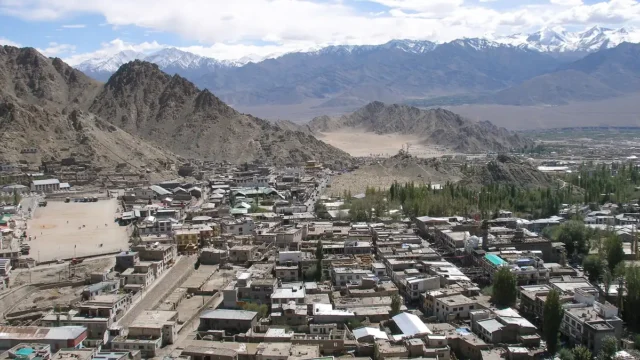
CJI Surya Kant inaugurates the first permanent High Court bench in Leh
On 18 October 2026 Chief Justice of India Surya Kant inaugurated a permanent bench of the High Court of Jammu and Kashmir and Ladakh in Leh. Until now, a person in Ladakh who wanted to file a writ petition had to travel to Srinagar or Jammu, across high passes and harsh winters. The bench was made possible by a regulation that the President promulgated on 27 August and that came into force on 5 September. It is a simple idea with a big effect: bring the court to the people.
UPSC angle: Prelims: Arts. 214, 231, 241, 226, 39A; common High Court. · Mains GS-II: access to justice, judicial infrastructure.
18 Oct 2026
Three High Court Chief Justices appointed as Supreme Court judges
On 5 October 2026 the President appointed three High Court Chief Justices as judges of the Supreme Court: Justice Sunita Agarwal (Gujarat), Justice Devendra Kumar Upadhyaya (Delhi) and Justice Aparesh Kumar Singh (Telangana). The first two have Allahabad as their parent High Court and the third Jharkhand.
UPSC angle: Prelims: Article 124. · Mains GS-II: judicial appointments.
5 Oct 2026Learn the concept
Question text as printed in the official UPSC Civil Services (Main) question paper. The model answer is original Battle IAS work; use it to learn structure, not to memorise.
Want every PYQ in one place? See the Battle IAS PYQ Book.