
Attitude (GS-IV): Meaning, ABC Components, Functions, Moral and Political Attitudes, Persuasion and Attitude Change (UPSC Ethics Notes)
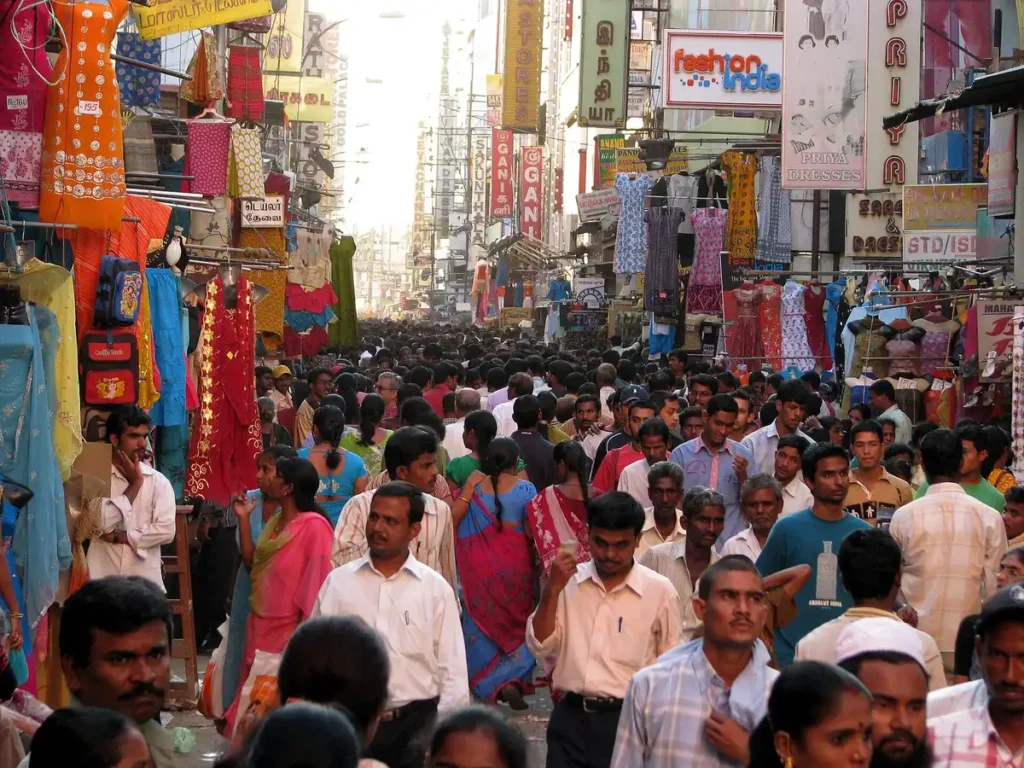
Structure and formation
Take a district officer’s view of manual scavenging: the belief that it violates dignity (cognitive), anger at seeing it (affective), and the drive to enforce the 2013 Act (behavioural). Attitudes form through family and school (socialisation), direct experience, observation of role models, media, and conditioning.
Functions
- Knowledge: help us make sense of the world quickly.
- Utilitarian: lead us toward rewards and away from punishment.
- Ego-defensive: protect self-image, sometimes through prejudice.
- Value-expressive: show who we are, such as a civil servant’s commitment to fairness.
Attitude and behaviour
Attitudes predict behaviour best when they are strong, specific, and formed by experience. But the gap is real: many people say they value cleanliness yet litter. Cognitive dissonance (Festinger) explains how people change attitudes to match actions, or vice versa. Swachh Bharat worked partly by changing behaviour first (toilets, peer pressure) and letting attitudes follow.
Moral and political attitudes
Moral attitudes concern right and wrong (views on corruption, honesty); political attitudes concern government and public issues (liberal, conservative, attitudes to reservation). A civil servant may hold political views but must act with political neutrality and non-partisanship.
Social influence and persuasion
Influence: conformity (Asch’s line experiment), compliance, obedience (Milgram). Persuasion depends on the source (credibility, likeability), the message (one-sided or two-sided, fear appeals with clear solutions), and the audience. The elaboration likelihood model: central route (arguments) for engaged audiences, peripheral route (celebrities, emotions) for others. Public campaigns use both: Pulse Polio used trusted religious leaders and celebrities.
Attitude: UPSC angle
For UPSC CSE
Mains GS-IV: definitions with examples, attitude of a civil servant, persuasion in public campaigns, case studies on changing community attitudes.
Attitude UPSC PYQs (Prelims)
Questions UPSC has actually asked, from the official papers. Pick an option to check yourself.
No Prelims question in the Battle IAS bank is directly on this topic yet.
Mains PYQs on this topic
Questions from the official UPSC Mains papers (2023-2026 in the Battle IAS Mains bank), newest first. Each links to a model answer.
- UPSC Mains 2025 · GS Paper IV · Q3b · 10 marks
“The greatest discovery of my generation is that a human being can alter his life by altering his attitudes.” — William James
Quick quiz
The ABC model of attitude includes
Three components.Answer (a)
Changing an attitude to reduce discomfort between belief and action illustrates
Festinger.Answer (b)
Using a celebrity to promote vaccination is an example of the
Elaboration likelihood model.Answer (b)
FAQs
How is attitude different from aptitude?
Attitude is an evaluation or disposition; aptitude is the capacity to learn or do something.
Can attitudes change?
Yes, through new information, experience, persuasion, dissonance and social influence.
What attitude does a civil servant need?
Impartiality, empathy toward weaker sections, integrity, objectivity and dedication to public service.
What is a two-sided message?
A message that presents the counter-argument and rebuts it, often more persuasive for informed audiences.
Spotted an error? Tell us. We correct within 48 hours.
Image: McKay Savage from London, UK, Wikimedia Commons, CC BY 2.0
How to use this in Mains
If asked: Explain the components of attitude with an example from administration. (GS-IV)
Quote: “Take a district officer’s view of manual scavenging: the belief that it violates dignity (cognitive), anger at seeing it (affective), and the drive to enforce the 2013 Act (behavioural).”
Use it: A ready administrative example of the ABC model.
In the news

Supreme Court: no prior approval under Section 17A needed to probe a bribe demand
In a judgment of 16 October 2026, a Supreme Court Bench of Justices S.V.N. Bhatti and N.V. Anjaria held that investigating a bribe demand by a public servant does not need prior approval under Section 17A of the Prevention of Corruption Act. Asking for a bribe, the court said, is not part of discharging official duties.
19 Oct 2026