
UPSC Mains 2013 GS Paper 2 Q10: model answer
Pressure group politics is sometimes seen as the informal face of politics. With regards to the above, assess the structure and functioning of pressure groups in India.
What the question wants
Assess how pressure groups in India are organised and how they work, in the light of their being politics' informal face.
How to structure it
Assess structure and functioning: types first, then methods, then a judgment.
- Meaning
- Structure and types
- How they function
- Strengths
- Weaknesses
- Assessment
How to think it through
Parties seek power; pressure groups seek influence. In India the line is blurred because most big groups are wings of parties. So the 'informal face' is often the same face wearing a different cap. Show both the independent ones and the party-tied ones.
Model answer
When the Bharatiya Kisan Union under Mahendra Singh Tikait camped on Delhi's Boat Club lawns in 1988, half a million farmers won concessions without contesting a single seat. That is the informal face of politics: influence without office.
Structure
- Business: FICCI, CII, ASSOCHAM, NASSCOM.
- Trade unions: INTUC, AITUC, BMS, CITU, most linked to parties.
- Peasant groups: BKU, All India Kisan Sabha, Shetkari Sanghatana.
- Professional bodies: IMA, Bar Councils.
- Caste, religious, linguistic and student groups; and anomic movements that rise suddenly, like India Against Corruption (2011).
Functioning
- Lobbying ministries and parliamentary committees with memoranda and data.
- Pre-budget consultations, which business chambers use expertly.
- Agitations, bandhs and dharnas.
- Litigation and PILs.
- Media campaigns and, now, hashtags.
Strengths
They carry information to the state, give voice to interests that parties ignore and keep governments alert between elections.
Weaknesses
- Many are party appendages, so they mobilise for the party, not the member.
- Uneven power: organised business outweighs unorganised workers.
- Violent methods and short-lived causes.
- Little transparency on funding; India has no lobbying law.
Assessment
Pressure groups deepen democracy when they are autonomous and transparent. A lobbying disclosure register and open consultation on draft laws would bring the informal face into daylight. Until then, the loudest voice, not the most just one, will usually win the ear of the ministry.
Draw: A ladder: memoranda, consultations, media, litigation, protest, from quiet to loud.
Keywords, cases and data to drop in
interest articulation, institutional, associational, anomic groups (Almond), BKU, FICCI/CII, party affiliation, lobbying regulation, pre-legislative consultation policy 2014.
Where most answers lose marks
- Listing types without 'functioning' or without an assessment.
Related Mains PYQs
- What is meant by judicial legislation? In this context, discuss the verdicts of the apex court allowing “passive euthanasia” and a “living… UPSC 2026 · GS-II
- Comment on the need of administrative tribunals as compared to the court system. Assess the impact of the recent tribunal reforms through… UPSC 2025 · GS-II
- Compare and contrast the President’s power to pardon in India and in the USA. Are there any limits to it in both… UPSC 2025 · GS-II
- “Constitutional morality is the fulcrum which acts as an essential check upon the high functionaries and citizens alike... .” In view of… UPSC 2025 · GS-II
Fresh examples from current affairs

‘Sentencing shall not be a lottery’: why India needs a Sentencing Council and guidelines
In India, two people convicted of the same crime can get very different punishments depending on which judge hears the case. An Indian Express ‘Experts Explain’ piece on 24 October 2026 argues for a Sentencing Council with guidelines, pointing to the Supreme Court’s words in Sunita Devi v. State of Bihar (2024) that ‘sentencing shall not be a mere lottery’. The Centre has asked the Law Commission to examine a national sentencing policy. This topic connects Articles 14 and 21 with criminal justice reform.
UPSC angle: Prelims: Probation of Offenders Act 1958, BNSS hearing on sentence, Concurrent List. · Mains GS-II: judicial reforms, criminal justice.
24 Oct 2026
Supreme Court: no prior approval under Section 17A needed to probe a bribe demand
In a judgment of 16 October 2026, a Supreme Court Bench of Justices S.V.N. Bhatti and N.V. Anjaria held that investigating a bribe demand by a public servant does not need prior approval under Section 17A of the Prevention of Corruption Act. Asking for a bribe, the court said, is not part of discharging official duties.
UPSC angle: Prelims: Sections 7, 7A, 17A and 19 of the PC Act. · Mains GS-II/GS-IV: honest officers versus accountability.
19 Oct 2026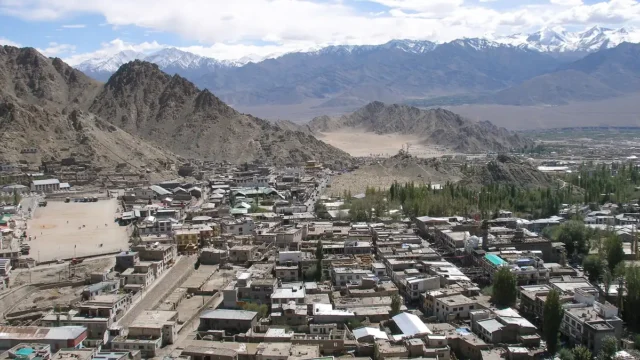
CJI Surya Kant inaugurates the first permanent High Court bench in Leh
On 18 October 2026 Chief Justice of India Surya Kant inaugurated a permanent bench of the High Court of Jammu and Kashmir and Ladakh in Leh. Until now, a person in Ladakh who wanted to file a writ petition had to travel to Srinagar or Jammu, across high passes and harsh winters. The bench was made possible by a regulation that the President promulgated on 27 August and that came into force on 5 September. It is a simple idea with a big effect: bring the court to the people.
UPSC angle: Prelims: Arts. 214, 231, 241, 226, 39A; common High Court. · Mains GS-II: access to justice, judicial infrastructure.
18 Oct 2026
Three High Court Chief Justices appointed as Supreme Court judges
On 5 October 2026 the President appointed three High Court Chief Justices as judges of the Supreme Court: Justice Sunita Agarwal (Gujarat), Justice Devendra Kumar Upadhyaya (Delhi) and Justice Aparesh Kumar Singh (Telangana). The first two have Allahabad as their parent High Court and the third Jharkhand.
UPSC angle: Prelims: Article 124. · Mains GS-II: judicial appointments.
5 Oct 2026Learn the concept
Question text as printed in the official UPSC Civil Services (Main) question paper. The model answer is original Battle IAS work; use it to learn structure, not to memorise.
Want every PYQ in one place? See the Battle IAS PYQ Book.