
UPSC Mains 2014 GS Paper 2 Q1: model answer
Starting from inventing the ‘basic structure’ doctrine, the judiciary has played a highly proactive role in ensuring that India develops into a thriving democracy. In light of the statement, evaluate the role played by judicial activism in achieving the ideals of democracy.
What the question wants
Evaluate how judicial activism, beginning with the basic structure doctrine, has helped Indian democracy.
How to structure it
Evaluate: contributions, then costs, then a verdict.
- Basic structure as start
- Contributions
- Concerns
- Verdict
How to think it through
Activism is like salt: the right amount makes democracy edible; too much and nobody can swallow it. Show both the good dishes (PIL, Vishaka, environment) and the over-salted ones (2G licences cancelled, the liquor ban near highways).
Model answer
When the Supreme Court took up a letter from Bihar's undertrial prisoners in Hussainara Khatoon (1979), over 40,000 people held for years without trial were released. Judicial activism had arrived.
Basic structure as the foundation
Kesavananda (1973) gave courts the power to protect democracy's core even from Parliament.
Contributions to democracy
- Rights expanded: Maneka Gandhi (1978) widened Article 21 to include dignity, livelihood, privacy and a clean environment.
- Access to justice: PIL let the poor approach courts through letters.
- Gaps filled: Vishaka guidelines (1997) on workplace harassment until a law came in 2013.
- Clean elections: candidates must disclose assets and criminal records (ADR, 2002); NOTA (2013).
- Accountability: coal block and 2G spectrum cancellations; police reforms (Prakash Singh, 2006).
- Federalism: S.R. Bommai (1994) checked misuse of Article 356.
Concerns
- Courts making policy (highway liquor ban, 2016) without expertise.
- Weakens separation of powers.
- Huge backlog while courts handle executive tasks.
- Orders often poorly implemented: police reform directions of 2006 remain largely on paper.
- Unelected judges are not accountable to voters for policy choices.
A middle path
The Court itself has stressed judicial restraint, for example in Divisional Manager, Aravali Golf Club (2008), warning judges not to run the government. Structured guidelines, time-bound orders and dialogue with the executive serve democracy better.
Verdict
Activism has deepened democracy when it protected rights and processes. It works best when it prompts the other branches to act, not when it replaces them.
Draw: Scale weighing 'rights, access, accountability' against 'overreach, backlog'.
Keywords, cases and data to drop in
PIL, Hussainara Khatoon, Maneka Gandhi, Vishaka, ADR 2002, Bommai, Prakash Singh, judicial overreach.
Where most answers lose marks
- Treating activism as all good or all bad; 'evaluate' needs both sides.
Related Mains PYQs
- What is meant by judicial legislation? In this context, discuss the verdicts of the apex court allowing “passive euthanasia” and a “living… UPSC 2026 · GS-II
- Comment on the need of administrative tribunals as compared to the court system. Assess the impact of the recent tribunal reforms through… UPSC 2025 · GS-II
- Compare and contrast the President’s power to pardon in India and in the USA. Are there any limits to it in both… UPSC 2025 · GS-II
- “Constitutional morality is the fulcrum which acts as an essential check upon the high functionaries and citizens alike... .” In view of… UPSC 2025 · GS-II
Fresh examples from current affairs

‘Sentencing shall not be a lottery’: why India needs a Sentencing Council and guidelines
In India, two people convicted of the same crime can get very different punishments depending on which judge hears the case. An Indian Express ‘Experts Explain’ piece on 24 October 2026 argues for a Sentencing Council with guidelines, pointing to the Supreme Court’s words in Sunita Devi v. State of Bihar (2024) that ‘sentencing shall not be a mere lottery’. The Centre has asked the Law Commission to examine a national sentencing policy. This topic connects Articles 14 and 21 with criminal justice reform.
UPSC angle: Prelims: Probation of Offenders Act 1958, BNSS hearing on sentence, Concurrent List. · Mains GS-II: judicial reforms, criminal justice.
24 Oct 2026
Supreme Court: no prior approval under Section 17A needed to probe a bribe demand
In a judgment of 16 October 2026, a Supreme Court Bench of Justices S.V.N. Bhatti and N.V. Anjaria held that investigating a bribe demand by a public servant does not need prior approval under Section 17A of the Prevention of Corruption Act. Asking for a bribe, the court said, is not part of discharging official duties.
UPSC angle: Prelims: Sections 7, 7A, 17A and 19 of the PC Act. · Mains GS-II/GS-IV: honest officers versus accountability.
19 Oct 2026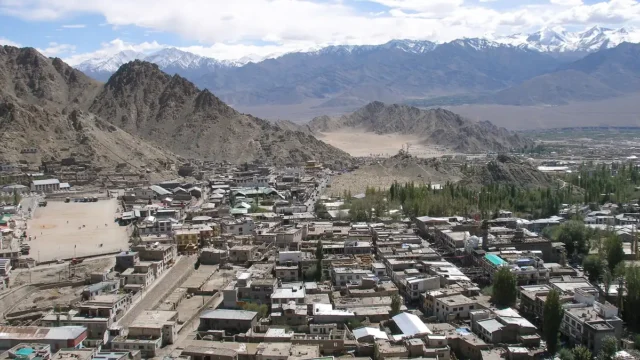
CJI Surya Kant inaugurates the first permanent High Court bench in Leh
On 18 October 2026 Chief Justice of India Surya Kant inaugurated a permanent bench of the High Court of Jammu and Kashmir and Ladakh in Leh. Until now, a person in Ladakh who wanted to file a writ petition had to travel to Srinagar or Jammu, across high passes and harsh winters. The bench was made possible by a regulation that the President promulgated on 27 August and that came into force on 5 September. It is a simple idea with a big effect: bring the court to the people.
UPSC angle: Prelims: Arts. 214, 231, 241, 226, 39A; common High Court. · Mains GS-II: access to justice, judicial infrastructure.
18 Oct 2026
Three High Court Chief Justices appointed as Supreme Court judges
On 5 October 2026 the President appointed three High Court Chief Justices as judges of the Supreme Court: Justice Sunita Agarwal (Gujarat), Justice Devendra Kumar Upadhyaya (Delhi) and Justice Aparesh Kumar Singh (Telangana). The first two have Allahabad as their parent High Court and the third Jharkhand.
UPSC angle: Prelims: Article 124. · Mains GS-II: judicial appointments.
5 Oct 2026Learn the concept
Question text as printed in the official UPSC Civil Services (Main) question paper. The model answer is original Battle IAS work; use it to learn structure, not to memorise.
Want every PYQ in one place? See the Battle IAS PYQ Book.