Topic hub

Science & Technology

Science & Technology: syllabus hub.

Syllabus: UPSC Pre GS1: General Science; Mains GS3: S&T developments

When UPSC asked this

2011: 17 questions11172012: 13 questions12132013: 16 questions13162014: 12 questions14122015: 9 questions1592016: 11 questions16112017: 8 questions1782018: 13 questions18132019: 13 questions19132020: 13 questions20132021: 10 questions21102022: 11 questions22112023: 6 questions2362024: 8 questions2482025: 12 questions25122026: 13 questions2613

Explainers

Previous-year questions

Attempt them here.

UPSC Prelims 2026 · GS Paper I

Which of the following statements with regard to Black Boxes used in modern aircrafts is/are correct ?

  • 1. They carry a beacon emitting red light pulses to facilitate underwater detection.
  • 2. They record both the cockpit voice and flight data.
  • 3. Their memory units are made using either stainless steel or titanium.

Select the answer using the code given below :

Answer (b) & explanation

Statements 2 and 3 are correct (b). Statement 2 is right: the "black box" is really two orange recorders, the cockpit voice recorder and the flight data recorder. Statement 3 is right: their crash-survivable memory sits in stainless steel or titanium shells. Statement 1 is wrong: under water, the locator beacon sends out ultrasonic pulses, about 37.5 kHz, not red light. So options (a), (c) and (d) fail.

Notice why they are orange: to be easy to spot in wreckage. The beacon works for about 30 to 90 days. Black boxes were key in probing the Air India Ahmedabad crash (June 2025); India's AAIB read its data at a new lab in Delhi. Newer rules call for 25-hour voice recording.

Answer as per the official UPSC answer key.

Open this question's page →

UPSC Prelims 2026 · GS Paper I

Consider the following statements with regard to involvement of private entities in India’s space programme :

  • 1. The Indian National Space Promotion and Authorisation Centre (IN-SPACe) is an autonomous agency formed to facilitate participation of private entities.
  • 2. Agnikul Cosmos launched the world’s first flight using 3D-printed rocket engine.
  • 3. Skyroot Aerospace has developed liquid fuel for GSLV.

Which of the statements given above is/are correct ?

Answer (c) & explanation

Statements 1 and 2 are correct (c). Statement 1 is right: IN-SPACe (2020) is the single-window, autonomous body under the Department of Space that authorises private space activity. Statement 2 is right: Agnikul's Agnibaan SOrTeD (May 2024) flew on the world's first single-piece 3D-printed semi-cryogenic engine. Statement 3 is wrong: Skyroot builds its own Vikram rockets; it does not make fuel for ISRO's GSLV. So options (a), (b) and (d) fail.

Notice Skyroot's milestone: Vikram-S (2022) was India's first privately built rocket to reach space. The Indian Space Policy, 2023 opened all space activities to private firms, and 100% FDI is allowed in parts of the sector. NSIL is ISRO's commercial arm.

Answer as per the official UPSC answer key.

Open this question's page →

UPSC Prelims 2026 · GS Paper I

Which of the following statements with regard to drone swarms is/are correct ?

  • 1. They use Terahertz band of frequency to communicate with the command centre.
  • 2. Individual drones in the swarm can communicate with other drones in the swarm.
  • 3. GPS Spoofing is a commonly used technique to counter drone swarm attack.

Select the answer using the code given below :

Answer (b) & explanation

Statements 2 and 3 are correct (b). Statement 2 is right: in a swarm, the drones talk to each other and share tasks, so the group keeps working even if some are lost. Statement 3 is right: defenders often jam or spoof GPS to send them off course. Statement 1 is wrong: swarms usually use ordinary radio bands; terahertz links are still experimental and short-range. So options (a), (c) and (d) fail.

Notice other counters: laser weapons, like DRDO's directed-energy systems, anti-drone guns and net systems. India showed a 75-drone swarm at the 2021 Army Day parade. Drone wars in Ukraine and during Operation Sindoor (2025) showed how cheap drones can overwhelm costly defences.

Answer as per the official UPSC answer key.

Open this question's page →

UPSC Prelims 2026 · GS Paper I

Which of the following statements with regard to GenomeIndia Project is/are correct ?

  • 1. It is a part of the Human Genome Project.
  • 2. The project is funded by the Department of Biotechnology (DBT), Government of India.
  • 3. Its primary aim is to build a catalogue of genetic diversity of the Indian population.

Select the answer using the code given below :

Answer (b) & explanation

Statements 2 and 3 are correct (b). Statement 2 is right: GenomeIndia (2020) is funded by the Department of Biotechnology. Statement 3 is right: it sequenced 10,000 genomes from many Indian communities to build a catalogue of the country's genetic variation, and the data was released in 2025. Statement 1 is wrong: the international Human Genome Project was a separate effort that ended in 2003. So options (a), (c) and (d) fail.

Notice the uses: finding gene variants behind diseases common in India, such as sickle cell and thalassaemia, and building personalised medicine. The data is stored at the Indian Biological Data Centre in Faridabad. A larger follow-up aims to sequence one million genomes.

Answer as per the official UPSC answer key.

Open this question's page →

UPSC Prelims 2026 · GS Paper I

Which of the following statements with regard to the National Quantum Mission (NQM) is/are correct ?

  • 1. It aims at developing intermediate-scale quantum computers with 50-1000 physical qubits.
  • 2. Its implementation includes setting up of four Thematic Hubs (T-Hubs) in academic and national R&D institutes across India.

Select the answer using the code given below :

Answer (c) & explanation

Both statements are correct (c). Statement 1 is right: the National Quantum Mission (2023, under the DST) aims at quantum computers of 50–1,000 physical qubits within eight years. Statement 2 is right: it has four T-Hubs: computing at IISc Bengaluru, communication at IIT Madras, sensing and metrology at IIT Bombay, and materials and devices at IIT Delhi. So options (a), (b) and (d) fail.

Notice the budget: about ₹6,000 crore from 2023-24 to 2030-31. The mission also aims at secure quantum communication over 2,000 km between cities, and satellite-based quantum links. India joined a handful of nations, like the USA, China and France, with such a dedicated mission.

Answer as per the official UPSC answer key.

Open this question's page →

UPSC Prelims 2026 · GS Paper I

Which of the following statements with regard to India’s Deep Ocean Mission is/are correct ?

  • 1. It was launched by the Ministry of Ports, Shipping and Waterways, Government of India.
  • 2. Matsya-6000 has been designed to carry 3 people for deep sea exploration.
  • 3. Samudrayaan is a project under this mission.

Select the answer using the code given below :

Answer (b) & explanation

Statements 2 and 3 are correct (b). Statement 2 is right: Matsya-6000 is a submersible designed to take three people to a depth of 6,000 metres. Statement 3 is right: Samudrayaan is the project under the mission that is building it. Statement 1 is wrong: the Deep Ocean Mission (2021) belongs to the Ministry of Earth Sciences, not the shipping ministry. So options (a), (c) and (d) fail.

Notice the mission's other parts: deep-sea mining of polymetallic nodules in the Central Indian Ocean Basin, ocean biodiversity, and climate advisory services. The National Institute of Ocean Technology in Chennai builds Matsya. Only a few countries, such as the USA, China, Japan and France, have crewed deep-sea vehicles.

Answer as per the official UPSC answer key.

Open this question's page →

UPSC Prelims 2026 · GS Paper I

Which of the following statements about DHRUV64 is/are correct ?

  • 1. It is the third chip fabricated under the DIR-V Programme with an overall aim to enable the creation of microprocessors for India.
  • 2. It is India’s first homegrown 1.0 GHz, 64-bit dual-core microprocessor.

Select the answer using the code given below :

Answer (c) & explanation

Both statements are correct (c). Statement 1 is right: DHRUV64, announced in December 2025 by C-DAC, is the third chip fabricated under the Digital India RISC-V (DIR-V) programme, after THEJAS32 and THEJAS64. Statement 2 is right: it is India's first homegrown 1.0 GHz, 64-bit dual-core microprocessor. So options (a), (b) and (d) fail.

Notice the technology: RISC-V is an open-source instruction set, so India can design chips without paying licence fees to owners of ARM or x86 designs. DHRUV64 targets 5G equipment, industrial automation, automotive and IoT uses. Next in line are the Dhanush chips. The India Semiconductor Mission (2021) supports the wider fab and assembly ecosystem.

Answer as per the official UPSC answer key.

Open this question's page →

UPSC Prelims 2026 · GS Paper I

Which one of the following pairs of semiconductor plants in India and their locations is not correctly matched ?

Answer (c) & explanation

The pair HCL-Foxconn : Madhya Pradesh is wrong (c). The HCL–Foxconn joint venture India Chip Ltd. was approved in 2025 near Jewar in Uttar Pradesh, close to the new airport, not in Madhya Pradesh. Option (a) is correct: CG Power with Renesas and STARS is building at Sanand, Gujarat. Option (b) is correct: Tata's assembly and test unit is at Jagiroad, Assam. Option (d) is correct: SiCSem's silicon carbide fab is in Odisha.

Notice the anchor project: Tata and PSMC of Taiwan are building India's first big fab at Dholera, Gujarat, and Micron's assembly unit is at Sanand. These come under the India Semiconductor Mission (2021), which offers about 50% fiscal support.

Answer as per the official UPSC answer key.

Open this question's page →

In the news

GS3 · Security · Defence

Army’s new Land Warfare Doctrine: what it is and why the Army is rewriting it now

The Army Commanders’ Conference, the Indian Army’s top biannual forum, is meeting in New Delhi from 21 to 23 October 2026. Its highlight is a new Land Warfare Doctrine to be released by Defence Minister Rajnath Singh, a framework to prepare the Army for the changing character of war. The last such doctrine came out in December 2018; since then, the China stand-off, Operation Sindoor and the wars in Ukraine and West Asia have changed how armies fight.

UPSC angle: Prelims: Army Commanders’ Conference, CDS, Article 53. · Mains GS-III: changing character of war; modernisation.

22 Oct 2026
GS2 · Health · Governance

FSSAI notices to Nestlé and Zydus over baby-food and Complan claims: what the rules say

The Food Safety and Standards Authority of India (FSSAI) has issued show-cause notices to Nestlé India over two infant products and to Zydus Wellness over Complan, asking for scientific proof of claims such as ‘easy to digest’, ‘supports normal immune system’ and ‘2X Faster Growth’. The move comes as FSSAI also proposes ending the allowance for added sucrose and fructose in foods for infants up to six months.

UPSC angle: Prelims: FSSAI, IMS Act 1992, Codex, HMOs. · Mains GS-II: regulation of food advertising; child nutrition.

22 Oct 2026
GS3 · Cyber Security · Science and Technology

eMudhra weak-key flaw: browsers block 8 certificates; what it means for India’s web trust

Google, Mozilla, Apple and Microsoft have blocked eight intermediate certificates of Bengaluru-based eMudhra, India’s largest certifying authority, after a researcher found their private keys were tiny numbers between 1 and 256 instead of proper 384-bit keys. eMudhra revoked them, CERT-In issued an advisory on 21 October 2026 and MeitY set up a special team. India’s regulated digital signatures and eSign are unaffected.

UPSC angle: Prelims: CCA, CERT-In, TLS, eSign. · Mains GS-III: cyber security, digital trust, data protection.

22 Oct 2026
GS3 · Science and Technology · Space

Japan’s MMX mission lifts off for Mars to bring back a sample of Phobos by 2031

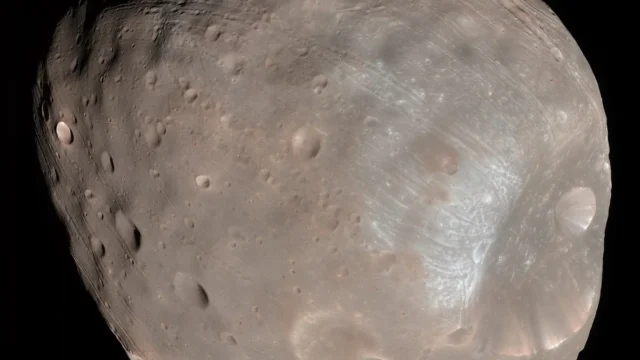
The Japan Aerospace Exploration Agency (JAXA) launched its Martian Moons eXploration (MMX) mission on an H3 rocket from the Tanegashima Space Center at about 1:11 am IST on 20 October 2026. It aims to collect at least 10 grams of material from Phobos, the larger moon of Mars, and return it to Earth in 2031. If it succeeds, Japan will be the first country to bring back samples from a Martian moon.

UPSC angle: Prelims: MMX facts, Phobos vs Deimos, sample-return missions. · Mains GS-III: planetary exploration and cooperation.

21 Oct 2026
GS3 · Science and Technology · AI

Open-weight AI models: why Big Tech gives them away and what it means for India

In October 2026 alone, Reflection AI, Meta, NVIDIA and Mistral released or announced open-weight AI models. The Hindu explained on 20 October why firms spend heavily and then let anyone download the weights: to win developers, set standards and earn from cloud, chips and services. For India, open weights offer a base to build Indian-language AI, but they also bring safety risks.

UPSC angle: Prelims: weights, open-weight vs open-source, IndiaAI, AI4Bharat. · Mains GS-III: AI sovereignty, safety and regulation.

21 Oct 2026
GS3 · Science and Technology · Space

Aditya-L1’s VELC produces Doppler velocity images of the solar corona

Scientists at the Indian Institute of Astrophysics (IIA), Bengaluru, have produced Doppler velocity images of the solar corona using the Visible Emission Line Coronagraph (VELC) on Aditya-L1. The images show whether coronal plasma is moving towards or away from us, and can help track whether a coronal mass ejection (CME) is heading for Earth. The method has been published in the Astrophysical Journal.

UPSC angle: Prelims: Aditya-L1, L1 point, VELC, CMEs, Doppler effect. · Mains GS-III: space science and protecting space assets.

20 Oct 2026