Topic hub

Indian Economy

Indian Economy: syllabus hub.

Syllabus: UPSC Pre GS1: Economic & Social Development; Mains GS3

PYQ trends

Questions per year and the most repeated subtopics.

Explainers

Previous-year questions

Attempt them here.

UPSC Prelims 2026 · GS Paper I

Which one of the following correctly represents the three key sub-indices of the Financial Inclusion Index (FI-Index) of the Reserve Bank of India (RBI) ?

Answer (c) & explanation

The sub-indices are Access, Usage and Quality (c). The RBI launched the FI-Index in August 2021. It covers banking, investments, insurance, postal services and pension, and gives one value between 0 and 100. Its three parameters are Access (35%), Usage (45%) and Quality (20%). Options (a), (b) and (d) list areas or ideas that are not its sub-indices; GDP contribution and affordability are not parameters.

Notice the logic: usage has the most weight, because an account that is never used does not mean real inclusion. Quality includes financial literacy and consumer protection. The index is published every July, and it has risen steadily, helped by Jan Dhan (2014) and UPI.

Answer as per the official UPSC answer key.

Open this question's page →

UPSC Prelims 2026 · GS Paper I

Which one of the following best describes the key objective of India's 'Open Network for Digital Commerce' (ONDC) initiative ?

Answer (c) & explanation

ONDC aims to break the dominance of large platforms (c). The Open Network for Digital Commerce, a DPIIT initiative (2021-22), is an open set of rules, like UPI for shopping. A buyer on one app can buy from a seller listed on another app. This interoperability lets small sellers reach buyers without joining a giant platform. Option (a) is wrong: it does not give the government control of transactions. Option (b) is wrong: private players can join; they are not replaced. Option (d) is wrong: it does not force UPI payments.

Notice ONDC's design: it is a not-for-profit company and part of India's Digital Public Infrastructure, along with Aadhaar, UPI and DigiLocker. It now covers food, groceries and mobility too.

Trap

options (a), (b) and (d) use strong words: "all", "replace", "mandate". A public digital platform usually opens a market; it does not take it over.

Answer as per the official UPSC answer key.

Open this question's page →

UPSC Prelims 2026 · GS Paper I

Which one of the following statements about Unified Payments Interface (UPI) and Central Bank Digital Currency (Digital Rupee) is not correct ?

Answer (d) & explanation

Statement (d) is not correct (d). Under UPI, money moves between bank accounts; the deposit is a liability of the bank. The Digital Rupee (e₹) is like a currency note in digital form, a direct liability of the RBI, not of users or banks. Option (a) is correct: UPI is a payment system, while the e-rupee is sovereign currency. Option (b) is correct: an e-rupee transfer moves value from wallet to wallet with no separate settlement. Option (c) is correct: e-rupee wallet transactions do not appear in bank statements.

Notice the legal base: the RBI Act was amended in 2022 to let the RBI issue a CBDC. Pilots began that year in wholesale (e₹-W) and retail (e₹-R) forms.

Trap

a "not correct" question. Look for the statement that puts the RBI's liability on someone else.

Answer as per the official UPSC answer key.

Open this question's page →

UPSC Prelims 2026 · GS Paper I

Which of the following statements about Real-World Assets (RWA) Tokenization are correct ?

  • 1. Tokenization is the process of turning real world assets into digital tokens using blockchain technology.
  • 2. Tokenization of real world assets offers 24x7 access, promoting financial inclusion.
  • 3. Tokenization of real world assets will allow the access to high growth investment opportunities for individuals in India.

Select the answer using the code given below :

Answer (a) & explanation

All three statements are correct (a). Statement 1 is right: tokenization turns a real asset, like a building, bond or gold, into digital tokens recorded on a blockchain. Statement 2 is right: tokens can be traded 24x7, which widens financial inclusion. Statement 3 is right: small, fractional tokens let ordinary individuals get into high-growth investments that once needed crores. So options (b), (c) and (d) fail.

Notice the risks: unclear regulation, cyber threats and weak investor protection. In India, related steps include Fractional Ownership Platforms and REITs and InvITs, which already let small investors own slices of real estate and infrastructure. The RBI is also testing tokenized deposits and government securities in sandbox pilots.

Answer as per the official UPSC answer key.

Open this question's page →

UPSC Prelims 2026 · GS Paper I

A bond whose proceeds are used only to finance or refinance a combination of both environmental and social projects is called :

Answer (c) & explanation

This is a sustainability bond (c). Under the ICMA principles followed worldwide, a bond that funds a mix of environmental and social projects is a sustainability bond. Option (a) is wrong: a green bond funds only environmental projects, like solar power. Option (b) is wrong: a social bond funds only social projects, like affordable housing. Option (d) is wrong: a sovereign bond is any bond issued by a national government, whatever its use.

Notice India's practice: India has issued Sovereign Green Bonds since January 2023, with the money going to projects like metro rail and renewable energy. A sustainability-linked bond is different: its money can go anywhere, but its interest rate depends on meeting ESG targets.

Trap

"Green Bond" is the most familiar term. The words "both environmental and social" point to the combined label.

Answer as per the official UPSC answer key.

Open this question's page →

UPSC Prelims 2026 · GS Paper I

Which of the following statements about M1xchange's role in Micro, Small & Medium Enterprises (MSMEs) financing is/are correct ?

  • 1. M1xchange provides collateral based loans to MSMEs.
  • 2. M1xchange facilitates discounting of invoices and Bills of Exchange for MSMEs.
  • 3. M1xchange functions as a credit rating agency for MSMEs.

Select the answer using the code given below :

Answer (b) & explanation

Only statement 2 is correct (b). Statement 2 is right: M1xchange is an RBI-licensed TReDS platform (Trade Receivables Discounting System) where an MSME's invoices and bills of exchange are discounted. Statement 1 is wrong: it does not give collateral-based loans; financing is without collateral, backed by the big buyer's credit. Statement 3 is wrong: it is not a credit rating agency. So options (a), (c) and (d) fail.

Notice how TReDS works: an MSME uploads an invoice raised on a large buyer, and banks bid to discount it, so the MSME gets cash fast. The other platforms are RXIL and Invoicemart. Companies with turnover above ₹250 crore and CPSEs must join TReDS, easing delayed payments to MSMEs.

Answer as per the official UPSC answer key.

Open this question's page →

UPSC Prelims 2026 · GS Paper I

Which one of the following best describes the 'Crowding Out Effect' in the context of fiscal policy ?

Answer (b) & explanation

Crowding out means government borrowing raises interest rates and cuts private investment (b). When the government borrows heavily, it competes with companies for the same pool of savings. Interest rates rise, and some private projects no longer pay, so private investment is pushed out. Option (a) is wrong: it describes the opposite, "crowding in". Option (c) is wrong: higher taxes usually reduce, not raise, private spending. Option (d) is wrong: government spending does affect aggregate demand.

Notice the policy link: this is why high fiscal deficits worry the RBI and investors. India's FRBM Act (2003) set limits on deficits. The Centre aims to cut its fiscal deficit below 4.5% of GDP and then shift to a debt-to-GDP target.

Answer as per the official UPSC answer key.

Open this question's page →

UPSC Prelims 2026 · GS Paper I

Which of the following statements about insurance in aviation sector is/are correct ?

  • 1. 'Aviation Hull Insurance' covers the physical aircraft, including the body, engine, and on-board equipment.
  • 2. Under the Montreal Convention, adopted in 1999 by over 130 countries, including India, airlines are strictly liable to pay compensation to the family/nominee of every deceased passenger without requiring the family to prove fault.

Select the answer using the code given below :

Answer (c) & explanation

Both statements are correct (c). Statement 1 is right: hull insurance covers the aircraft itself, its body, engines and on-board equipment. Statement 2 is right: under the Montreal Convention, 1999, which India joined in 2009, the airline is strictly liable for a passenger's death or injury up to a set limit, so the family need not prove fault for that first tier. So options (a), (b) and (d) fail.

Notice the tiers: above that limit, the airline can escape further payment only by proving it was not negligent. The convention replaced the older Warsaw Convention (1929). In India, it is applied through the Carriage by Air Act, 1972. Passenger and third-party claims fall under liability insurance, not hull cover.

Answer as per the official UPSC answer key.

Open this question's page →

In the news

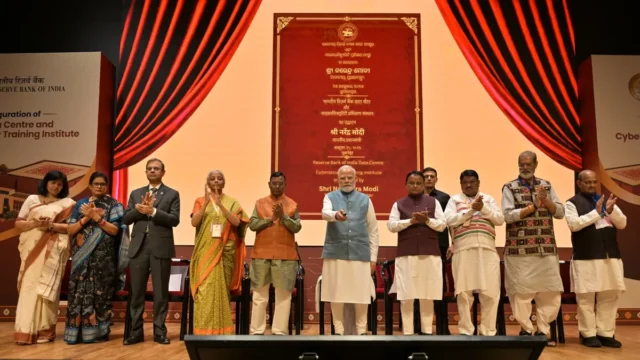
Prime Minister Narendra Modi at the inauguration of the RBI Data Centre and Cybersecurity Training Institute in Bhubaneswar on 25 October 2026
GS3 · Internal Security · Cyber Security

PM opens RBI’s data centre and cybersecurity training institute in Bhubaneswar: why banking needs cyber defence

On Sunday the Prime Minister opened the Reserve Bank of India's ₹169-crore data centre and Cybersecurity Training Institute in Bhubaneswar, warning that a country can be weakened by attacks on its economy, not only by weapons. He called for modern systems and a skilled workforce. For you, this connects CERT-In, RBI data localisation and financial inclusion.

UPSC angle: Prelims: CERT-In, Section 70B IT Act, RBI data localisation, bank nationalisation, PMJDY. · Mains GS-III: cyber security challenges and the financial sector.

26 Oct 2026
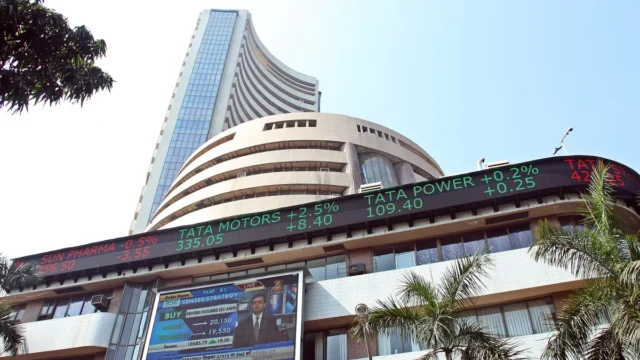
The BSE building on Dalal Street in Mumbai
GS3 · Economy · External Sector

FPIs pull ₹48,056 crore from Indian equities in October: what drives the outflow

Foreign portfolio investors have withdrawn ₹48,056 crore from Indian equities in October so far, after pulling out ₹35,861 crore in September. High crude prices, the West Asia conflict, inflation worries and weak corporate earnings are blamed. For you, this connects the capital account, the FPI-FDI line and SEBI's FPI rules.

UPSC angle: Prelims: FPI vs FDI, 10% rule, P-Notes, capital account, CDSL/NSDL. · Mains GS-III: mobilisation of resources and external sector stability.

26 Oct 2026
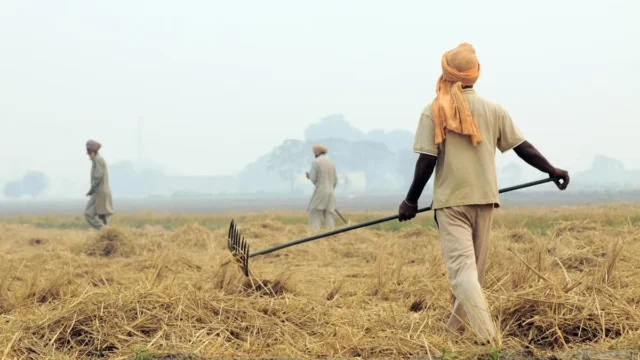
A farmer preparing to burn rice crop residue in a harvested field in Punjab
GS3 · Environment · Air Pollution

Punjab farm fires: why Tarn Taran and Amritsar account for 72% of stubble burning so far

Punjab recorded 574 farm fires between September 15 and October 24, and 414 of them, or 72%, were in just two Majha districts, Tarn Taran and Amritsar. Farmers there harvest short-duration paddy early and hurry to sow green peas or potatoes before wheat. For you, this connects stubble burning, cropping patterns and the CAQM.

UPSC angle: Prelims: CAQM, zero tillage, crop residue management, Majha-Doaba-Malwa. · Mains GS-III: air pollution, cropping patterns and farm practices.

26 Oct 2026
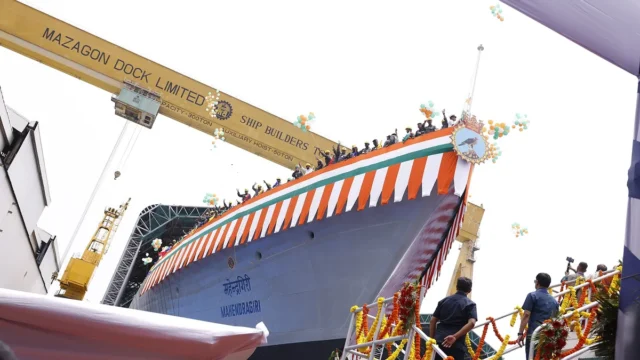
A frigate being launched at Mazagon Dock Shipbuilders in Mumbai
GS3 · Economy · Infrastructure

India’s shipbuilding: deliveries set to double, but only 0.5% of global orders

India wants to be a top shipbuilding nation, but its yards held only 0.5% of the world’s order book in September, ranking 12th. China alone holds 64% of all orders. Yet Indian deliveries due in 2026–30 are nearly double those of 2021–25, and a ₹69,725-crore package aims for the top 10 by 2030 and the top five by 2047. For you, this links the Sagarmala Programme, ports like Vizhinjam and India’s manufacturing push.

UPSC angle: Prelims: CGT, Sagarmala, Vizhinjam, BIMCO. · Mains GS-III: manufacturing, infrastructure, maritime security.

25 Oct 2026
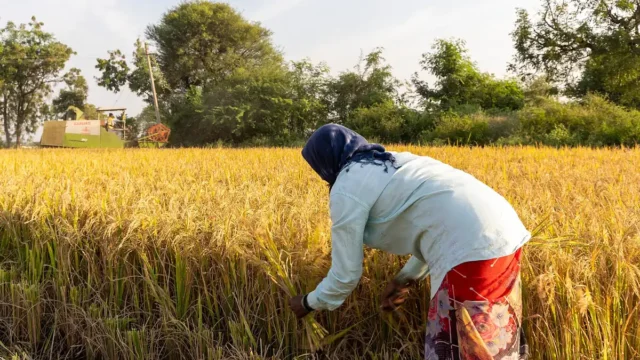
A woman farmer harvesting rice by hand in Raichur district, Karnataka
GS3 · Economy · Agriculture

11 crore Farmer IDs created five months early under the Digital Agriculture Mission and Agri Stack

The Centre is building a digital register of farmers, so that each farmer has one verified identity for all schemes. Under the Digital Agriculture Mission, 11 crore Farmer IDs were created by the night of 23 October, five months before the March 2027 deadline. With this ID, farmers need not submit the same papers again and again for loans, crop insurance or relief. For you, this links Agri Stack, the Kisan Credit Card, PMFBY and land-record reform.

UPSC angle: Prelims: Digital Agriculture Mission, Agri Stack, KCC, PMFBY, DILRMP. · Mains GS-III: technology in agriculture; DBT.

25 Oct 2026
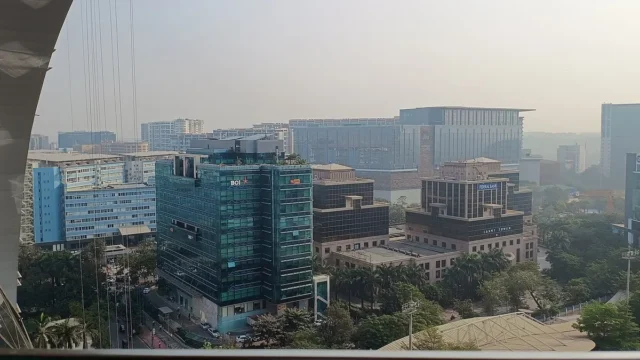
Glass office towers of the Bandra Kurla Complex business district in Mumbai
GS3 · Economy · External Sector

Net FDI positive for third straight month: $3.3 billion in August 2026, says RBI Bulletin

Net foreign direct investment into India was $3.3 billion in August 2026, the third positive month in a row, according to the RBI’s October Bulletin. Gross inflows were $11.1 billion, almost 68% higher than a year earlier, while outflows rose to $7.7 billion, mainly because foreign firms took profits home. It is a clear turnaround from five months of negative net FDI between August and December 2025.

UPSC angle: Prelims: gross vs net FDI, FDI vs FPI, capital account. · Mains GS-III: investment models, external sector stability.

24 Oct 2026