Topic hub

Indian Economy

Indian Economy: syllabus hub.

Syllabus: UPSC Pre GS1: Economic & Social Development; Mains GS3

PYQ trends

Questions per year and the most repeated subtopics.

Explainers

Previous-year questions

Attempt them here.

UPSC Prelims 2026 · GS Paper I

Which one of the following correctly represents the three key sub-indices of the Financial Inclusion Index (FI-Index) of the Reserve Bank of India (RBI) ?

Answer (c) & explanation

The sub-indices are Access, Usage and Quality (c). The RBI launched the FI-Index in August 2021. It covers banking, investments, insurance, postal services and pension, and gives one value between 0 and 100. Its three parameters are Access (35%), Usage (45%) and Quality (20%). Options (a), (b) and (d) list areas or ideas that are not its sub-indices; GDP contribution and affordability are not parameters.

Notice the logic: usage has the most weight, because an account that is never used does not mean real inclusion. Quality includes financial literacy and consumer protection. The index is published every July, and it has risen steadily, helped by Jan Dhan (2014) and UPI.

Answer as per the official UPSC answer key.

Open this question's page →

UPSC Prelims 2026 · GS Paper I

Which one of the following best describes the key objective of India's 'Open Network for Digital Commerce' (ONDC) initiative ?

Answer (c) & explanation

ONDC aims to break the dominance of large platforms (c). The Open Network for Digital Commerce, a DPIIT initiative (2021-22), is an open set of rules, like UPI for shopping. A buyer on one app can buy from a seller listed on another app. This interoperability lets small sellers reach buyers without joining a giant platform. Option (a) is wrong: it does not give the government control of transactions. Option (b) is wrong: private players can join; they are not replaced. Option (d) is wrong: it does not force UPI payments.

Notice ONDC's design: it is a not-for-profit company and part of India's Digital Public Infrastructure, along with Aadhaar, UPI and DigiLocker. It now covers food, groceries and mobility too.

Trap

options (a), (b) and (d) use strong words: "all", "replace", "mandate". A public digital platform usually opens a market; it does not take it over.

Answer as per the official UPSC answer key.

Open this question's page →

UPSC Prelims 2026 · GS Paper I

Which one of the following statements about Unified Payments Interface (UPI) and Central Bank Digital Currency (Digital Rupee) is not correct ?

Answer (d) & explanation

Statement (d) is not correct (d). Under UPI, money moves between bank accounts; the deposit is a liability of the bank. The Digital Rupee (e₹) is like a currency note in digital form, a direct liability of the RBI, not of users or banks. Option (a) is correct: UPI is a payment system, while the e-rupee is sovereign currency. Option (b) is correct: an e-rupee transfer moves value from wallet to wallet with no separate settlement. Option (c) is correct: e-rupee wallet transactions do not appear in bank statements.

Notice the legal base: the RBI Act was amended in 2022 to let the RBI issue a CBDC. Pilots began that year in wholesale (e₹-W) and retail (e₹-R) forms.

Trap

a "not correct" question. Look for the statement that puts the RBI's liability on someone else.

Answer as per the official UPSC answer key.

Open this question's page →

UPSC Prelims 2026 · GS Paper I

Which of the following statements about Real-World Assets (RWA) Tokenization are correct ?

  • 1. Tokenization is the process of turning real world assets into digital tokens using blockchain technology.
  • 2. Tokenization of real world assets offers 24x7 access, promoting financial inclusion.
  • 3. Tokenization of real world assets will allow the access to high growth investment opportunities for individuals in India.

Select the answer using the code given below :

Answer (a) & explanation

All three statements are correct (a). Statement 1 is right: tokenization turns a real asset, like a building, bond or gold, into digital tokens recorded on a blockchain. Statement 2 is right: tokens can be traded 24x7, which widens financial inclusion. Statement 3 is right: small, fractional tokens let ordinary individuals get into high-growth investments that once needed crores. So options (b), (c) and (d) fail.

Notice the risks: unclear regulation, cyber threats and weak investor protection. In India, related steps include Fractional Ownership Platforms and REITs and InvITs, which already let small investors own slices of real estate and infrastructure. The RBI is also testing tokenized deposits and government securities in sandbox pilots.

Answer as per the official UPSC answer key.

Open this question's page →

UPSC Prelims 2026 · GS Paper I

A bond whose proceeds are used only to finance or refinance a combination of both environmental and social projects is called :

Answer (c) & explanation

This is a sustainability bond (c). Under the ICMA principles followed worldwide, a bond that funds a mix of environmental and social projects is a sustainability bond. Option (a) is wrong: a green bond funds only environmental projects, like solar power. Option (b) is wrong: a social bond funds only social projects, like affordable housing. Option (d) is wrong: a sovereign bond is any bond issued by a national government, whatever its use.

Notice India's practice: India has issued Sovereign Green Bonds since January 2023, with the money going to projects like metro rail and renewable energy. A sustainability-linked bond is different: its money can go anywhere, but its interest rate depends on meeting ESG targets.

Trap

"Green Bond" is the most familiar term. The words "both environmental and social" point to the combined label.

Answer as per the official UPSC answer key.

Open this question's page →

UPSC Prelims 2026 · GS Paper I

Which of the following statements about M1xchange's role in Micro, Small & Medium Enterprises (MSMEs) financing is/are correct ?

  • 1. M1xchange provides collateral based loans to MSMEs.
  • 2. M1xchange facilitates discounting of invoices and Bills of Exchange for MSMEs.
  • 3. M1xchange functions as a credit rating agency for MSMEs.

Select the answer using the code given below :

Answer (b) & explanation

Only statement 2 is correct (b). Statement 2 is right: M1xchange is an RBI-licensed TReDS platform (Trade Receivables Discounting System) where an MSME's invoices and bills of exchange are discounted. Statement 1 is wrong: it does not give collateral-based loans; financing is without collateral, backed by the big buyer's credit. Statement 3 is wrong: it is not a credit rating agency. So options (a), (c) and (d) fail.

Notice how TReDS works: an MSME uploads an invoice raised on a large buyer, and banks bid to discount it, so the MSME gets cash fast. The other platforms are RXIL and Invoicemart. Companies with turnover above ₹250 crore and CPSEs must join TReDS, easing delayed payments to MSMEs.

Answer as per the official UPSC answer key.

Open this question's page →

UPSC Prelims 2026 · GS Paper I

Which one of the following best describes the 'Crowding Out Effect' in the context of fiscal policy ?

Answer (b) & explanation

Crowding out means government borrowing raises interest rates and cuts private investment (b). When the government borrows heavily, it competes with companies for the same pool of savings. Interest rates rise, and some private projects no longer pay, so private investment is pushed out. Option (a) is wrong: it describes the opposite, "crowding in". Option (c) is wrong: higher taxes usually reduce, not raise, private spending. Option (d) is wrong: government spending does affect aggregate demand.

Notice the policy link: this is why high fiscal deficits worry the RBI and investors. India's FRBM Act (2003) set limits on deficits. The Centre aims to cut its fiscal deficit below 4.5% of GDP and then shift to a debt-to-GDP target.

Answer as per the official UPSC answer key.

Open this question's page →

UPSC Prelims 2026 · GS Paper I

Which of the following statements about insurance in aviation sector is/are correct ?

  • 1. 'Aviation Hull Insurance' covers the physical aircraft, including the body, engine, and on-board equipment.
  • 2. Under the Montreal Convention, adopted in 1999 by over 130 countries, including India, airlines are strictly liable to pay compensation to the family/nominee of every deceased passenger without requiring the family to prove fault.

Select the answer using the code given below :

Answer (c) & explanation

Both statements are correct (c). Statement 1 is right: hull insurance covers the aircraft itself, its body, engines and on-board equipment. Statement 2 is right: under the Montreal Convention, 1999, which India joined in 2009, the airline is strictly liable for a passenger's death or injury up to a set limit, so the family need not prove fault for that first tier. So options (a), (b) and (d) fail.

Notice the tiers: above that limit, the airline can escape further payment only by proving it was not negligent. The convention replaced the older Warsaw Convention (1929). In India, it is applied through the Carriage by Air Act, 1972. Passenger and third-party claims fall under liability insurance, not hull cover.

Answer as per the official UPSC answer key.

Open this question's page →

In the news

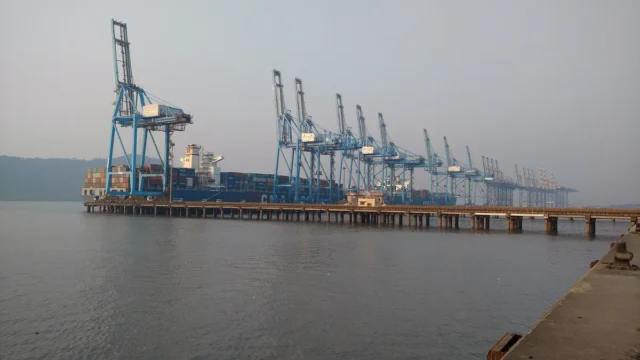
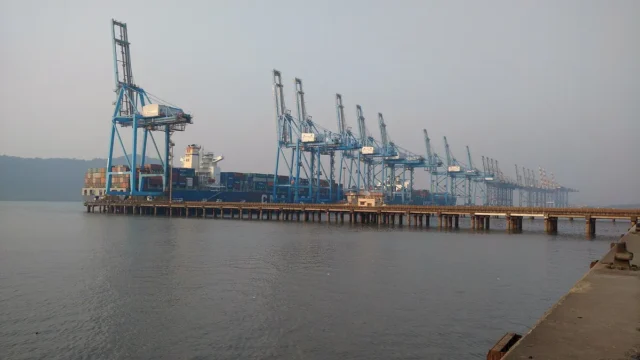
Container cranes at Jawaharlal Nehru Port, Navi Mumbai
GS3 · Economy · Manufacturing and Ports

₹10,000-crore push to make shipping containers in India

Almost every steel box that carries India's goods by ship is made abroad. The Union Cabinet has approved the Container Manufacturing Promotion Scheme, worth ₹10,000 crore, to make shipping containers in India and raise yearly output about ten times. Read it to revise the scheme's numbers, what a TEU is and why containers matter for trade.

UPSC angle: Prelims: scheme numbers, TEU, major ports. · Mains GS-III: manufacturing, logistics, import substitution.

29 Oct 2026
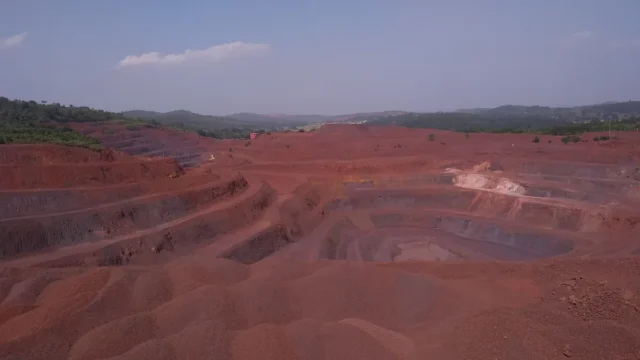
An opencast iron ore mine in Keonjhar district, Odisha
GS3 · Economy · Mining and Critical Minerals

Mineral exchanges to bring fair prices to India’s mining

Today most of India's minerals are sold through private deals and auctions, so nobody knows the fair price and small miners often lose out. India now plans mineral exchanges: online markets where buyers and sellers trade real ore openly, starting with iron ore. Read it to revise the MMDR Act, the Indian Bureau of Mines and India's critical minerals push.

UPSC angle: Prelims: MMDR Act, IBM, critical minerals. · Mains GS-III: mining reforms, resource management, transparency.

29 Oct 2026
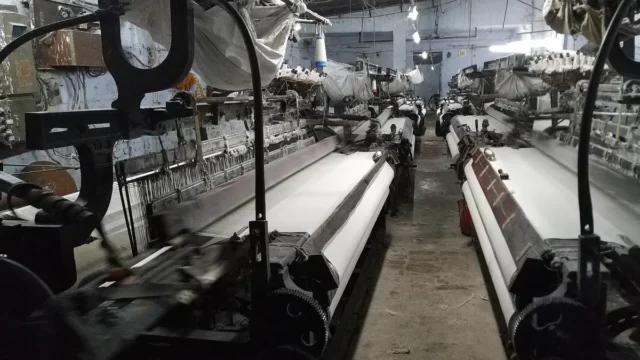
Rows of power looms weaving white cloth in a textile unit in Meerut, Uttar Pradesh
GS3 · Industry · Textiles · PPP (U.P. economy)

Uttar Pradesh picks developer for Lucknow’s PM MITRA textile park

On 27 October 2026 the U.P. Cabinet chose Ramky Infrastructure Ltd as the master developer of the PM MITRA Mega Textile Park on the Lucknow-Hardoi border. The 1,000-acre park will cost about ₹1,947 crore and is expected to create jobs for around one lakh people. Read it for the PM MITRA scheme, the 5F idea and the DBFOT model of PPP.

UPSC angle: Prelims: PM MITRA scheme, 5F, seven sites, DBFOT, Seventh Schedule entries on industry. · Mains GS-III: industrial policy, textiles, PPP, employment.

29 Oct 2026
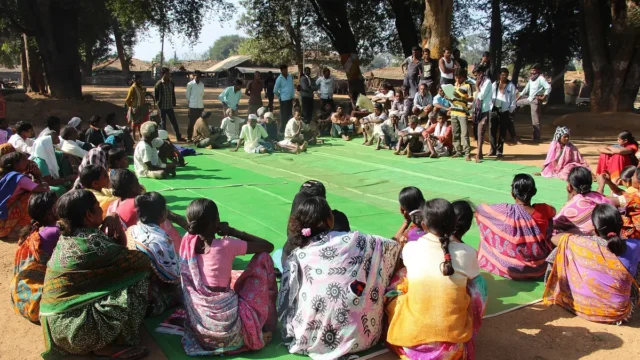
Villagers seated at a gram sabha meeting in Mendha Lekha, Maharashtra
GS2 · Governance · Panchayati Raj

Cabinet clears ₹7,396-crore scheme to train panchayats

A village panchayat decides on roads, drains, water and schools, but many members get little training to plan or spend money well. The Union Cabinet has now approved the Pradhan Mantri Viksit Gram Swaraj Yojana, a ₹7,395.55 crore scheme for five years, to help panchayats plan better and use digital tools. Read it to revise the scheme, the 73rd Amendment and how village plans are made.

UPSC angle: Prelims: scheme facts, Articles 243G, 243I, 243K, Eleventh Schedule. · Mains GS-II: devolution, local governance, capacity building.

29 Oct 2026
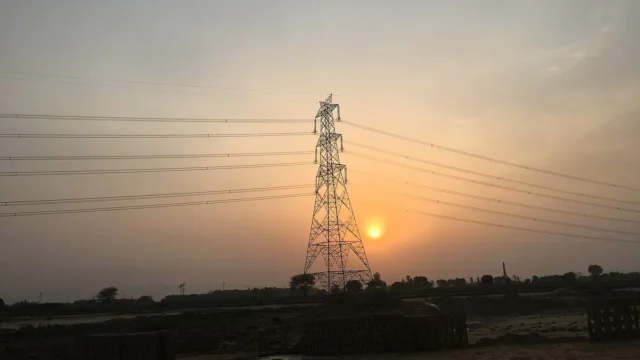
A high-voltage power transmission tower at sunset
GS3 · Economy · Energy

Six States seek extra power to avoid winter evening shortage

When the sun sets, solar power stops, but people switch on lights, fans and pumps. Six States fear shortages on winter evenings and are buying extra electricity for November and December at ₹8.99 to ₹41.50 a unit, yet most could not get all they wanted. Read it to understand the evening power gap, energy storage and how States buy power.

UPSC angle: Prelims: pumped storage, CERC, power exchanges. · Mains GS-III: energy security, renewable integration, infrastructure.

29 Oct 2026
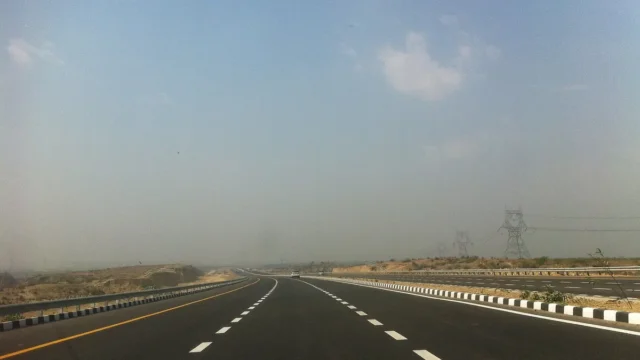
The Agra–Lucknow Expressway in Uttar Pradesh
GS3 · Uttar Pradesh Economy · Infrastructure (UPPCS GS-VI)

Uttar Pradesh clears four new link expressways

Uttar Pradesh already has some of India's longest expressways, but they do not all join up. The State Cabinet has cleared four new link expressways, costing ₹17,542 crore from the State's own money, to connect them into one network. Read it for the four links, the main expressways often asked in exams and why this matters for industry and jobs.

UPSC angle: Prelims: infrastructure basics, Gati Shakti. · Mains GS-III: infrastructure-led regional development.

29 Oct 2026