Topic hub

UPSC Syllabus

Root of the syllabus map; every PYQ, explainer and current-affairs post gets ≥1 term here.

When UPSC asked this

2011: 180 questions111802012: 180 questions121802013: 180 questions131802014: 180 questions141802015: 180 questions151802016: 180 questions161802017: 180 questions171802018: 180 questions181802019: 180 questions191802020: 180 questions201802021: 180 questions211802022: 180 questions221802023: 180 questions231802024: 180 questions241802025: 180 questions251802026: 180 questions26180

Explainers

Previous-year questions

Attempt them here.

UPSC Prelims 2026 · CSAT (Paper II)

Question : X receives three coins of different denominations : 1, 2, 5, 10 and 20. If the total amount received by X is m, does X receive a coin of denomination 5?

Statement I : m is not a prime number.

Statement II : The sum of the digits of m is greater than 5.

Answer (a) & explanation

Statement II alone is enough; Statement I alone is not (a). Step 1: three different coins from 1, 2, 5, 10, 20 give ten totals. With a 5: 8, 16, 17, 26, 27, 35. Without a 5: 13, 23, 31, 32. Step 2: Statement I (m not prime): 8, 16, 26, 27, 35 have a 5, but 32 (2 + 10 + 20) does not. Mixed answers, so I fails. Step 3: Statement II (digit sum above 5): 8, 16, 17, 26, 27, 35 qualify, and every one has a 5. (13, 23, 31, 32 have digit sums 4, 5, 4, 5.) So II answers "yes". Options (b), (c) and (d) fail.

Tip: when cases are few, list them all. Then check each statement against the full list.

Trap

don't assume both statements are needed. Listing all ten cases takes thirty seconds and settles it.

Answer as per the official UPSC answer key.

Open this question's page →

UPSC Prelims 2026 · CSAT (Paper II)
Read the passage

How is deflation done? Most countries use a method called ‘double deflation’, where input and output prices are deflated separately. Consider a manufacturer importing oil for use in production. If oil prices fall, output prices do not and quantities remain the same, real value added should not change. But if the same deflator is used for inputs and outputs, as in India, it would look as if the manufacturer had become more productive.

Which of the following assumptions is/are valid?

  • 1. Deflation strategies can be used to make manufacturers appear to be doing better than they actually are.
  • 2. When input and output prices are both deflated against a single input price, it is referred to as ‘double deflation’.

Select the answer using the code given below.

Answer (a) & explanation

Only assumption 1 is valid (a). Step 1: the passage says that using one deflator for inputs and outputs, as in India, makes it "look as if the manufacturer had become more productive". So deflation methods can make firms appear better than they are (1). Step 2: assumption 2 says double deflation means deflating both against a single price. But the passage defines double deflation as deflating inputs and outputs separately. So 2 reverses the definition. Step 3: options (b), (c) and (d) fail.

Tip: check definitions word for word against the passage. Deflating means removing the effect of price changes to find real growth, as in real GDP.

Answer as per the official UPSC answer key.

Open this question's page →
UPSC Prelims 2026 · CSAT (Paper II)

P, Q, R, S and T are ranked 1 to 5 (not necessarily in that order). The rank of P is 4, the rank of Q is not 5, the rank of R is 1, the rank of S is not 2, the rank of T is not 3. Then which of the following is/are correct?

  • I. If the rank of S is 3, then that of T is 2.
  • II. If the rank of Q is 3, then that of T is 5.

Select the answer using the code given below.

Answer (d) & explanation

Neither statement is correct (d). Step 1: P = 4 and R = 1 are fixed. Ranks 2, 3 and 5 remain for Q, S and T, with rules: Q is not 5, S is not 2, T is not 3. Step 2: statement I: if S = 3, then Q and T share 2 and 5. Q cannot be 5, so Q = 2 and T = 5, not 2. I is wrong. Step 3: statement II: if Q = 3, then S and T share 2 and 5. S cannot be 2, so S = 5 and T = 2, not 5. II is wrong. Options (a), (b) and (c) fail.

Tip: fix the known ranks first, then apply each "if" condition and let the "not" rules decide the rest. Write the small table on paper.

Answer as per the official UPSC answer key.

Open this question's page →
UPSC Prelims 2026 · CSAT (Paper II)

How many times does 5 appear in all two-digit positive integers?

Answer (b) & explanation

The digit 5 appears 19 times (b). Step 1: 5 in the tens place: 50, 51, …, 59 = 10 times. Step 2: 5 in the units place: 15, 25, 35, 45, 55, 65, 75, 85, 95 = 9 times (05 is not a two-digit number). Step 3: total = 10 + 9 = 19. The number 55 has two 5s, and both are counted. Option (a), 18, counts 55 once. Options (c) and (d) wrongly add 05 or 5.

Tip: count place by place. The question asks how many times the digit appears, not how many numbers contain it (that would be 18).

Answer as per the official UPSC answer key.

Open this question's page →
UPSC Prelims 2026 · CSAT (Paper II)

An alloy P contains 20% copper and 80% zinc by weight. Another alloy Q contains 60% copper and 40% zinc by weight. A third alloy R is to be prepared from P and Q so that it contains equal amount of copper and zinc. In what ratio, amounts of P and Q be mixed in order to get R?

Answer (a) & explanation

P and Q must be mixed in the ratio 1 : 3 (a). Step 1: "equal copper and zinc" means R is 50% copper. Step 2: use alligation on copper: P has 20%, Q has 60%, and the mix needs 50%. P : Q = (60 − 50) : (50 − 20) = 10 : 30. Step 3: simplify to 1 : 3. Check: 1 kg P gives 0.2 kg copper; 3 kg Q gives 1.8 kg; total 2 kg copper in 4 kg = 50% ✓. Option (b) reverses the ratio. Options (c) and (d) fail.

Tip: in alligation, the amount of each item is the distance of the other item from the mean. Always check with a quick calculation.

Answer as per the official UPSC answer key.

Open this question's page →
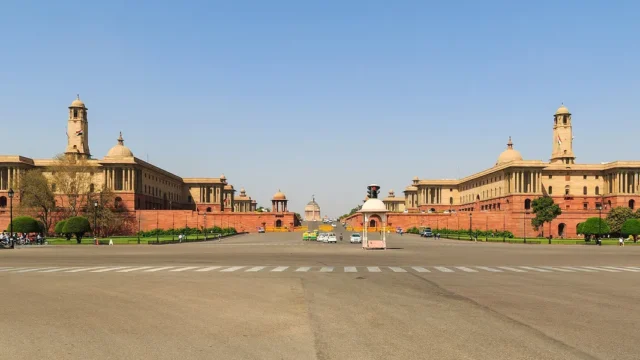
UPSC Prelims 2026 · GS Paper I

Which one of the following Carnatic music ragas is similar to Raga Bilawal in Hindustani music ?

Answer (d) & explanation

Dheera Shankarabharanam matches Raga Bilawal (d). Bilawal is the Hindustani thaat with all seven notes natural (shuddha), the same scale as the Western major scale. Its Carnatic twin is Dheera Shankarabharanam, the 29th melakarta. Option (a) is wrong: Nat Bhairavi matches Asavari. Option (b) is wrong: Kamavardhini (Pantuvarali) matches Purvi. Option (c) is wrong: Hanumatodi matches the Hindustani Bhairavi.

Notice the two systems: Hindustani music has ten thaats, classified by V.N. Bhatkhande, while Carnatic music has 72 melakartas, organised by Venkatamakhin. Another easy pair: Kalyan (Yaman) matches Mechakalyani (Kalyani). Trick: match the notes, not the names, since some names, like Bhairavi, mean different scales in the two systems.

Trap

Hanumatodi sounds like Todi, but the Carnatic Todi scale is the Hindustani Bhairavi thaat, not Bilawal.

Answer as per the official UPSC answer key.

Open this question's page →
UPSC Prelims 2026 · GS Paper I

Pandit Mallikarjun Mansur, the famous classical singer from Karnataka, represented the :

Answer (d) & explanation

Mallikarjun Mansur represented the Jaipur-Atrauli gharana (d). Mallikarjun Mansur (1910–1992) from Dharwad was a khayal singer of the Jaipur-Atrauli gharana, founded by Alladiya Khan. He trained with Manji Khan and Bhurji Khan, Alladiya Khan's sons. Options (a), (b) and (c), Agra, Gwalior and Patiala, are wrong. He received the Padma Vibhushan.

Notice Dharwad's musical riches: it also gave Bhimsen Joshi and Gangubai Hangal, both of the Kirana gharana, and Kumar Gandharva trained nearby. The Jaipur-Atrauli style is known for complex, rare ragas. Kesarbai Kerkar and Kishori Amonkar were other famous singers of this gharana.

Answer as per the official UPSC answer key.

Open this question's page →
UPSC Prelims 2026 · GS Paper I

Consider the following statements with reference to the Sagarmala Programme of the Government of India :

  • I. The Sagarmala Programme seeks to achieve port-led economic growth through cost-effective and sustainable coastal infrastructure.
  • II. The success of the Sagarmala Programme is reflected in significant growth in coastal and inland waterway shipping, along with improved global port rankings.
  • III. Sagarmala 2.0 aims to position India as a global maritime innovation hub aligned with Atmanirbhar Bharat and Viksit Bharat 2047 visions.

Which of the following relationships among the above statements is/are correct ?

  • 1. Statement II validates the effectiveness of the strategies envisioned in statement I.
  • 2. Statement III extends the objectives of statement I by embedding them into a future-oriented innovation framework.
  • 3. Statement I contradicts statement III by focusing only on traditional infrastructure instead of modern innovation.

Select the answer using the code given below :

Answer (b) & explanation

Relationships 1 and 2 are correct (b). Sagarmala (2015, Ministry of Ports, Shipping and Waterways) aims at port-led development. Relationship 1 is right: growth in coastal and inland waterway shipping, plus better global port rankings, is evidence that it works. Relationship 2 is right: Sagarmala 2.0 builds on the same aim with innovation and shipbuilding, linked to Atmanirbhar Bharat and Viksit Bharat 2047. Relationship 3 is wrong: building on an aim is not contradicting it. So options (a), (c) and (d) fail.

Notice the four pillars: port modernisation, port connectivity, port-led industrialisation and coastal community development. Also related: Maritime India Vision 2030 and Amrit Kaal Vision 2047. Vizhinjam and Vadhavan are big new ports.

Answer as per the official UPSC answer key.

Open this question's page →
In the news

GS2/GS3 · Consumer protection · Internal security

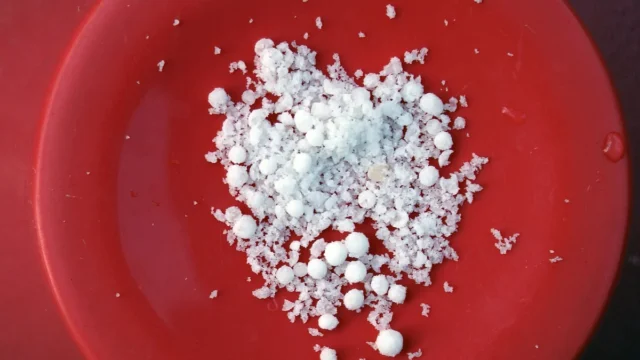
CCPA acts against online sale of explosives: 3,940 sellers delisted from seven platforms

The Central Consumer Protection Authority (CCPA) said on 19 October 2026 that 3,940 sellers of regulated explosives such as ammonium nitrate, picric acid and PETN have been delisted from seven online platforms after its action. It has fined Dial4Trade and ExportersIndia ₹10 lakh per order, and other cases are under hearing or investigation.

UPSC angle: Prelims: CCPA, PESO, CPA 2019 sections, helpline 1915. · Mains GS-II/III: platform liability and security.

19 Oct 2026
GS2/GS3 · IR · Infrastructure

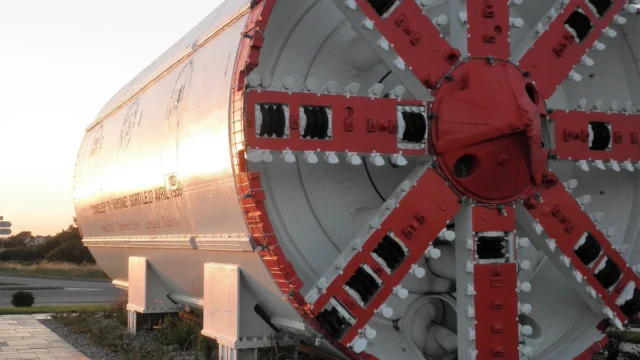
China to impose export controls on tunnel boring machines from 18 November: what it means for India

On 19 October 2026 China’s Commerce Ministry announced export controls on tunnel boring machines (TBMs) and related items from 18 November, calling them clearly dual-use. India imports TBMs for metro, rail and border tunnels and has faced customs delays on Chinese machines since 2024. China also announced controls on some drones.

UPSC angle: Prelims: export control regimes, SCOMET, Wassenaar, MTCR. · Mains GS-II/III: China dependence and supply-chain resilience.

19 Oct 2026
GS2 · International relations

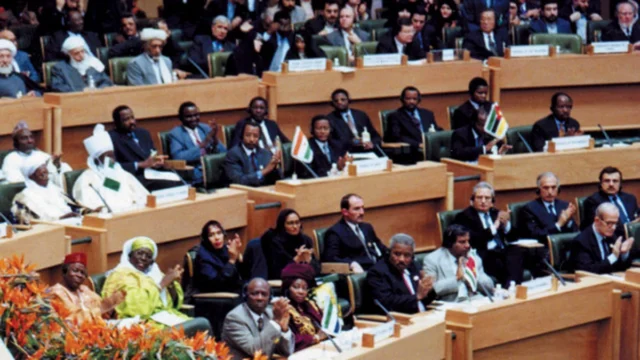
India rejects OIC’s Baghdad resolutions on Jammu and Kashmir as ‘malicious, biased and false’

On 19 October 2026 the Ministry of External Affairs rejected references to India in resolutions adopted at the Organisation of Islamic Cooperation (OIC) Council of Foreign Ministers in Baghdad on 17–18 October. It called them ‘malicious, biased and false’, said Pakistan orchestrated them, and said the OIC has no locus standi on India’s internal matters.

UPSC angle: Prelims: OIC facts, J&K Reorganisation Act, UN Charter Article 2(7). · Mains GS-II: India, OIC and Pakistan.

19 Oct 2026
GS2/GS3 · Consumer protection · Trade

India to host 61st CIML meeting on legal metrology in New Delhi, 26–28 October

India will host the 61st meeting of the International Committee of Legal Metrology (CIML) for the first time, in New Delhi from 26 to 28 October 2026. The Department of Consumer Affairs is organising it with the International Organization of Legal Metrology (OIML), and more than 100 delegates are expected, PIB said on 19 October.

UPSC angle: Prelims: OIML, CIML, Legal Metrology Act 2009, Union List Entry 50. · Mains GS-III: standards and trade.

19 Oct 2026
GS2 · Health · Education

NMC withdraws MSMER-2023: medical colleges lose the fixed penalty rulebook, annual disclosure stays

The National Medical Commission (NMC) has de-notified the Maintenance of Standards of Medical Education Regulations, 2023 (MSMER-2023) by a notification dated 14 October 2026, published in the Gazette on 16 October. Its fixed penalties, including seat cuts and fines of up to ₹5 lakh for false records, go with it. The Annual Disclosure Report stays.

UPSC angle: Prelims: NMC Act 2019, autonomous boards, Concurrent List Entry 25. · Mains GS-II: regulation of medical education.

19 Oct 2026
GS3 · Energy · Infrastructure

Pumped storage hydropower: India’s roadmap for 100 GW of ‘water batteries’ by 2035-36

A PIB backgrounder of 19 October 2026 explains how pumped storage projects (PSPs) will store solar and wind power for India’s grid. India runs 7.43 GW of pumped storage today, is building 15.87 GW more and has an assessed potential of 345.38 GW. A roadmap aims to add about 100 GW between 2025-26 and 2035-36.

UPSC angle: Prelims: PSP types, CEA, ISTS waiver, IRENA ranking. · Mains GS-III: storage and the clean energy transition.

19 Oct 2026