Topic hub

UPSC Syllabus

Root of the syllabus map; every PYQ, explainer and current-affairs post gets ≥1 term here.

When UPSC asked this

2011: 180 questions111802012: 180 questions121802013: 180 questions131802014: 180 questions141802015: 180 questions151802016: 180 questions161802017: 180 questions171802018: 180 questions181802019: 180 questions191802020: 180 questions201802021: 180 questions211802022: 180 questions221802023: 180 questions231802024: 180 questions241802025: 180 questions251802026: 180 questions26180

Explainers

Previous-year questions

Attempt them here.

UPSC Prelims 2026 · CSAT (Paper II)

Question : X receives three coins of different denominations : 1, 2, 5, 10 and 20. If the total amount received by X is m, does X receive a coin of denomination 5?

Statement I : m is not a prime number.

Statement II : The sum of the digits of m is greater than 5.

Answer (a) & explanation

Statement II alone is enough; Statement I alone is not (a). Step 1: three different coins from 1, 2, 5, 10, 20 give ten totals. With a 5: 8, 16, 17, 26, 27, 35. Without a 5: 13, 23, 31, 32. Step 2: Statement I (m not prime): 8, 16, 26, 27, 35 have a 5, but 32 (2 + 10 + 20) does not. Mixed answers, so I fails. Step 3: Statement II (digit sum above 5): 8, 16, 17, 26, 27, 35 qualify, and every one has a 5. (13, 23, 31, 32 have digit sums 4, 5, 4, 5.) So II answers "yes". Options (b), (c) and (d) fail.

Tip: when cases are few, list them all. Then check each statement against the full list.

Trap

don't assume both statements are needed. Listing all ten cases takes thirty seconds and settles it.

Answer as per the official UPSC answer key.

Open this question's page →

UPSC Prelims 2026 · CSAT (Paper II)
Read the passage

How is deflation done? Most countries use a method called ‘double deflation’, where input and output prices are deflated separately. Consider a manufacturer importing oil for use in production. If oil prices fall, output prices do not and quantities remain the same, real value added should not change. But if the same deflator is used for inputs and outputs, as in India, it would look as if the manufacturer had become more productive.

Which of the following assumptions is/are valid?

  • 1. Deflation strategies can be used to make manufacturers appear to be doing better than they actually are.
  • 2. When input and output prices are both deflated against a single input price, it is referred to as ‘double deflation’.

Select the answer using the code given below.

Answer (a) & explanation

Only assumption 1 is valid (a). Step 1: the passage says that using one deflator for inputs and outputs, as in India, makes it "look as if the manufacturer had become more productive". So deflation methods can make firms appear better than they are (1). Step 2: assumption 2 says double deflation means deflating both against a single price. But the passage defines double deflation as deflating inputs and outputs separately. So 2 reverses the definition. Step 3: options (b), (c) and (d) fail.

Tip: check definitions word for word against the passage. Deflating means removing the effect of price changes to find real growth, as in real GDP.

Answer as per the official UPSC answer key.

Open this question's page →
UPSC Prelims 2026 · CSAT (Paper II)

P, Q, R, S and T are ranked 1 to 5 (not necessarily in that order). The rank of P is 4, the rank of Q is not 5, the rank of R is 1, the rank of S is not 2, the rank of T is not 3. Then which of the following is/are correct?

  • I. If the rank of S is 3, then that of T is 2.
  • II. If the rank of Q is 3, then that of T is 5.

Select the answer using the code given below.

Answer (d) & explanation

Neither statement is correct (d). Step 1: P = 4 and R = 1 are fixed. Ranks 2, 3 and 5 remain for Q, S and T, with rules: Q is not 5, S is not 2, T is not 3. Step 2: statement I: if S = 3, then Q and T share 2 and 5. Q cannot be 5, so Q = 2 and T = 5, not 2. I is wrong. Step 3: statement II: if Q = 3, then S and T share 2 and 5. S cannot be 2, so S = 5 and T = 2, not 5. II is wrong. Options (a), (b) and (c) fail.

Tip: fix the known ranks first, then apply each "if" condition and let the "not" rules decide the rest. Write the small table on paper.

Answer as per the official UPSC answer key.

Open this question's page →
UPSC Prelims 2026 · CSAT (Paper II)

How many times does 5 appear in all two-digit positive integers?

Answer (b) & explanation

The digit 5 appears 19 times (b). Step 1: 5 in the tens place: 50, 51, …, 59 = 10 times. Step 2: 5 in the units place: 15, 25, 35, 45, 55, 65, 75, 85, 95 = 9 times (05 is not a two-digit number). Step 3: total = 10 + 9 = 19. The number 55 has two 5s, and both are counted. Option (a), 18, counts 55 once. Options (c) and (d) wrongly add 05 or 5.

Tip: count place by place. The question asks how many times the digit appears, not how many numbers contain it (that would be 18).

Answer as per the official UPSC answer key.

Open this question's page →
UPSC Prelims 2026 · CSAT (Paper II)

An alloy P contains 20% copper and 80% zinc by weight. Another alloy Q contains 60% copper and 40% zinc by weight. A third alloy R is to be prepared from P and Q so that it contains equal amount of copper and zinc. In what ratio, amounts of P and Q be mixed in order to get R?

Answer (a) & explanation

P and Q must be mixed in the ratio 1 : 3 (a). Step 1: "equal copper and zinc" means R is 50% copper. Step 2: use alligation on copper: P has 20%, Q has 60%, and the mix needs 50%. P : Q = (60 − 50) : (50 − 20) = 10 : 30. Step 3: simplify to 1 : 3. Check: 1 kg P gives 0.2 kg copper; 3 kg Q gives 1.8 kg; total 2 kg copper in 4 kg = 50% ✓. Option (b) reverses the ratio. Options (c) and (d) fail.

Tip: in alligation, the amount of each item is the distance of the other item from the mean. Always check with a quick calculation.

Answer as per the official UPSC answer key.

Open this question's page →
UPSC Prelims 2026 · GS Paper I

Which one of the following Carnatic music ragas is similar to Raga Bilawal in Hindustani music ?

Answer (d) & explanation

Dheera Shankarabharanam matches Raga Bilawal (d). Bilawal is the Hindustani thaat with all seven notes natural (shuddha), the same scale as the Western major scale. Its Carnatic twin is Dheera Shankarabharanam, the 29th melakarta. Option (a) is wrong: Nat Bhairavi matches Asavari. Option (b) is wrong: Kamavardhini (Pantuvarali) matches Purvi. Option (c) is wrong: Hanumatodi matches the Hindustani Bhairavi.

Notice the two systems: Hindustani music has ten thaats, classified by V.N. Bhatkhande, while Carnatic music has 72 melakartas, organised by Venkatamakhin. Another easy pair: Kalyan (Yaman) matches Mechakalyani (Kalyani). Trick: match the notes, not the names, since some names, like Bhairavi, mean different scales in the two systems.

Trap

Hanumatodi sounds like Todi, but the Carnatic Todi scale is the Hindustani Bhairavi thaat, not Bilawal.

Answer as per the official UPSC answer key.

Open this question's page →
UPSC Prelims 2026 · GS Paper I

Pandit Mallikarjun Mansur, the famous classical singer from Karnataka, represented the :

Answer (d) & explanation

Mallikarjun Mansur represented the Jaipur-Atrauli gharana (d). Mallikarjun Mansur (1910–1992) from Dharwad was a khayal singer of the Jaipur-Atrauli gharana, founded by Alladiya Khan. He trained with Manji Khan and Bhurji Khan, Alladiya Khan's sons. Options (a), (b) and (c), Agra, Gwalior and Patiala, are wrong. He received the Padma Vibhushan.

Notice Dharwad's musical riches: it also gave Bhimsen Joshi and Gangubai Hangal, both of the Kirana gharana, and Kumar Gandharva trained nearby. The Jaipur-Atrauli style is known for complex, rare ragas. Kesarbai Kerkar and Kishori Amonkar were other famous singers of this gharana.

Answer as per the official UPSC answer key.

Open this question's page →
UPSC Prelims 2026 · GS Paper I

Consider the following statements with reference to the Sagarmala Programme of the Government of India :

  • I. The Sagarmala Programme seeks to achieve port-led economic growth through cost-effective and sustainable coastal infrastructure.
  • II. The success of the Sagarmala Programme is reflected in significant growth in coastal and inland waterway shipping, along with improved global port rankings.
  • III. Sagarmala 2.0 aims to position India as a global maritime innovation hub aligned with Atmanirbhar Bharat and Viksit Bharat 2047 visions.

Which of the following relationships among the above statements is/are correct ?

  • 1. Statement II validates the effectiveness of the strategies envisioned in statement I.
  • 2. Statement III extends the objectives of statement I by embedding them into a future-oriented innovation framework.
  • 3. Statement I contradicts statement III by focusing only on traditional infrastructure instead of modern innovation.

Select the answer using the code given below :

Answer (b) & explanation

Relationships 1 and 2 are correct (b). Sagarmala (2015, Ministry of Ports, Shipping and Waterways) aims at port-led development. Relationship 1 is right: growth in coastal and inland waterway shipping, plus better global port rankings, is evidence that it works. Relationship 2 is right: Sagarmala 2.0 builds on the same aim with innovation and shipbuilding, linked to Atmanirbhar Bharat and Viksit Bharat 2047. Relationship 3 is wrong: building on an aim is not contradicting it. So options (a), (c) and (d) fail.

Notice the four pillars: port modernisation, port connectivity, port-led industrialisation and coastal community development. Also related: Maritime India Vision 2030 and Amrit Kaal Vision 2047. Vizhinjam and Vadhavan are big new ports.

Answer as per the official UPSC answer key.

Open this question's page →
In the news

GS3 · Defence · GS2 · International Relations

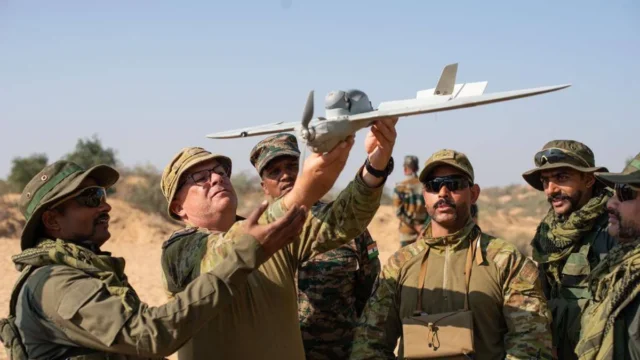
AUSTRAHIND 2026: fifth India–Australia Army exercise begins in Thiruvananthapuram

The fifth edition of the India–Australia joint military exercise AUSTRAHIND began on 19 October 2026 at the Foreign Training Node, Thiruvananthapuram, and runs till 1 November. About 120 soldiers from each army will train for sub-conventional operations in island and coastal terrain under a UN Chapter VII mandate. For the first time, New Zealand has sent observers.

UPSC angle: Prelims: exercise names, venues, partner countries, UN Chapter VII. · Mains GS-III: defence diplomacy in the Indo-Pacific.

20 Oct 2026
GS3 · Economy · Inclusive Growth

Financial inclusion saturation campaign in 2.70 lakh panchayats and ULBs from 21 October

The Department of Financial Services will run a nationwide campaign from 21 October to 31 December 2026 to saturate financial inclusion schemes in 2.70 lakh gram panchayats and urban local bodies. Bank camps will enrol people in PMJJBY, PMSBY and APY, open Jan Dhan accounts, finish re-KYC and nominations, and spread awareness on digital frauds and unclaimed deposits.

UPSC angle: Prelims: scheme parameters of PMJJBY, PMSBY, APY, PMJDY. · Mains GS-III: inclusive growth and financial inclusion.

20 Oct 2026
GS2 · GS3 · International Relations · Trade

India–New Zealand FTA enters into force: zero duty on all Indian exports from day one

The India–New Zealand Free Trade Agreement came into force on 20 October 2026. From day one, New Zealand charges no customs duty on any Indian export, the first time India has got full duty-free access on all tariff lines at entry into force. New Zealand has also committed to facilitate USD 20 billion of investment into India, while dairy, sugar and edible oils stay protected.

UPSC angle: Prelims: FTA dates, Centres of Excellence, visa quotas, TRQ items. · Mains GS-II/III: FTAs with developed economies and farm safeguards.

20 Oct 2026
GS3 · Environment · Biodiversity

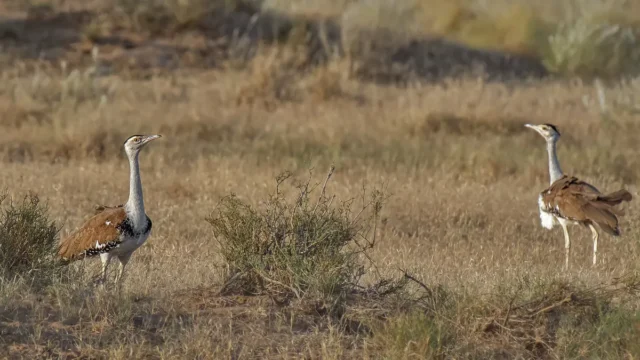
National Red List of birds: 1,211 species under assessment, 107 done in first review

India has begun a national Red List assessment of its 1,211 regularly occurring bird species using the IUCN framework. By 19 October 2026, a preliminary review of 107 species was complete, with the Great Indian Bustard proposed as Critically Endangered and the Indian Roller as Vulnerable. A final assessment is expected towards the end of 2027.

UPSC angle: Prelims: IUCN categories, species and their proposed status, lead institutions. · Mains GS-III: biodiversity conservation and data gaps.

20 Oct 2026
GS2 · International Relations · India–US

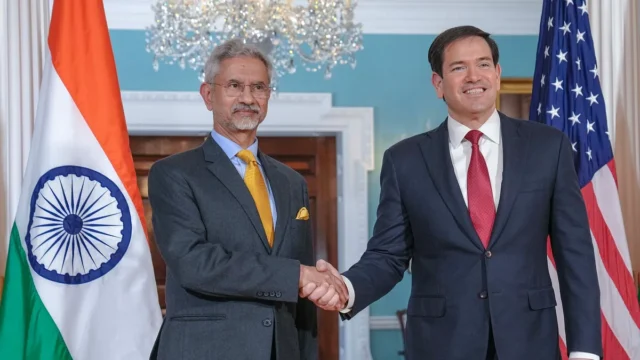
Rubio in Mumbai: India–US trade deal ‘very, very close’; energy and defence on the table

US Secretary of State Marco Rubio began his second India visit of the year in Mumbai on 20 October 2026 and met External Affairs Minister S. Jaishankar on trade, energy, technology and defence. Rubio said the two sides are ‘very, very close’ to a trade deal with ‘a small number of items left’, and praised India’s progress in diversifying energy supplies.

UPSC angle: Prelims: I2U2, Jamnagar, key office holders. · Mains GS-II: India-US partnership, tariffs and strategic autonomy.

20 Oct 2026
GS1 · Art and Culture · Heritage

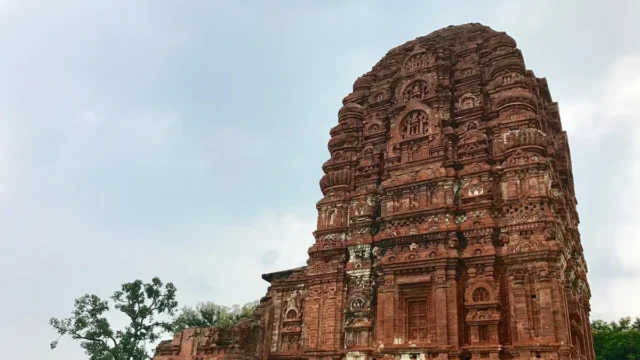
Sirpur in Chhattisgarh enters UNESCO’s Tentative List of World Heritage sites

Sirpur, an archaeological site in Chhattisgarh’s Mahasamund district with Hindu, Buddhist and Jain remains from the 5th to the 12th century CE, has been added to UNESCO’s Tentative List. The ASI now has about a year to prepare a nomination dossier proving its Outstanding Universal Value. Sirpur was once the capital of Dakshina Kosala.

UPSC angle: Prelims: Sirpur location, Lakshmana Temple, dynasties, UNESCO process. · Mains GS-I: heritage conservation and composite culture.

20 Oct 2026